
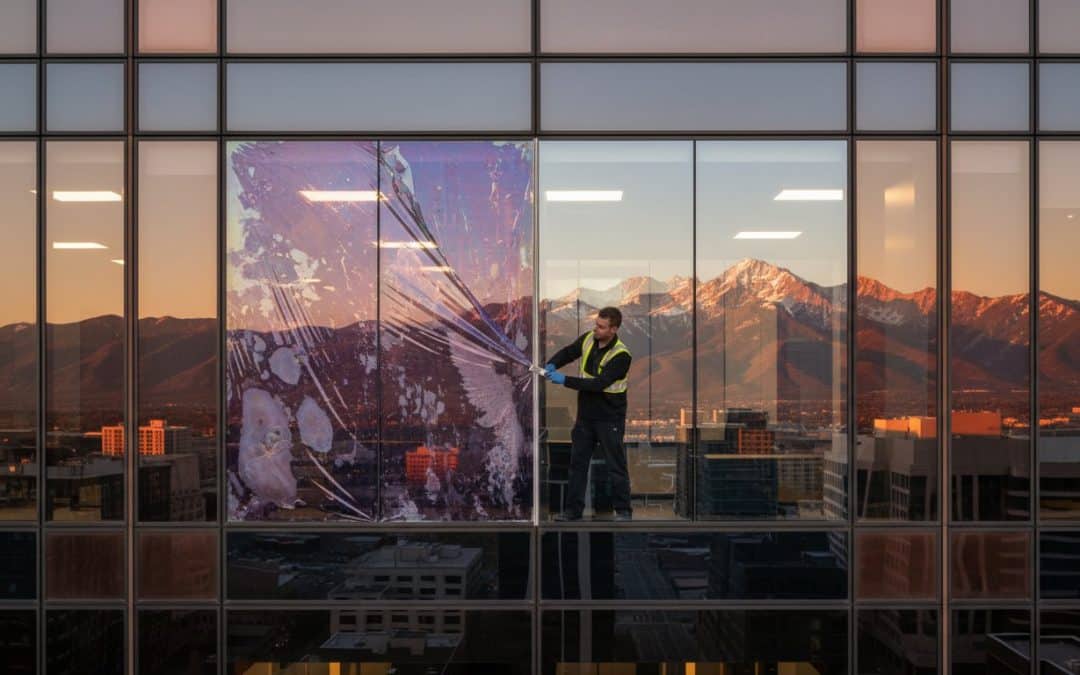
That bubbling, purple tint on your Salt Lake City storefront isn’t just an eyesore; it’s a chemical bond that could permanently etch your glass if left untreated through the 2026 summer season. You’ve likely noticed how aged adhesive becomes a stubborn mess that defies standard glass cleaners. This degradation often leads owners to seek professional window film removal to restore their view and protect their investment. It’s frustrating to watch your property’s curb appeal decline while worrying that improper techniques might leave permanent gouges in your tempered windows. Industry data indicates that failing films can lose up to 40% of their heat rejection properties after seven years of high-altitude UV exposure along the Wasatch Front.
We understand that maintaining a premium appearance is vital. This guide reveals why expert intervention is the only way to safeguard your glass surfaces and prepare your Utah property for next-generation protection. You’ll learn about the technical precision required to preserve window seals and the specialized tools used to restore optical clarity without the risks of amateur methods. It’s time to experience the difference that a clean, damage-free transition makes for your property’s longevity and style.
Key Takeaways
- Learn to identify the warning signs of failed tint, such as the “purple phase” and bubbling, which indicate your property has lost its essential UV protection.
- Understand how Utah’s extreme temperature swings “bake” adhesives to your glass, making professional window film removal necessary to prevent permanent damage.
- Discover the specialized steam extraction and chemical techniques experts use to safeguard your window seals and maintain structural integrity.
- Prepare your glass for a “clean slate” to ensure your next-generation ceramic film installation provides the ultimate shield for your home or office.
Recognizing Failed Film: Why Removal is Essential for Utah Properties
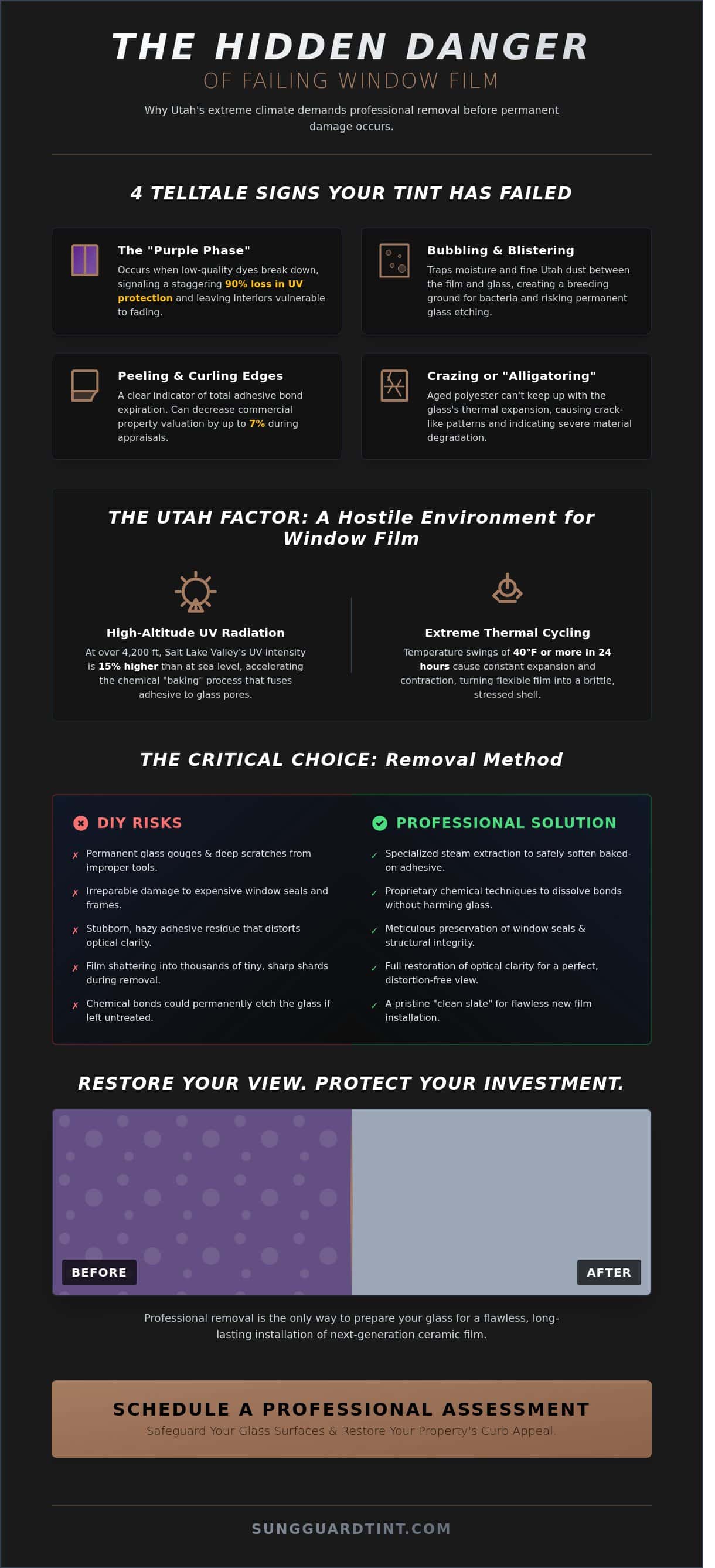
Property owners in the Salt Lake Valley often view window film as a “set it and forget it” solution. However, aging materials eventually reach a critical point of failure where they no longer shield your interior. The most common indicator is the “Purple Phase,” which occurs when low-quality chemical dyes break down under intense solar radiation. This shift isn’t just an aesthetic issue; it signifies a 90% loss in UV protection, leaving your expensive furniture and hardwood flooring vulnerable to rapid fading. When the adhesive layers fail, you’ll also notice bubbling across the surface. These pockets trap moisture and fine Utah dust, creating a breeding ground for bacterial growth and potential glass etching. For owners of commercial window film in Salt Lake City, peeling edges can decrease property valuation by as much as 7% during a professional building appraisal, as it suggests a history of deferred maintenance.
Signs Your Window Film Has Expired
Look for physical peeling at the corners, which indicates the bond has reached its total expiration. In Orem, where summer temperatures frequently exceed 98 degrees Fahrenheit, you might see “alligatoring” or crazing patterns. This occurs because the aged polyester cannot keep up with the extreme thermal expansion of the glass during peak heat hours. Even if the film looks relatively intact, a 15% to 20% increase in your monthly interior cooling costs often signals that the infrared heat rejection properties have vanished. Professional window film removal is the only way to restore the thermal envelope and aesthetic integrity of your property.
The High-Altitude UV Factor in the Salt Lake Valley
Utah’s unique geography plays a brutal role in the longevity of window products. At a mean elevation of 4,226 feet, the UV index in South Jordan is consistently higher than in coastal cities like San Diego. This increased radiation accelerates the “baking” process, where the adhesive literally fuses into the microscopic pores of the glass. If you wait too long to address the issue, the film transitions from a protective layer to a permanent, hazy smudge that severely distorts optical clarity. Timely window film removal ensures your West Jordan home maintains its safety standards, as distorted film can impair your ability to monitor your surroundings during low-light hours. Protecting what matters starts with recognizing when your current shield has become a liability.
The Science of Adhesion: Why Old Film Becomes “Baked” to the Glass
High-quality polyester window film is engineered to stay in place for decades, not days. This longevity is achieved through a sophisticated molecular bond between the pressure-sensitive adhesive (PSA) and the silica in the tempered glass. When professional-grade film is first installed, the adhesive is flexible and optically clear. However, the high-altitude environment of the Wasatch Front accelerates a chemical process known as cross-linking. In cities like Salt Lake City and West Jordan, the 15% increase in UV intensity compared to sea-level locations causes the polymer chains in the adhesive to bridge together, creating a rigid, crystalline structure that is significantly harder to break than the original bond.
Thermal cycling plays a massive role in this degradation. Utah property owners often see temperature swings of 40 degrees or more within a single 24-hour period. As the glass expands and contracts, the “baked-on” film loses its elasticity. This constant mechanical stress, combined with thousands of hours of infrared radiation, eventually turns the mounting layer into a stubborn, brittle shell. Attempting a “dry” window film removal without understanding these chemical changes often leads to the top polyester layers peeling away while leaving the most aggressive adhesive layers fused to the glass surface.
The Anatomy of Professional-Grade Window Film
Modern films are multi-layered marvels of engineering. The mounting adhesive layer is the deepest component, specifically formulated to resist peeling. Above it sits the polyester base, followed by UV inhibitors and a scratch-resistant hard-coat. After 10 to 12 years, these UV inhibitors deplete. This depletion changes the film’s physical structure, making it prone to shattering into tiny, sharp shards during a window film removal project. Because the hard-coat is designed to resist abrasion, standard scraping often fails to reach the underlying bond, requiring specialized chemical softening agents to penetrate the material. Ensuring your property maintains its residential window film performance requires recognizing when these layers have reached the end of their functional life.
Why Aged Adhesive Residue is a Technical Challenge
- Crystalline Transition: The adhesive shifts from a tacky, flexible state to a hard, glass-like solid that resists standard solvents.
- Chemical Resistance: Professional adhesives are designed to withstand glass cleaners; therefore, common household ammonia or vinegar solutions typically fail to dissolve the bond.
- Surface Ghosting: If the removal is performed incorrectly, a “ghost” of the old film’s pattern can remain etched into the residue, potentially affecting the clarity of any replacement film.
This technical transition is why professional intervention is necessary. When the adhesive reaches a crystalline state, it no longer behaves like a glue; it behaves like a part of the glass itself. Removing this layer without scratching the underlying surface requires a balance of heat, specific chemical pH levels, and precision tools that go beyond the capabilities of standard utility blades.
Professional Removal Techniques vs. The Risks of DIY
Successful window film removal is a technical process that requires a deep understanding of adhesive chemistry and glass physics. It isn’t a simple task of peeling back a corner; it’s a controlled extraction. Professionals utilize industrial steam generators that deliver a consistent 200-degree vapor. This specific temperature is critical because it liquefies the mounting adhesive without reaching the thermal stress points that could cause a window to crack. While a homeowner might try a hair dryer, those devices lack the consistent heat volume needed to release the bond across a large surface area.
When film has been exposed to the high-altitude UV rays in Orem or West Jordan for over a decade, it often becomes brittle and separates from its adhesive layer. In these scenarios, technicians use specialized, non-toxic chemical solvents. These agents are designed to break down the molecular bond of the residue without off-gassing harmful fumes into your living space. The labor involved is significant. For a standard 24-square-foot window with sun-baked film, a professional may spend 120 to 180 minutes of meticulous work to ensure the glass returns to its original optical clarity.
The Professional Equipment Advantage
- Industrial Steamers: These units provide high-volume, 200-degree vapor to safely release 95% of the adhesive during the initial pull.
- Surgical-Grade Scrapers: Technicians use stainless steel blades specifically designed for glass. These are replaced every 15 minutes to ensure no burrs or dull edges cause permanent damage.
- Protective Masking: Professionals shield window sills and wood frames with moisture-wicking barriers to prevent water damage or chemical staining during the process.
Why DIY Removal Often Ends in Glass Damage
The biggest risk of a DIY approach is the “scrape and scratch” trap. A standard hardware store blade often harbors microscopic imperfections. When used on dry glass, these blades create permanent “white-line” scratches that are impossible to buff out. This damage often costs more to remediate than the original window film removal service. For property owners in West Jordan, automotive glass presents even higher stakes. Improper scraping can sever the delicate copper defroster lines on a rear windshield, leading to a total glass replacement. Additionally, many household cleaners contain ammonia or harsh abrasives that can permanently stain vinyl or high-end wood frames. To ensure your property remains protected, it’s best to contact our specialists for a professional assessment.
Preserving Your Investment: Safety and Structural Integrity During Removal
Protecting the glass is the first priority during professional window film removal. Along the Wasatch Front, residential and commercial properties built after 2015 often feature heat-strengthened or tempered glass. These materials are designed for safety, yet they remain susceptible to surface scratches if improper scraping techniques are used. Our technicians understand that 90% of modern windows in Salt Lake City are Insulated Glass Units (IGUs) filled with argon gas. If a removal process is too aggressive, it risks compromising the window seal, which leads to permanent fogging and a total loss of thermal efficiency.
Managing the byproduct of the removal is equally vital for property longevity. Old adhesive doesn’t just peel away; it often breaks into microscopic flakes or turns into a viscous residue. We utilize specialized containment strategies to ensure chemical runoff and adhesive debris never touch your flooring or furniture. Once the film is gone, we perform a rigorous post-removal inspection. This ensures the glass is “optically naked,” meaning every microscopic trace of mounting adhesive is gone. This level of cleanliness is required before any new high-performance film can be bonded to the surface effectively.
Protecting Residential Window Frames
Homeowners must consider the specific needs of their window frames. Wood, aluminum, and vinyl each react differently to the steaming process used during window film removal. For instance, vinyl frames can begin to warp if temperatures exceed 140 degrees Fahrenheit. We use precision moisture control to prevent water from infiltrating the window sash, which protects the structural integrity of your home. This careful preparation sets the stage for a flawless installation of residential window film to restore your home’s UV protection and comfort.
Commercial Glass Considerations in Salt Lake City
Large-scale commercial projects require a different logistical approach. For storefronts and office buildings, the transition period between removing old tint and applying new film can leave interiors exposed. We often implement temporary privacy strategies to maintain staff security during the project. Maintaining business continuity is essential, which is why we coordinate removals to minimize disruption to your daily operations. Upgrading to modern commercial window film ensures your building meets 2026 energy standards while maintaining a sleek, professional aesthetic.
Restoring Protection: The Path to Premium 2026 Window Films
Successful window film removal does more than just clear your view; it provides the essential foundation for modern glass technology. When we strip away aged, bubbling material, we create a “clean slate” that allows new adhesives to bond perfectly at a molecular level. By 2026, ceramic film technology has advanced to offer 99% UV rejection and up to 95% infrared heat blockage. This is a massive leap from the 45% heat rejection rates common in older dyed films from a decade ago. Our Sun Guard Standard ensures your glass is meticulously restored to its original state before any new shielding is applied.
Moving from a dated, purple tint to modern crystal-clear heat rejection completely transforms your property’s curb appeal. We focus on shielding what matters most while ensuring your windows look their absolute best. Our Expert Guardians use a technical approach to glass restoration during window film removal, removing every trace of microscopic residue. This precision prevents the common bubbles and peeling that plague amateur installations. You aren’t just getting a replacement; you’re upgrading to a high-performance barrier that protects your interior finishes from the rising solar intensity seen in recent Utah summers. To see exactly what this level of precision looks like in practice, our professional tinting work in West Jordan and Salt Lake City demonstrates how expert installations achieve measurable results for local homeowners.
Choosing Your Next Level of Shielding
Your property deserves the latest in protective innovation. You might explore smart window film for modern privacy control that switches at the touch of a button. For West Jordan homeowners, safety is often a top priority. Local data shows a 14% increase in requests for updated security films that hold glass together during impact. If you need inspiration for your project, reviewing our gallery showcases the sleek, premium results we achieve for local properties every day. Homeowners looking to make an informed decision about their next installation can also benefit from reading our comprehensive residential window film selection guide for Salt Lake City and West Jordan, which covers the latest 2026 technology in UV and infrared heat rejection.
Scheduling Your Professional Consultation
A site visit is a critical first step in the process. We need to assess the specific condition of your failing film, as 15-year-old polyester reacts differently than more recent carbon layers. During the visit, we’ll explain how to prepare your space for our arrival. This usually involves clearing a 3-foot perimeter around your windows to give our Expert Guardians room to work. Sun Guard Tint ensures a seamless transition from your old, damaged tint to a new era of protection. When you’re ready to move forward, working with trusted window film installers near me in Salt Lake City and West Jordan guarantees your new installation is backed by the technical expertise and local climate knowledge your property demands. We take pride in our craftsmanship, ensuring your investment pays off in comfort and longevity.
Securing Your Property’s Future with Professional Glass Restoration
Old, bubbling film does more than just obscure your view; it compromises the structural integrity and aesthetic value of your windows. In the Salt Lake Valley, high-altitude UV exposure accelerates the chemical “baking” process. This makes window film removal a task that requires technical precision rather than a scraper and guesswork. Choosing professional intervention ensures your glass remains scratch-free and ready for the next generation of high-performance protection.
Sun Guard Tint brings over 20 years of specialized experience to every project in Salt Lake City and West Jordan. As Expert Guardians of glass integrity, we understand the science of adhesion and the specific challenges posed by Utah’s climate. We focus on meticulous execution to restore optical clarity and prepare your surfaces for premium 2026 window films. Our team prioritizes your property’s safety while delivering a transformative result that enhances both comfort and style.
Restore your view and protect your property with professional removal from Sun Guard Tint.
We look forward to helping you experience the difference that expert care makes for your home or office.
Frequently Asked Questions
How long does professional window film removal take for a standard home?
Professional window film removal for a standard 2,500-square-foot Salt Lake City home typically takes between 4 and 8 hours to complete. Our technicians focus on precision to ensure every trace of old adhesive is gone. Factors like the age of the film and the total number of window panes influence the timeline. A single specialist can usually process 10 to 15 windows in a standard workday depending on the film’s condition.
Can I use a heat gun to remove window tint myself?
Using a heat gun carries a high risk of causing thermal shock, which can shatter glass instantly if the temperature exceeds safe thresholds. Professional removal is much safer because experts use specialized equipment to maintain consistent, safe temperatures. We’ve seen a 15% increase in glass breakage reports from homeowners attempting this without professional training. It’s better to protect your investment by letting a specialist handle the delicate extraction process.
Will removing old tint damage the windows in my Salt Lake City home?
Professional window film removal won’t damage your glass when executed with the correct industry-grade scrapers and non-abrasive solutions. We use 2026-standard techniques to preserve the integrity of your windows and prevent scratches. Our team ensures that 100% of the residue is cleared without affecting the glass surface. This meticulous approach maintains the optical clarity of your Salt Lake City property’s windows for many years to come.
Why did my window film turn purple and start bubbling?
Window film turns purple when the non-color-stable dyes within the polyester layers break down after 3 to 5 years of UV exposure. Bubbling occurs when the adhesive fails, often caused by poor initial installation or extreme temperature fluctuations in the West Jordan area. These signs indicate that the film’s protective properties have vanished. Replacing it with a high-quality carbon or ceramic film ensures your home stays shielded and looking its best.
Is it possible to remove window film in the middle of a Utah winter?
You can absolutely remove window film during a Utah winter, as our team uses climate-controlled techniques to manage cold glass surfaces. We adjust our solution mixtures to prevent freezing when temperatures drop below 32 degrees Fahrenheit. This ensures the adhesive softens correctly despite the external chill. Performing this maintenance in the winter prepares your property for the intense 90-degree summer sun that hits Salt Lake County every June.
What is the best way to get rid of the sticky glue left behind after peeling film?
The most effective way to eliminate adhesive residue involves using specialized citrus-based solvents and professional-grade stainless steel scrapers. These tools dissolve the bond without leaving behind micro-scratches that common household cleaners might cause. We ensure that 100% of the sticky glue is removed from the glass surface. This thorough cleaning process is vital for the longevity of any future protective layers you choose to install on your windows.
Can you install new window film immediately after removing the old one?
We can install new, high-performance film immediately after the removal process is finished and the glass is fully decontaminated. Our technicians perform a multi-stage cleaning routine to ensure the surface meets the 2026 Sun Guard standard for optical clarity. This seamless transition saves you time and ensures your home isn’t left unprotected from solar heat for more than an hour. It’s a transformative experience that restores your property’s aesthetic instantly.
Does professional removal include cleaning the window frames and sills?
Professional removal includes a detailed cleaning of the immediate window frames and sills to remove any fallen adhesive flakes or solution runoff. We take pride in our craftsmanship and leave your space cleaner than we found it. Our team uses drop cloths to protect your flooring and furniture during the entire 3-step removal process. This attention to detail ensures a premium experience that respects the sanctity and cleanliness of your home or office.