

What if a scratched or marked restroom mirror didn’t have to mean replacing the glass? Graffiti and vandalism can make a public facility feel neglected, while repair work may interrupt normal operations. For property managers considering anti-graffiti film for public restrooms Orem, professionally installed graffiti protection film can help shield suitable glass and mirrors from damage. If the film is marked, a professional installer can remove or replace it without damaging the window.
Protective film can preserve restroom glass as part of a broader upkeep plan, while routine cleaning and facility oversight remain important. This article explains how graffiti protection film works, what to consider when planning an installation, and how Sun Guard Tint helps Orem businesses protect suitable glass surfaces. The glass type, its condition, and how the restroom is used all matter when defining a project. Sun Guard Tint is locally owned and operated, with more than 20 years of industry experience serving Utah businesses.
Key Takeaways
- Marked restroom glass can affect a facility’s appearance and add to ongoing maintenance needs.
- Anti-graffiti film for public restrooms in Orem can protect suitable glass as part of a broader plan that includes routine upkeep.
- A professional assessment considers the glass, its condition, and how the surface is used.
- Project planning starts with identifying priority surfaces and explaining the protection concerns.
- Sun Guard Tint offers free estimates and free consultations for Orem-area properties.
Why Orem Public Restrooms Need a Plan for Graffiti on Glass
Marked mirrors and glass can quickly change how a public restroom feels. Smears, scratches, and graffiti draw attention away from an otherwise maintained space and create another issue for facility teams to track. For Orem property managers, planning ahead means identifying exposed glass, considering how people use it, and deciding where protection could support routine upkeep. Graffiti as vandalism takes different forms, so a useful plan should reflect the surfaces and concerns at the specific facility.
Restroom mirrors and glazed panels may be within easy reach of visitors, particularly in busy commercial or public properties. A maintenance plan can identify priority surfaces, clarify how staff handle visible damage, and determine where protective film may fit. Film can help shield suitable glass, but it cannot prevent every act of vandalism or eliminate the need for cleaning and facility oversight.
The goal is practical, targeted protection, not an assumption that every restroom faces the same conditions. One Orem property might prioritize a large mirror near a busy wash area, while another may focus on accessible interior glass panels. Considering the layout and use of each surface helps keep the project focused on the property’s actual needs.
Which restroom surfaces may need protection?
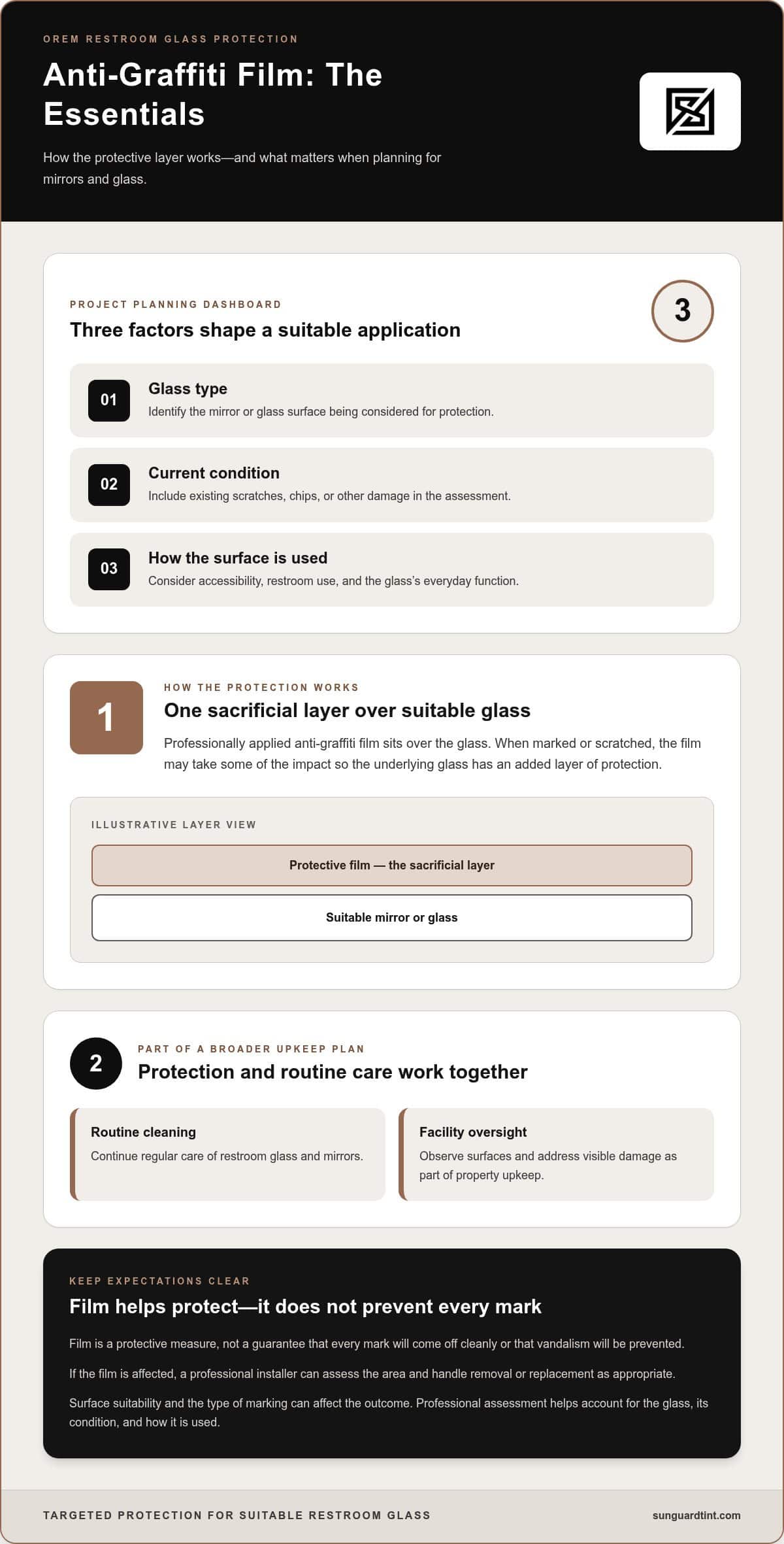
Identify mirrors and other glass surfaces that are visible, accessible, or repeatedly affected by marks. Consider how close visitors can get, how busy the area is, and the glass’s current condition. Existing scratches, chips, or other damage should be included in the project discussion. Since film suitability depends on the surface and its condition, a professional assessment can help determine the appropriate application.
This review also helps define the project scope. A facility may need protection for one mirror, several glass panels, or a combination of surfaces. Sharing those priorities gives the installer useful context to assess the glass and discuss an application of professional graffiti protection film.
How graffiti affects the restroom experience
Visible marks can make a restroom seem less clean, cared for, or welcoming, even when the rest of the space is well maintained. Writing and scratches on a mirror are especially noticeable because visitors look directly at the surface. Keeping glass presentable supports the overall impression of the facility and signals attention to the space.
For property teams, damaged-looking glass can become a recurring upkeep concern. Staff may need to assess the mark, determine an appropriate response, and track the issue for maintenance. Protective film can help safeguard suitable glass as part of that broader plan. Pairing surface protection with routine observation and maintenance gives Orem facility managers a practical way to care for restroom glass without treating film as a substitute for wider vandalism prevention.
How Anti-Graffiti Film Protects Orem Restroom Mirrors and Glass
Anti-graffiti film is a protective layer professionally applied to suitable glass to help shield its surface from marks and scratches. The film sits over the glass as a sacrificial layer, taking some of the impact of surface marking so the underlying glass has an added layer of protection.
For property managers considering anti-graffiti film for public restrooms in Orem, this can help protect existing glass without making replacement the first response to every mark. Film is a protective measure, not a way to prevent vandalism. It does not replace routine restroom care or other property measures.
What happens when the protective film is marked?
If a mark or scratch affects the film, the film may receive the damage instead of the glass. The surface condition and type of marking can affect the outcome, so no film should be treated as a guarantee that every mark will come off cleanly. A professional installer can evaluate the affected area and handle removal or replacement as appropriate.
All window film can be removed or replaced by a professional installer without damaging your windows. This gives facility teams a professional maintenance option when film needs attention, without relying on DIY removal that could risk the surface or interfere with the glass’s use.
Keeping the restroom glass clear and functional
A restroom mirror needs to serve its everyday purpose, so a film project should take the surface, its current condition, and its use into account. A mirror used frequently for grooming has different practical demands from a glass panel elsewhere in the restroom. An installer can assess the intended surface and discuss an appropriate application rather than assuming one approach fits every pane.
Good planning also connects protection with appearance. The goal is to add a protective layer while preserving the usability of the glass. Sun Guard Tint’s graffiti protection film service helps property owners protect suitable glass surfaces.
Before installation, clarify which mirrors or panes are priorities, what kinds of marks or scratches are a concern, and how each surface is used. That context helps the installer assess the glass and tailor the application to the property. With a professional approach, Orem facility teams can make an informed decision about protecting restroom glass while keeping its everyday function in view.
Anti-Graffiti Film and Other Orem Restroom Protection Measures
Protecting a public restroom from graffiti involves more than one task. Film, coatings, and facility practices address different parts of the challenge. For Orem property managers, understanding those roles makes it easier to decide where a protective layer could help and where routine observation or maintenance remains essential.
Anti-graffiti film for public restrooms in Orem is intended for suitable glass surfaces, such as mirrors or panes. It does not replace broader facility oversight, and operational prevention does not create a protective layer on glass. A practical plan considers both the surfaces and how the restroom is maintained.
| Approach | Primary role | Useful consideration |
|---|---|---|
| Protective film | Creates a layer over suitable glass. | Application depends on the surface and project assessment. |
| Coatings | Apply a treatment to a surface rather than placing a film layer over it. | Suitability depends on the specific coating and application. |
| Operational measures | Support awareness, upkeep, and response to issues in the facility. | They complement surface protection but do not protect glass by themselves. |
Film versus coatings on restroom surfaces
Film and coatings are different approaches. Film is installed as a layer over suitable glass; a coating is applied as a treatment to a surface. Neither description establishes compatibility or performance for every restroom material. Glass type, condition, and intended use matter, so an installer should assess the project before recommending an application. Coatings are included here for comparison, not as a Sun Guard Tint service.
For a mirror, the key question is whether film suits the glass and its daily function. Other restroom materials may need a different assessment. A professional project review ties the decision to the actual surface instead of assuming one approach fits mirrors, panes, partitions, and other finishes alike.
Why film works alongside facility maintenance
Film addresses the glass surface; monitoring and maintenance address what happens across the facility. Regular attention can help staff notice visible marks and respond through the property’s established upkeep process. Film may add a protective layer to suitable glass, but it does not replace observation, cleaning, or decisions about managing the restroom overall.
These approaches work as complementary parts of a considered plan. For example, a property team may prioritize film for selected glass while continuing routine care across the wider restroom. Noticing a concern can inform the next maintenance response, while professional assessment helps determine whether film suits the surface. No single measure promises to prevent every incident.
For Orem facilities, the right mix depends on which surfaces need attention and what the maintenance team wants to prioritize. Film can provide targeted protection for suitable glass, while coatings are a separate type of surface treatment and operational measures support continued oversight. Combining approaches thoughtfully helps protect restroom glass without confusing that specific role with broader facility maintenance.
Planning a Professional Anti-Graffiti Film Project in Orem
A clear project scope helps an installer evaluate restroom glass and discuss an appropriate film application. For an Orem business, planning can start with an inventory of priority surfaces, followed by a description of current concerns and how the restroom operates. This gives the professional consultation a useful starting point without asking staff to handle the film themselves.
Consider access as well as protection. If a restroom remains in regular use, coordinate the project with the property’s operations so staff understand which areas are involved and can manage access as needed. Installation logistics depend on the site, so discuss them during the professional assessment rather than assuming a standard process.
What to include in a restroom project assessment
Give the installer a practical picture of the project. Identify mirrors and relevant glass panels, note visible marks or scratches, and explain which areas matter most. Include the appearance you want to maintain and any operational needs that could affect access. These details help focus the assessment on the actual glass and how the restroom is used.
- Surfaces: Identify mirrors, windows, and other glass areas under consideration.
- Current condition: Describe existing marks or damage without attempting to alter the surface.
- Facility priorities: Explain how the restroom is used and which appearance or upkeep concerns matter most.
This information helps the installer assess the glass and determine an appropriate film application. It also clarifies whether the scope is focused on one mirror or includes several glass surfaces. For a business property with additional window-film needs, commercial window film can be part of a broader discussion about protecting and managing the space.
Preparing for professional installation
Use the consultation to align the proposed application with the site’s surfaces, priorities, and access needs. The installer can review the glass and discuss a suitable approach, while property staff explain how the restroom operates and coordinate site arrangements. This keeps planning professional and tailored without asking staff to test, cut, remove, or apply film.
It can also help to consider glass protection as part of a wider property plan. Safety and security film serves a different protective purpose from graffiti protection film, so keep the project discussion focused on the need each measure is intended to address. The right scope depends on the property, its surfaces, and its maintenance priorities.
For anti-graffiti film for public restrooms in Orem, Sun Guard Tint offers free consultations and free estimates to help local businesses plan around their restroom glass. Share the surfaces and priorities you have identified to start a professional discussion about the project.
Protect Orem Public Restroom Glass with Sun Guard Tint
Public restroom mirrors and glass contribute to a property’s everyday presentation. For Orem commercial properties, professionally installed graffiti protection film offers a focused way to help protect suitable glass surfaces as part of the facility’s wider upkeep plan. Sun Guard Tint provides graffiti protection film to Utah businesses, including those in Orem, with a professional approach centered on assessing the project and its surfaces.
Each film project is specific to the property. The glass, its condition, its location, and the restroom’s day-to-day use inform the discussion about an appropriate application. Facility managers can explain which mirrors or panes concern them, what kinds of marks they have observed, and what appearance they want to maintain. A professional can then assess the glass and discuss a suitable scope rather than treating every surface as identical.
A local professional approach to restroom glass
Sun Guard Tint is locally owned and operated, with over 20 years of industry experience. That experience supports a customer-focused process for businesses planning glass protection. Professional workmanship matters because an application should account for the specific surface and the property’s needs, not rely on a one-size-fits-all assumption. The goal is to help protect suitable restroom glass while keeping its everyday function in view.
Working with a professional also means having a clear conversation about the project scope. A restroom may have one priority mirror or several glass surfaces to assess. Sharing those details helps keep the installation discussion grounded in the site, its operations, and the appearance the team wants to preserve. Film is a protective measure, not a promise that vandalism will never occur.
Discuss your Orem restroom film project
As you consider anti-graffiti film for public restrooms in Orem, describe the glass surfaces involved and the protection concerns behind the project. You can also explain how the restroom is used and any access considerations that could shape planning. This gives Sun Guard Tint a useful starting point for a professional conversation about your commercial property.
Sun Guard Tint offers free estimates and free consultations to help Utah property owners discuss their film needs. Contact Sun Guard Tint about your restroom glass project to arrange free estimates and free consultations.
Make Restroom Glass Protection Part of Your Next Facility Plan
A restroom protection plan can start with one practical decision: which glass surfaces deserve priority? Identifying those areas keeps the next step focused on your property’s needs instead of treating every surface or facility concern the same way. For Orem managers considering anti-graffiti film for public restrooms, a professional conversation can turn those priorities into a project scope tailored to the site.
Consider the appearance you want to maintain, how the restroom is used, and which mirrors or glass panels are central to daily operations. That context helps shape a discussion about a suitable film application and how it fits into your wider maintenance approach. You do not need to settle every project detail before starting the conversation.
Sun Guard Tint provides graffiti protection film and commercial window film services for Utah businesses, including Orem, West Jordan, Salt Lake City, Provo, Lehi, Payson, Spanish Fork, South Jordan, and Saratoga Springs. Take the next step toward a considered project plan: request free estimates and free consultations for your restroom glass.
Frequently Asked Questions
Can anti-graffiti film be applied to public restroom mirrors?
Yes, anti-graffiti film can be applied to restroom mirrors when the glass and its condition suit the application. A mirror with existing marks or unusual edges should be included in the professional assessment rather than treated as a standard surface. Orem facility managers can identify priority mirrors and explain how people use them. This gives the installer useful context to discuss an appropriate application and practical restroom requirements.
Does anti-graffiti film stop all restroom graffiti?
No. Anti-graffiti film cannot guarantee that vandalism will not occur. It serves as a protective layer on suitable glass, while facility observation and maintenance address other concerns. For example, a team may include glass condition in its regular facility checks and respond through its established maintenance process. Treat film as one part of the property’s care plan, not as a substitute for attention to the wider restroom environment.
Can marked anti-graffiti film be replaced without replacing the mirror?
In some situations, a professional can address the film without making mirror replacement the automatic next step. All window film can be removed or replaced by a professional installer without damaging your windows. The right response depends on the film, the mirror, and their condition. A professional can review the surface and discuss whether removal or replacement of the film is appropriate for that restroom.
Will anti-graffiti film change the appearance of a restroom mirror?
Appearance should be part of the project discussion because film is applied directly to the mirror’s glass. Consider how the mirror is viewed from different parts of the restroom and whether it needs to support clear everyday use. Rather than assuming every application looks identical, discuss the planned surface and desired finished appearance with the installer. This helps align protection with the look and function facility staff want to maintain.
Can anti-graffiti film be installed on metal restroom partitions?
Do not assume a film intended for glass is also suitable for metal partitions. Suitability depends on the material and the specific application, so include each surface in the project assessment. Identify which partitions or panels are metal and which are glass, then discuss their condition and protection concerns with the installer. This keeps the proposed application focused on the actual materials rather than treating the whole restroom alike.
Is anti-graffiti film useful if a facility already has a cleaning routine?
Yes. Film and a cleaning routine serve different purposes and can be considered together. Maintenance staff may already follow a schedule for general restroom care, while selected glass surfaces still need added protection. Film does not replace that routine, and the routine does not create a protective layer over the glass. A project assessment can help identify which mirrors or panels fit the facility’s priorities.
How can an Orem facility arrange professional graffiti protection film?
Identify the restroom mirrors or other glass surfaces you want assessed and describe your protection concerns. Sun Guard Tint provides graffiti protection film for commercial settings and offers free estimates and free consultations. Its Utah service area includes Orem, West Jordan, Salt Lake City, Provo, Lehi, Payson, Spanish Fork, South Jordan, and Saratoga Springs. A professional discussion can help define a suitable project scope without staff handling the film themselves.