

What if the best window film for your gym isn’t the darkest option, but the right match for each glass area? For window film for gyms and fitness centers Lehi facility managers, the decision often starts with different needs in different rooms. A gym needs daylight and welcoming views, but direct sun can create glare and discomfort in workout zones. Glass-facing studios or recovery rooms may call for more privacy. Start by identifying those priorities instead of treating every window the same.
Sun Guard Tint provides commercial window tinting for fitness facilities in Lehi, with solar control, glare-reduction, privacy, decorative, and security film options. All our window films offer 76 % heat rejection and block 99 % of UV rays. The right film category for each area depends on the balance you want between comfort, visibility, privacy, and appearance. This guide explains what to compare, how to plan by glass area, and what to consider when arranging professional installation.
Key Takeaways
- Different gym spaces can call for different film priorities, so match the solution to each area rather than treating every window alike.
- Compare solar control, glare-reduction, privacy, decorative, and security films by the concern each is intended to address.
- Before choosing a category, weigh comfort, glare, privacy, appearance, visibility, and glass-protection goals for each area.
- Professional installation helps create a clean finish while protecting the glass.
- Sun Guard Tint’s commercial window tinting helps Lehi fitness facilities match film options to their glass and priorities.
Why Window Film Can Improve Comfort in Lehi Gyms and Fitness Centers
Expansive glass can make a gym feel open and welcoming, but direct sunlight can also bring glare, uneven comfort, and privacy concerns into the member experience. The best film choice depends on how each area is used. Storefront glazing may need to preserve an inviting view, while a room used for private sessions may call for more visual screening. Common reasons to consider commercial window film include:
- Reducing sun-related heat near windows.
- Addressing bright light or reflections that distract members in glass-facing workout areas.
- Adding privacy in rooms where members expect greater visual separation.
- Maintaining a polished appearance while balancing daylight and visibility.
Commercial window film lets a facility address different concerns without treating every pane as if it serves the same purpose. Sun Guard Tint’s films offer 76 % heat rejection and block 99 % of UV rays. For a general overview of film types and applications, see Understanding Window Film. The goal is to make the glass better suited to the space, not simply to darken it.
Which gym areas tend to create window film questions?
At a storefront, the priority may be a comfortable entrance that remains open and visible from outside. In workout areas, direct sunlight or reflections on nearby surfaces can distract members or make a zone less comfortable during bright periods. A private room may call for more visual screening. Each space has its own balance of visibility and discretion.
That balance matters when comparing options. A film selected for a private room may change the look or outward visibility of a storefront where an open feel is important. A glare concern in a training area also doesn’t automatically mean the glass needs added privacy. Matching the film goal to the room’s actual use helps preserve the gym’s overall design while addressing specific concerns.
What should a gym owner clarify before comparing films?
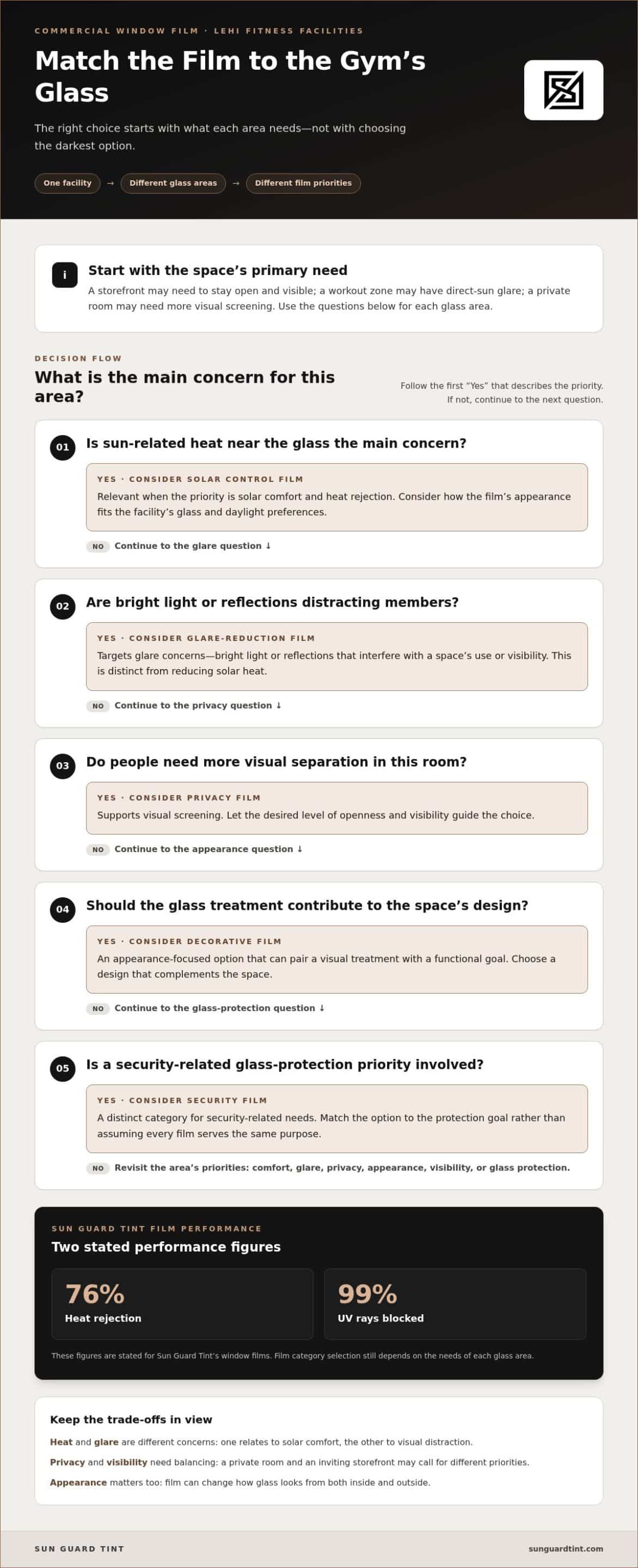
Start with the experience the facility wants to improve. Is sunlight making a workout area uncomfortable? Are reflections interfering with visibility? Can people see into a room where members expect privacy? Separate these concerns before comparing film categories. Glare reduction focuses on the effect of bright light; privacy film addresses sightlines, and decorative film makes appearance part of the choice.
Then consider where visibility matters most. A welcoming storefront and a private studio may need different solutions, even if both have large windows. Sun Guard Tint’s commercial window tinting can be matched to a facility’s different glass areas and priorities.
Choose a film by the space’s primary need, then weigh comfort, privacy, visibility, and appearance together. This facility-first approach gives Lehi gym owners a clear starting point for evaluating window film for gyms and fitness centers Lehi.
Compare Commercial Window Film Options for Gym Glass
Once you’ve identified what a window needs to do, compare film categories by purpose rather than assuming one option will solve every concern. A sunny training area may call for a different balance of comfort and visibility than a studio where members want privacy. Appearance matters too. Film can change how glass looks from inside and outside, so functional priorities and design preferences belong in the same decision.
| Facility need | Relevant film category | Key trade-off |
|---|---|---|
| Manage heat from sunlight | Solar control film | Prioritizes solar comfort. Consider how the chosen appearance fits the facility’s glass and daylight preferences. |
| Address distracting brightness or reflections | Glare-reduction film | Targets glare concerns, which are distinct from reducing heat. Consider the desired visibility and look of the windows. |
| Screen views into a room | Privacy film | Supports visual screening. The desired level of openness and visibility should guide the choice. |
| Pair a visual treatment with a functional goal | Decorative film | Offers an appearance-focused option. Choose a design that complements the space rather than distracts from it. |
| Address a glass-protection priority | Security film | Provides a distinct category for security-related needs. Match the film to the protection goal rather than assuming every option offers the same level. |
When should a gym compare solar control and glare-reduction film?
Solar heat and distracting glare both relate to sunlight, but they describe different concerns. Solar control film is relevant when the priority is heat rejection and comfort near sun-exposed glass. Glare-reduction film suits concerns about bright light interfering with a space’s use or visibility. Premium window film can block up to 70-85 % of solar heat. The appropriate film and the result in a particular space depend on the building and its conditions.
Heat rejection addresses solar heat; glare reduction addresses visual discomfort from brightness or reflections. This distinction helps a gym clarify whether the main goal is a more comfortable area, less visual distraction, or a balance of both.
When are privacy, decorative, or security films relevant?
Privacy film is worth considering for rooms where visual screening matters, while other glass areas may need to remain open and visible. Decorative film brings appearance into the decision, making it relevant when the facility wants its glass treatment to contribute to the interior or exterior design. Security film is a separate option for facilities looking to safeguard glass surfaces and enhance structural integrity against impacts.
Compare each pane by its purpose, desired visibility, and appearance rather than applying a single look across the whole facility. Sun Guard Tint’s commercial window film options can be considered in that facility-specific context, helping Lehi decision-makers compare window film for gyms and fitness centers Lehi by practical need and visual fit.
How to Evaluate Window Film for Your Lehi Fitness Facility
A useful film decision starts with the issue the facility wants to address, not a product name. Different panes can serve different purposes: storefront glazing may need to preserve an open, welcoming view, while workout areas may call for greater comfort or less glare. Interior-facing spaces can have their own privacy needs. Evaluate each area by its function before comparing film categories.
Match film goals to each glass area
An area-by-area comparison helps keep priorities clear. Separate comfort, glare, privacy, appearance, and glass-protection goals rather than treating them as interchangeable. This table can help facility decision-makers discuss the balance they want in each zone:
| Glass area | Primary concern | Desired balance |
|---|---|---|
| Storefront | Comfort or sun exposure | Manage the concern while maintaining the desired sense of openness and visibility. |
| Workout area | Glare or comfort | Address the concern without overlooking how the glass should look. |
| Interior-facing room | Privacy | Provide visual screening consistent with the room’s use and visibility needs. |
| Glass with a protection priority | Security or surface protection | Choose a relevant film category that fits the protection goal. |
This is a planning aid, not a recommendation that every facility needs every treatment. Some gyms have storefront glass and workout areas with different priorities; others have interior-facing rooms where privacy matters more. Comparing areas makes those distinctions clear before narrowing the film choices.
Balance performance, visibility, and appearance
Once each area’s concern is clear, consider how much visual openness the facility wants to retain and whether the film’s appearance suits the building. A functional goal and an aesthetic preference can coexist, but they shouldn’t be confused: reducing glare, managing solar heat, and screening views are different objectives. The best fit depends on which benefit matters most in that space.
We mostly use AURORA, the most elegant architectural film on the market. ASWF’s AURORA series offers up to 97 % IR rejection and as much as 67 % TSER. It offers up to 97 % infrared (IR) rejection and up to 67 % total solar energy rejected (TSER). These figures describe specific performance measures, not whether a film suits every window. Match the product to the facility’s priorities and the intended use of the glass.
Choose a film for the benefit the space needs, then weigh that benefit against the visibility and appearance the facility wants to preserve. This keeps the evaluation focused and helps prevent a uniform treatment from overlooking different uses across the building.
- Identify the concern for each glass area, such as comfort, glare, privacy, appearance, or glass protection.
- Set the desired level of visibility and visual openness for that area.
- Compare relevant film categories against both priorities, then consider how the treatment will fit the facility as a whole.
Sun Guard Tint’s commercial window film can be tailored to a facility’s glass areas and priorities. This structured approach gives Lehi decision-makers a practical basis for comparing window film for gyms and fitness centers Lehi without assuming one category will suit every pane.
What Professional Gym Window Film Installation Involves
Professional installation brings product selection and application together, helping the chosen film suit the facility’s glass, intended use, and appearance. For a gym, the project also needs to fit around how members and staff use the building. Planning those details in advance helps decision-makers understand the work involved and account for facility operations.
Plan the project around facility operations
Before scheduling, consider which glass areas are involved and how members use nearby spaces. Storefront windows, workout zones, and rooms with privacy needs may affect different parts of the facility. Factor in member access, staff routines, and the flow of business when planning the project, then coordinate the work with the gym’s operating needs.
Most residential and commercial window film projects can be completed in just a few hours. Complex projects may take up to a day. Use this timing to plan, keeping in mind that project complexity affects how long the work takes.
Clear communication about the areas included in the project also helps the facility plan around the work. If several spaces have different film goals, identify the relevant zones and consider how each fits the gym’s daily use. This keeps planning tied to the project scope instead of relying on a generic timeline.
Understand professional care for the glass
Glass is an important part of a gym’s appearance and function, so professional installation matters. Window tint does not damage glass when installed by a professional. This can give facility owners peace of mind as they consider commercial film for comfort, privacy, or glare concerns.
Professional care matters if a facility later changes its needs or appearance. All window film can be removed or replaced by a professional installer without damaging your windows. That option allows a gym to revisit its film choices as the space evolves while keeping the glass itself in view as an asset to preserve.
Professional service connects the facility’s priorities with the selected commercial film and careful work on the glass. Sun Guard Tint provides commercial window tinting for fitness facilities and other commercial spaces in Lehi.
For a professional solution tailored to your facility’s glass and operational needs, explore commercial window tinting for your gym.
Choose a Commercial Window Film Partner Serving Lehi
Choosing film for a fitness facility means balancing what members experience with how the building should look. A sun-exposed workout area, a visible storefront, and a room where privacy matters can call for different priorities. Sun Guard Tint is a locally owned Utah business serving Lehi with commercial window tinting, helping facilities consider film choices in relation to their glass, goals, and appearance.
What Sun Guard Tint brings to a gym film project
Sun Guard Tint offers commercial film categories for solar control, glare reduction, privacy, decorative appearance, and security. All our window films offer 76 % heat rejection and block 99 % of UV rays. The relevant option depends on the space’s main purpose and the balance the facility wants between comfort, visibility, privacy, and aesthetics.
For example, a facility may prioritize comfort near sun-facing glass while preserving an open storefront appearance. A room where members expect more discretion has a different priority. Decorative film can bring appearance into the decision, while security film can help safeguard glass surfaces. These categories give decision-makers a practical starting point for discussing the spaces they want to address.
A project-focused approach also keeps the facility’s overall design in view. Film selection can account for the look of expansive glass as well as its functional role, so the treatment suits the space rather than being chosen by category alone. Sun Guard Tint’s commercial window film service connects those priorities with options for facilities in Lehi.
Take the next step for your Lehi facility
Before arranging a consultation, bring together the concerns identified in your evaluation: which areas need more comfort, where glare is a distraction, which rooms call for privacy, and what appearance you want to preserve. That context helps focus the discussion on the facility’s priorities rather than a one-film-fits-all solution.
Sun Guard Tint offers free estimates and free consultations to Utah residents. A professional conversation can help align film choices with the purpose and appearance of each glass area, keeping the facility’s priorities at the center of the decision.
Ready to discuss window film for gyms and fitness centers Lehi facilities can tailor to their needs? Arrange a free consultation or request a free estimate for your commercial window film project.
Plan a Better-Fitting Glass Experience for Your Gym
Your facility’s glass is part of how members experience each space. As layouts, programs, and room uses change, priorities around openness, comfort, and discretion can shift too. Thinking of film as part of the facility’s environment helps keep those needs in view, rather than treating every pane as a purely decorative choice.
For operators considering window film for gyms and fitness centers Lehi, bring the facility’s priorities into a focused conversation. Discuss which spaces matter most, what you want members to experience there, and how the glass should look as part of the overall property. This connects a film decision to the way your gym operates and feels.
Start a conversation about commercial window film for your facility and take the next step toward a thoughtful solution. Your gym can make its glass work harder for the experience you want to create.
Frequently Asked Questions
What type of window film is best for a gym?
The best film depends on the windows’ location and the concern the facility wants to address. Solar control or glare-reduction film may suit areas where sunlight affects comfort or visibility, while privacy film can be considered for rooms that need visual screening. Decorative and security films serve different goals. For window film for gyms and fitness centers Lehi, compare options by room function, desired visibility, and the look the gym wants to maintain.
Can window film help reduce glare in a fitness center?
Yes, glare-reduction film may help address bright reflections affecting spaces such as a reception area or workout zone. The facility’s priorities still matter: a solution intended to reduce glare should also fit the level of visibility and appearance desired for that glass. A gym may want a welcoming view through its entrance while giving a screen-facing exercise area a different balance.
Does gym window film block UV rays?
Yes. Sun Guard Tint’s window films block 99 % of UV rays. UV protection may help limit UV-related fading of interior surfaces, but it doesn’t replace decisions about glare, privacy, or the appearance of each glass area. A gym might prioritize UV protection throughout while selecting different film categories for a bright training space and a room where members expect visual screening.
Can window film make a gym’s glass private?
Privacy film is available for commercial applications and can be considered where reducing views into a room is a priority. The right choice depends on how the room is used and whether visibility from inside or outside still matters. A private training room may call for a different approach than an entrance where the facility wants an open, visible storefront. Consider privacy needs for each area.
Will window tint damage a gym’s windows?
Window tint does not damage glass when installed by a professional. If a facility later wants to change the film, all window film can be removed or replaced by a professional installer without damaging your windows. Film choices can be revisited as room functions or design preferences change, with installation and removal handled professionally.
How long does commercial window film installation take?
Most residential and commercial window film projects can be completed in just a few hours. Complex projects may take up to a day. Gym managers can use this general timing to consider how work may fit alongside member access and facility operations. Project complexity affects the timing.
Does Sun Guard Tint serve gyms and fitness centers in Lehi?
Yes. Sun Guard Tint serves Lehi and provides commercial window tinting for businesses. Gym decision-makers can discuss comfort, glare, privacy, and appearance goals in relation to the facility’s glass areas. Free estimates and free consultations are available to Utah residents. Sun Guard Tint also serves West Jordan, Salt Lake City, Provo, Orem, Payson, Spanish Fork, South Jordan, Saratoga Springs, and Lehi.