
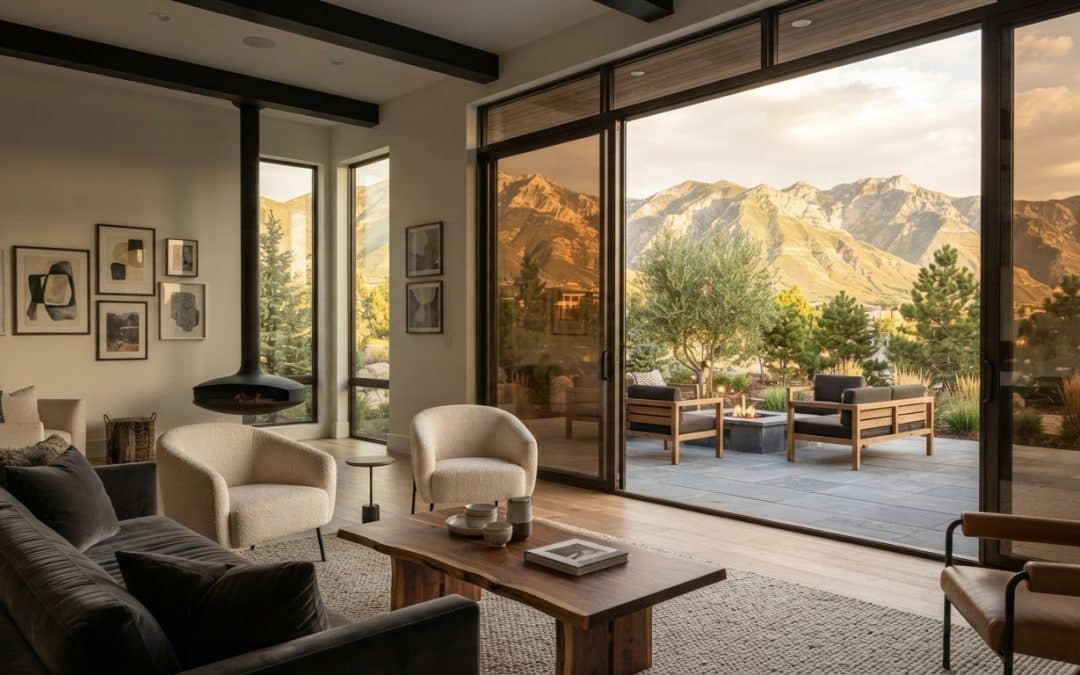
What if your sliding glass doors could feel more comfortable without turning a bright, view-filled room dim? Provo homeowners often value the daylight and outdoor scenery these doors bring in, yet direct sun can create heat and glare where the family gathers. With window tinting for sliding glass doors Provo homeowners can address those concerns while keeping light, views, and the home’s appearance in focus.
The right film depends on your priorities and the door’s glass. A professional assessment helps match film characteristics to the space, so you can weigh comfort and sun protection against brightness and clarity rather than choosing by appearance alone. This guide covers the benefits and trade-offs to consider, plus practical questions to help you decide what matters most for your door.
You’ll also learn what professional film selection and installation involve, including attention to the glass and nearby interiors. Sun Guard Tint provides residential window tinting in Provo, drawing on more than 20 years of industry experience to help homeowners weigh comfort, daylight, and views.
Key Takeaways
- Separate your goals for heat, glare, UV protection, privacy, and safety to identify what matters most for your sliding doors.
- With window tinting for sliding glass doors Provo homeowners can consider film options alongside their preferred level of daylight and view clarity.
- A professional assessment considers the glass before film selection and installation, helping tailor the project to your home.
- Sun Guard Tint provides residential window tinting for sliding glass doors in Provo.
Why Provo Sliding Glass Doors Can Benefit from Residential Window Tinting
A bright room can still feel uncomfortable. Sunlight through a wide sliding glass door brings welcome daylight and an open view, but it may also create glare on screens, warm the area beside the glass, or make a sunny seat less pleasant. Because sliding doors often span a substantial part of a wall, direct sun can affect how the whole room feels.
Residential window film is a professionally applied layer selected for the glass and the homeowner’s comfort goals. It can be part of a tailored approach to managing sunlight without giving up the connection to the outdoors. Window film is an applied layer for existing glass, not a glass replacement. That distinction matters: the project focuses on the door and the room, rather than changing the glass itself.
What window film can address on a sliding glass door
Homeowners may consider film to help manage heat and glare, or to add UV protection for furnishings and finishes exposed to sunlight. These are separate goals, not interchangeable promises. The outcome depends on the film selected and the project conditions, so start by identifying what feels uncomfortable and what you want to preserve. For example, note whether the main issue is a hot seating area, reflections on a television, or sun falling on furnishings near the door.
A general overview of window film can explain its range of applications, but it doesn’t determine the best fit for a particular door. The assessment should connect the intended benefit to the room’s use and the glass being considered.
Why sliding-door glass deserves a tailored discussion
A film that suits one home may not suit another. Sliding doors can have different glass assemblies, and their orientation, surrounding shade, and relationship to living areas also shape the project discussion. Assessing the glass before selecting film helps ground the recommendation in the actual door instead of assuming all sliding doors are alike.
There’s also a visual and practical balance to protect. A broad pane makes film appearance especially noticeable, so preserving daylight and outdoor views may be just as important as easing glare. Since the door is used regularly, a neat, unobtrusive finish contributes to the room’s appearance and everyday experience. Residential sliding-door film serves a different purpose from interior office tinting, because the home project must account for the family’s view, light, and door use.
For homeowners considering window tinting for sliding glass doors Provo, a useful first step is to identify the main discomfort without assuming one film can address every concern equally. Sun Guard Tint provides residential window tinting in Provo, with project assessment and film selection focused on balancing comfort, brightness, views, and appearance. That discussion helps match the film to what you value about the room.
How Window Film Works on Sliding Glass Doors
Window film is selected for its intended purpose, then professionally applied to the glass. It changes how sunlight passes through the door, but the result depends on the film choice and the existing glass. A homeowner hoping to reduce glare while keeping a clear view has different priorities from someone seeking more privacy or a safety-focused layer. No single film can be assumed to suit every sliding glass door.
That’s why film selection begins with the room’s main concern, not a promise that one option will solve every sunlight-related issue. The Benefits of Architectural Window Film overview from the Whole Building Design Guide provides context on common applications, but a home’s specific glass and goals still guide the project.
Match film goals to the room’s main concern
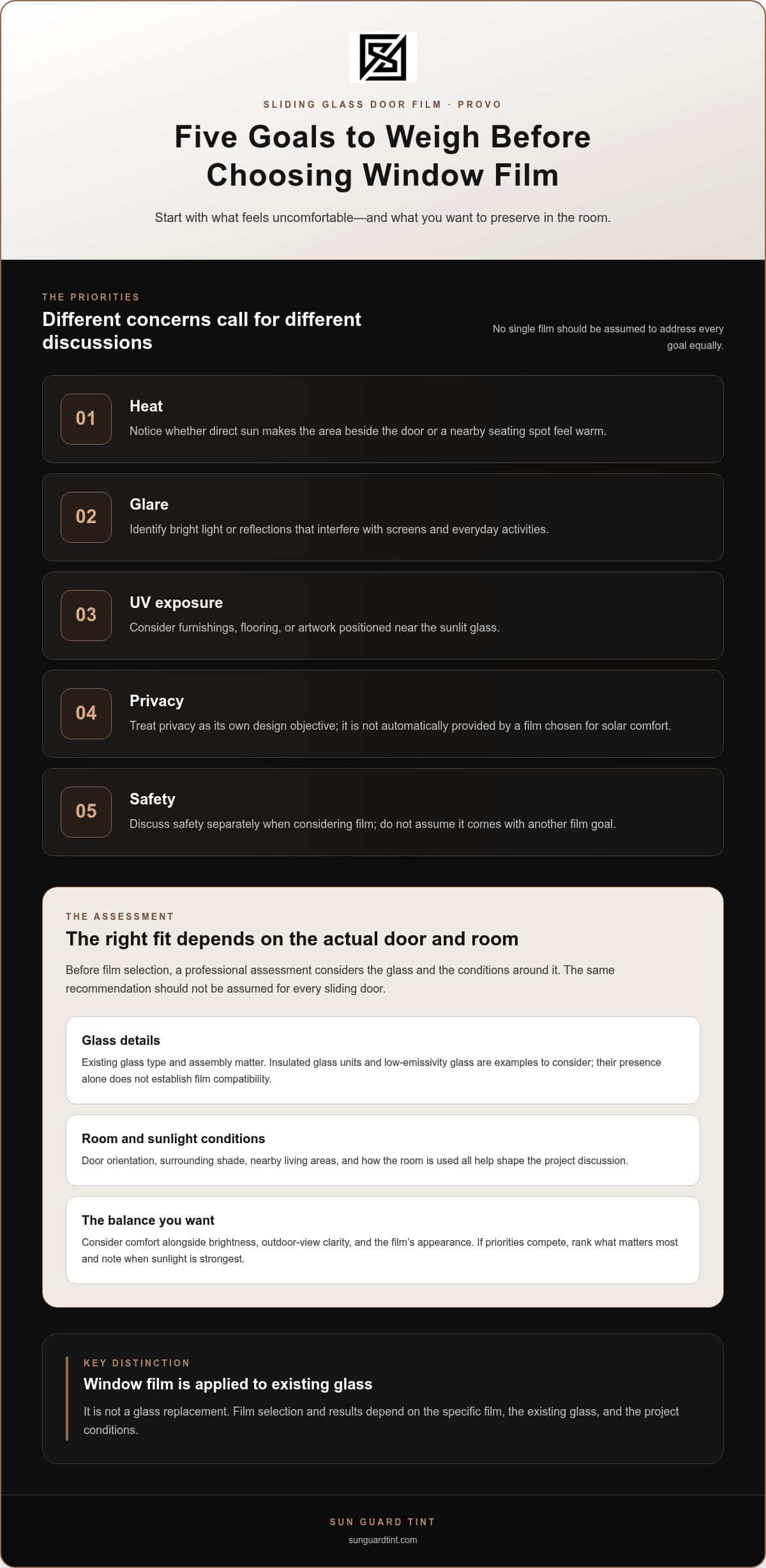
Heat and glare are both related to sunlight, but they are distinct comfort concerns. A film selected with heat management in mind may not create the same visual change as one chosen primarily to soften glare. UV protection is another consideration, especially for furnishings, flooring, or artwork near a sun-exposed door. Privacy is a separate design goal; it shouldn’t be assumed to come automatically with a film intended to address solar comfort.
- Heat: Consider how direct sun affects comfort near the door.
- Glare: Identify where reflections or bright light interfere with everyday activities.
- UV exposure: Note which interior items sit close to the sunlit glass.
- Privacy or safety: Treat each as its own objective when discussing film selection.
These priorities can overlap, but they don’t mean the same thing. A clear discussion of what matters most helps shape a focused recommendation. If several concerns compete, rank them in order of importance and consider how the room is used at the time of day when sunlight is strongest.
Account for glass type and existing conditions
Before film is selected, a professional assessment considers the existing door glass and relevant conditions. Insulated glass units and low-emissivity glass are examples of details that matter during this review; their presence alone doesn’t establish whether a particular film is appropriate. Compatibility must be evaluated for the specific project rather than assumed from the door’s appearance.
That assessment also keeps expectations grounded. Film can affect both how sunlight is managed and how the glass looks, so the intended benefit needs to be considered alongside the desired appearance. For window tinting for sliding glass doors Provo, homeowners should expect a recommendation shaped by the actual glass, room priorities, and the balance they want between comfort and daylight.
Sun Guard Tint’s residential window film service centers that decision on the home and its glass. A thoughtful selection process connects the film’s intended purpose to the door’s conditions, rather than relying on a one-size-fits-all assumption.
Will Sliding Glass Door Tint Make Your Provo Home Darker?
Film can change how a sliding glass door looks, but the degree and character of that change depend on the film and the existing glass. There isn’t a universal promise that a tinted door will look unchanged. The practical question is how to address discomfort from sunlight while keeping the room’s brightness and outdoor view in line with what you enjoy.
Think of daylight, glare, and privacy as separate priorities. A homeowner who wants to keep a bright living room may value a different balance than someone whose main concern is distracting reflections during television viewing. A professional recommendation should reflect how the room is used, the view you want to preserve, and the appearance you prefer.
Balance brightness, glare, and outdoor views
Daylight is the amount of natural light you want in the room; glare is light that feels distracting or interferes with an activity. Reducing one concern doesn’t automatically mean the other disappears. Consider whether the door looks onto a valued landscape, whether glare affects a seating or work area, and how the room feels at different times of day. These details help guide a choice without relying on unsupported performance assumptions.
The trade-offs are easier to discuss when priorities are clear. Use the comparison below to frame a professional assessment, not as a guarantee of a particular result.
| Priority | Potential trade-off | Assessment question |
|---|---|---|
| Preserve daylight | A choice focused on brightness may not address glare in the same way as another option. | How bright should the room feel during its usual daytime use? |
| Reduce glare | The door’s appearance or view may look different, depending on the film and glass. | Where does distracting sunlight affect activities or screens? |
| Maintain the outdoor view | View clarity and glare control may need to be balanced rather than treated as identical goals. | Which parts of the view matter most from inside the room? |
| Add privacy | Privacy effects can vary with lighting and viewing conditions. | At what times and from which direction is privacy a concern? |
Set expectations for appearance and privacy
Film appearance depends on its characteristics and the existing glass conditions, so an assessment should account for both. Privacy also isn’t an automatic effect of every film; the result can vary with the relationship between interior and exterior lighting and the viewing conditions. Discussing when privacy matters helps set realistic expectations while considering the room’s look. If nighttime privacy is important, make that clear rather than judging privacy only by how the glass looks during the day.
Reviewing residential window film options with these priorities in mind makes the decision more concrete. For window tinting for sliding glass doors Provo homeowners should treat comfort, daylight, views, and appearance as connected choices, then select a balance that suits the space rather than expecting every goal to be maximized at once.
What Provo Homeowners Can Expect from Professional Sliding-Door Tinting
Professional sliding-door tinting is a considered process, not a one-film-fits-all application. The project typically moves from a conversation about comfort and appearance to an assessment of the existing glass, film selection, and installation. Each stage connects the homeowner’s priorities with the door’s conditions, while keeping the desired balance of light, views, and comfort in focus.
Project details depend on the door, its glass, and how the room is used. A sunlit living area where glare interrupts screen time may call for a different discussion than a space where maintaining a bright, open view is the leading priority. It helps to describe the specific time and place where sunlight causes a problem.
Assessment and film selection for a sliding door
The assessment considers the existing glass, the room’s use, and the homeowner’s preferred results. The installer can discuss where sunlight creates discomfort, how much daylight the homeowner wants to retain, and whether the outdoor view is a central feature of the space. These preferences guide film recommendations; they’re not secondary details.
That conversation also helps clarify trade-offs. If glare control is the main goal, the homeowner can discuss how film appearance may relate to the desired view. If preserving brightness matters most, that preference should shape selection. The glass assessment provides important context, especially because doors can differ in their construction and existing conditions. Recommendations should be specific to the project rather than based on assumptions about every sliding door.
For homeowners looking into window tinting for sliding glass doors Provo, this stage is an opportunity to align the intended benefit with the way the room feels and functions. Before the assessment, it can help to identify which activity is affected, which part of the day is most uncomfortable, and what you most want to preserve. That makes the decision more focused.
Professional installation and the finished result
After selection, professional installation applies the chosen film to the glass with attention to a neat, even finish across the door. The large surface area makes consistency important: the film should complement the glass and the room’s appearance, not distract from the view or the door itself. Installation is handled by a professional, so homeowners don’t need to treat this as a do-it-yourself project.
The finished appearance reflects the selected film and the glass conditions. Expectations should stay grounded in that specific combination, rather than a universal promise about darkness, clarity, or comfort. Nearby office glass has different use considerations; Sun Guard Tint also provides interior office tinting for workspaces.
For Utah homeowners comparing approaches to sun exposure, a useful discussion centers on the home’s glass, the room’s role, and the comfort goals, not on assumptions that one option suits every door. Sun Guard Tint brings those project details into its residential window tinting process for Provo homes. A focused conversation about your door and priorities is the best starting point for choosing film.
Choose Sun Guard Tint for Sliding Glass Door Window Film in Provo
Choosing film for a sliding glass door means balancing several priorities: a more comfortable room, useful daylight, the outdoor view, and an appearance that suits your home. The glass itself also matters. A recommendation grounded in the door’s existing conditions and your goals is more useful than choosing based on a single benefit or how film looks in another setting.
Sun Guard Tint is a locally owned provider serving Provo with residential window tinting and more than 20 years of industry experience. For homeowners, that experience supports a careful project discussion focused on the door, the room, and the outcome they want from professional film installation.
A residential film recommendation shaped around your home
The process begins with the glass and your priorities. If direct sun makes a sitting area uncomfortable, the discussion can focus on comfort while also considering how much daylight and view you want to retain. If appearance is especially important, that preference belongs in the recommendation from the start. Each home presents a different combination of glass conditions, room use, and expectations.
Sun Guard Tint assesses those project details and guides film selection for residential glass. The aim is a considered match between the intended benefit and the way you want the room to look and feel, without assuming one film suits every sliding door.
Explore examples and take the next step
Visual examples can help you think through the look of finished film projects. The window film project gallery offers a chance to explore examples while keeping in mind that appearance can vary with the film and glass. Use what you see to clarify your preferences, not as a guarantee that another project will look identical in your home.
For window tinting for sliding glass doors Provo homeowners, the practical value comes from considering comfort without overlooking light, views, and appearance. A professional assessment brings those goals together with the conditions of the door, helping you make an informed decision about residential window film.
Sun Guard Tint provides residential window tinting for Provo homes, with film selection tailored to the project. If you’re ready to discuss a sliding glass door in your home, talk with Sun Guard Tint about residential window film.
Make Your Sliding-Door Comfort Plan
Your next step can be simple: think about how you want the room to feel during the brightest part of the day. Which matters most, a more comfortable spot near the glass, a clear view outdoors, or keeping the space bright? Having that preference in mind gives a professional conversation a useful starting point.
With window tinting for sliding glass doors Provo, the goal isn’t to change the character of your home. It’s to explore whether professionally selected film can address your concerns while respecting the light and views you value. A discussion about your door and priorities can turn general questions into a project approach tailored to your home.
Sun Guard Tint is locally owned and operated, with more than 20 years of industry experience. Ready to explore residential film for your sliding glass door? Discuss window film for your Provo home and take the next step toward a more comfortable space.
Frequently Asked Questions
Can window film be installed on sliding glass doors?
Yes, residential window film can be professionally installed on sliding glass doors when the film is appropriate for the specific glass. The assessment matters because a large door may have different glass conditions from other windows in the same home. Sun Guard Tint provides residential window tinting in Provo and nearby communities, including West Jordan, Salt Lake City, Orem, Lehi, Payson, Spanish Fork, South Jordan, and Saratoga Springs.
Will tinting sliding glass doors make my room too dark?
Not necessarily, but the room’s appearance can change depending on the film and glass. Before choosing, consider a typical moment in the room: reading beside the door, watching a screen, or enjoying the outdoor view. These examples help clarify whether keeping daylight, softening glare, or changing how the glass looks matters most. A professional recommendation can then reflect the brightness and appearance you prefer.
Does window film reduce glare through patio doors?
Some films can be selected with glare reduction as a goal, though the result depends on the film and project conditions. Think about when glare causes the most trouble: a reflection on a television in the afternoon or bright sunlight across a dining area, for example. Sharing the affected activity and time of day makes the discussion more specific than simply asking for a darker door.
Can window film help protect furniture near sliding glass doors from UV exposure?
Window film may help reduce UV exposure through the glass, which can be a consideration for furnishings near a sunny door. For example, note whether a rug, sofa, or artwork sits in a sunlit area for much of the day. Film isn’t a guarantee against fading, which can have multiple contributing factors, but UV protection can be part of a broader plan to care for interior finishes.
Is every window film suitable for insulated sliding glass doors?
No. Film suitability depends on the specific glass assembly, so an insulated unit should be assessed before film is selected. Details such as the glass construction and any existing coatings can affect the project decision. Rather than assuming a film used on another home will suit your door, share what you know about the glass during the professional assessment. Compatibility is determined for the particular installation.
How long does professional sliding glass door tinting take?
Timing varies by project, so there isn’t a reliable single duration for every sliding door. The size and condition of the glass, along with the scope of the installation, affect the work involved. A professional can discuss timing in relation to the specific door and project details. Avoid relying on estimates based on a different home, since its glass and installation conditions may not match yours.
Can window film provide privacy through sliding glass doors at night?
Don’t assume window film will provide dependable nighttime privacy. Privacy effects can change with lighting and viewing conditions, including whether a room is lit after dark while it’s darker outside. If privacy at night is a key concern, include that specific situation in the film discussion instead of relying on daytime appearance as a guide. The recommendation should account for when privacy matters and the view you want to preserve.