
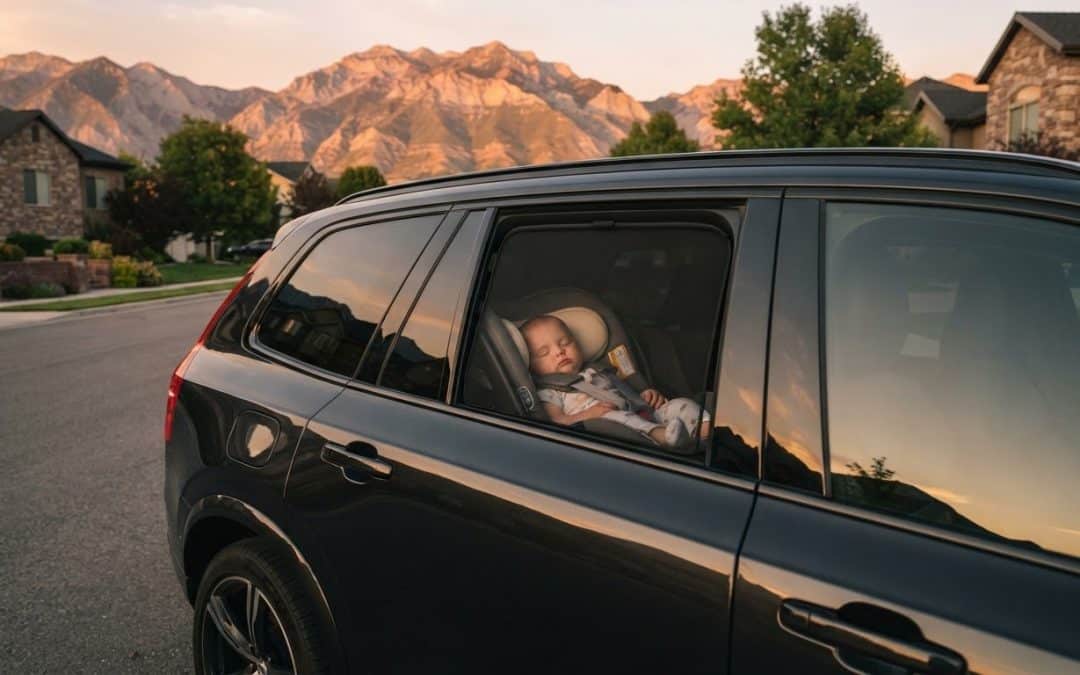
Tinted windows can reduce a baby’s exposure to ultraviolet light, but they don’t replace a sun shade when direct sunlight reaches the back seat. The best UV protection car tint for a baby can block up to 99% of harmful UVA and UVB rays, yet no tint blocks all harmful rays or fully softens low-angle sunlight.
It makes sense to want UV protection and a more comfortable ride for your child. The right film can also help reduce heat and protect the car’s interior from fading, but films differ in how they handle heat, light, and electronics. This guide compares dyed, metalized, carbon, and ceramic films, explains when a baby sun shade may still help, and covers Utah tint rules so you can make a more informed choice for the back seat.
Key Takeaways
- Compare film types by more than shade: ceramic film is described as offering the strongest heat and UV protection among the options discussed.
- A sun shade may still help when direct, low-angle sunlight reaches your baby, even with protective window film.
- Tint can reduce solar heat, but it doesn’t make a parked car safe for a child to be left alone in.
- Utah tint rules make visible light transmission and reflectiveness important considerations, particularly for front windows.
- UV rays contribute about 40% of vehicle fading, so learn how tint can help protect interior surfaces alongside other fading factors.
What Is the Best Window Tint to Protect Children in the Backseat?
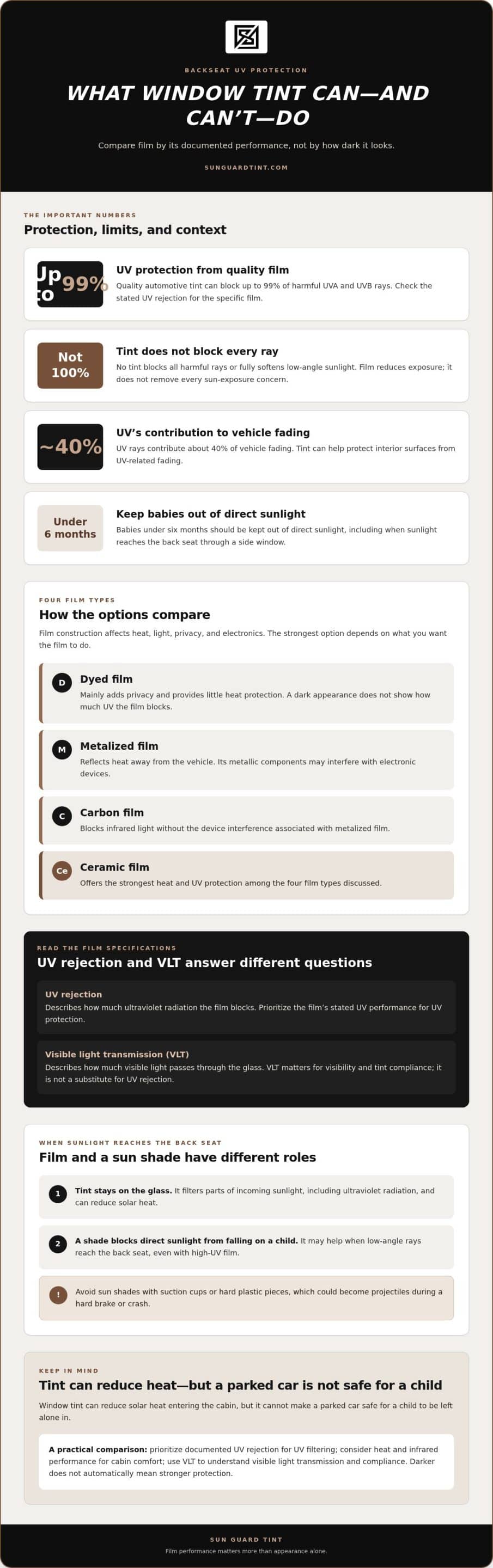
For backseat UV protection, choose automotive film with strong UV rejection, not simply the darkest appearance. Quality car window tinting can block up to 99% of harmful UVA and UVB rays, but no tint blocks 100%.
UV Transmission Through Side and Rear Windows
UVA transmission means long-wave ultraviolet radiation passes through vehicle glass, including side windows. Ordinary automotive glass blocks most UVB, but UVA can still pass through clear side glass and reach skin in the back seat. This matters when a child rides beside a window on a sunny trip. Babies under six months should be kept out of direct sunlight.
Rear-seat sun exposure can change as the vehicle turns or sunlight shifts across the cabin. A child seated on the sunny side, for example, may receive direct rays through the side window while the opposite seat remains shaded. Glass can reduce some exposure, but clear side glass does not eliminate UVA reaching skin.
How Tint Filters Sunlight and UV Radiation
Automotive window tint is a film applied to glass that filters parts of incoming sunlight, including ultraviolet radiation. Quality film can block up to 99% of harmful UVA and UVB rays, helping reduce exposure and protect the interior from UV-related fading. A dark appearance alone doesn’t show how much UV the film filters. For a closer look at automotive window tint options, consider the film’s stated performance.
A sun shade and window tint have different roles: film stays on the glass, while a shade can block direct sunlight from falling on a child. Even high-UV film may not fully soften low-angle sunlight, so a shade can help when rays reach the back seat. Avoid shades with suction cups or hard plastic pieces, which could become projectiles during a hard brake or crash.
UV Rejection and Visible Light Transmission
UV rejection describes how much ultraviolet radiation a film blocks; visible light transmission (VLT) describes how much visible light passes through glass. For UV protection, prioritize the film’s stated UV rejection rather than judging performance by darkness alone. VLT matters for visibility and tint compliance, while a film with high UV rejection can look light. Utah tint rules are covered separately in this guide.
Professional automotive tinting costs in the United States depend on the vehicle, glass coverage, film type, and installation scope; pricing is provided after a quote request. Installation time also varies with the vehicle and the number and shape of its windows.
After installation, keep the windows rolled up for a few days while the film cures. Clean tinted glass with an ammonia-free cleaner and a soft cloth. These care steps help preserve the film’s finish as it settles.
Window tint and safety film are not interchangeable: UV filtering does not establish shattered-glass protection. Do not assume ordinary tint will hold broken glass together. Choose film for the protection it is designed to provide.
Comparing dyed, metalized, carbon, and ceramic films
Film construction affects how tinted windows manage heat, light, and electronics. Dyed film mainly adds privacy and provides little heat protection. Metalized film reflects heat, but its metallic components may interfere with electronic devices. Carbon film blocks infrared light without interfering with devices. Ceramic film offers the strongest heat and UV protection among these four types. For parents choosing a backseat shield, these differences matter more than appearance alone.
Dyed film can darken glass, but darkness does not indicate how much harmful UV it blocks. It may suit someone prioritizing privacy, but it offers less heat protection than the other types described here. Metalized film reflects heat away from the vehicle, which can support cabin comfort. Its possible effect on electronics is a trade-off to consider, especially for drivers who rely on in-car devices.
Carbon film blocks infrared light, a part of sunlight that contributes to warmth. It also avoids the device interference associated with metalized film. Ceramic film is the strongest option in this comparison for heat and UV protection. That combination may appeal to adults concerned about prolonged sun exposure, which is linked to increased skin cancer risk and other skin conditions. Film complements, rather than replaces, sensible sun protection for a child.
Names such as 3M Crystalline, Ceramic IR, and XP can appear in film discussions, but a label alone doesn’t tell you how a particular film performs. Compare the stated UV rejection and visible light transmission for the exact film being considered. UV rejection describes ultraviolet filtering, while visible light transmission describes how much visible light passes through the glass. Those figures answer different questions, so don’t use one as a substitute for the other.
A parent focused on backseat UV protection may prioritize a film’s UV performance, while someone also managing a hot cabin may weigh infrared and heat rejection. A darker look does not automatically mean stronger protection. Among the types listed, ceramic film offers the strongest heat and UV protection, while carbon film blocks infrared without device interference. Dyed and metalized films have different trade-offs.
Choose based on the protection you need, not the darkest appearance or most familiar label. The best UV protection car tint for a baby is the option whose documented performance matches your priorities, while maintaining suitable visibility. Explore automotive window tint options as you compare film types. No film removes every exposure concern, so shade placement and time in direct sunlight still matter.
Can my child overheat in a tinted car?
Yes. Window tint can reduce solar heat entering a cabin, but it cannot make a parked car safe for a child. Infrared radiation contributes to the warmth felt in sunlight and to a sunlit car’s rising cabin temperature.
Tinting and Cabin Temperature
Automotive tint filters sunlight through the glass, which can help reduce heat entering the cabin. The comfort difference depends on the film’s heat-rejection performance, the vehicle’s glass, and how directly sunlight reaches it. A back seat beside a sunny window, for example, may feel warmer than a shaded seat. Tint can improve comfort, but it does not control every source of heat.
Infrared radiation is one contributor to that warmth. Heat-rejecting film can reduce some solar heat gain, but it does not cool a car like air conditioning. Cabin temperature also responds to sunlight entering through untinted glass, the vehicle’s exposure, and whether it is parked or moving. A shaded parking spot may limit direct sun, but it does not replace supervision or safe transport practices.
Heat Comfort and Child Overheating
Cabin comfort and overheating are different concerns, so tint should not be treated as a safeguard against heat-related danger. Even with tinted windows, never leave a child alone in a parked car. Sunlight can heat the cabin, and film does not stop that temperature rise or make the vehicle safe to leave unattended.
Think of tint as one part of a comfort plan, not a stand-alone safeguard. During a drive, a parent can monitor the child and adjust the vehicle’s climate controls as needed. If sunlight falls directly across the child’s seat, a sun shade may help soften that exposure. Film may not fully soften low-angle sunlight, so tint and a shade address different parts of the problem.
Ceramic film is described as offering the strongest heat and UV protection among the film types discussed. Its heat performance is relevant when cabin comfort is a priority, but it does not promise a particular cabin temperature. Seat position, sun direction, and vehicle use all affect how warm the back seat feels.
Keep the distinction clear: reduced heat and harmful UV exposure can support safety and comfort, but neither means a child can remain in a parked vehicle. Tint also doesn’t eliminate all harmful UV rays. Choose film for the protection it provides during travel, use shades when direct sunlight reaches the child, and never rely on either measure to make an unattended car safe.
State tint regulations
Utah drivers need to consider both UV protection and visibility rules for tinted vehicle windows. State tint regulations can limit window darkness and reflectiveness, especially on front windows.
State Tint Laws and Light Transmittance
Visible light transmission, or VLT, is the amount of visible light that passes through tinted glass. It matters because a film’s UV performance and darkness are different properties. A light-looking film can still filter UV rays, while darker glass reduces the light entering the cabin.
Tint darkness and reflectiveness are governed by state-specific rules, particularly for front windows. Before installing aftermarket film, understand Utah’s requirements for the specific windows being tinted. Do not assume a rule for a rear window applies to a front window, or that a film legal in another state is suitable in Utah.
When comparing films, separate the performance questions: UV rejection concerns ultraviolet filtering, while VLT concerns visible light. Ceramic film is described as offering strong heat and UV protection among the types discussed, but that does not establish its legal VLT. The film’s shade and reflectiveness also matter when assessing visibility and compliance with state rules.
Tint and Visibility Concerns
Tint and visibility concerns involve how much light passes through a window and how easily people can see through it. This matters when checking on a child in the back seat, driving after dark, or allowing someone outside to see into the cabin.
Dark film can make it harder to see through windows, particularly when outside light is low. For nighttime driving, consider whether the driver can see clearly through each treated window. The driver should be able to monitor a child in a car seat without compromising a clear view of the road. A bright daytime appearance does not indicate how the same glass will look after dark.
Tinted windows can also reduce visibility into a vehicle from outside, which may affect how readily a passerby can see a child during an emergency. Do not treat UV rejection as a measure of visibility: it describes a different film performance. Choose a VLT that supports clear sightlines as well as the desired UV filtering.
Picture a vehicle with dark front side glass and a child seated behind it. The film may filter sunlight yet limit views into or out of the cabin. A lighter, high-UV film may balance UV protection with visibility, but its suitability still depends on Utah’s requirements. Check the rules for each window before choosing a film, and do not assume “ceramic” means a particular darkness or legal status.
Car interior fading from sunlight
Sunlight can gradually change a vehicle’s upholstery, dashboard, and trim. Estimates attribute about 40% of vehicle fading to UV rays, while visible light transmittance contributes about 25%. Heat contributes another 25%. These figures show why fading isn’t caused by ultraviolet exposure alone. A seat near a bright side window may receive different light and heat exposure than shaded interior surfaces.
UV radiation can affect materials even when the cabin does not feel especially hot. A child’s car seat beside a side window and the exposed door panel, for example, may receive prolonged sunlight during regular drives. Over time, fabrics and plastics can lose color or change appearance. UV-filtering film can help reduce one source of exposure while also supporting passenger protection.
Visible light also plays a role in fading, according to the estimates. A vehicle parked outdoors may receive direct sunlight across its dashboard and front seats, while a garage reduces exposure when the car is parked. Tinting can filter some incoming light, but it does not remove every cause of fading. Materials, their position, and the amount of sunlight reaching them all matter.
Heat is another contributor, accounting for an estimated 25% of vehicle fading. A sunlit cabin can warm interior surfaces, including a dark dashboard or leather seat. Film designed to reject heat can address this part of the exposure, while UV rejection targets ultraviolet rays. Those are related benefits, but they describe different parts of sunlight’s effect on a vehicle.
For families, preserving the interior can matter alongside backseat comfort. A child’s seat may stay in one position, leaving the same upholstery and nearby trim exposed during repeated drives. Film can reduce incoming UV and help limit fading, but it does not guarantee that every material will retain its original color. Direct sunlight, heat, and visible light remain relevant factors.
Window film is one way to address sunlight entering through vehicle glass. Its UV rejection and heat performance describe different protections, so compare both when interior preservation is a priority. Someone concerned about fading, for instance, may consider how film handles UV and heat while also accounting for visible light. A darker appearance alone does not describe all three properties.
Fading estimates are a guide, not a precise forecast for every car. A vehicle kept outdoors, driven frequently in bright conditions, or parked with one side facing direct sun may show a different pattern from a garage-kept car. Materials also vary: fabric seats, plastic trim, and leather can show changes differently. Repeated exposure to the same surface adds to the concern.
Use the figures to understand the multiple sources involved: UV rays contribute about 40%, visible light transmittance about 25%, and heat about 25%. Reducing UV exposure can help protect the interior, but preserving a vehicle’s appearance also means considering light and heat. Film selection should reflect those priorities, along with the need for clear visibility during driving.
Sun Guard Tint: Residential Window Tinting
Sun Guard Tint provides Residential Window Tinting to help manage sunlight through home windows and protect furnishings from UV-related fading. If sunlight also affects a nursery or another room where your family spends time, residential film addresses that home setting. It is separate from automotive tint for a baby’s car rides, where vehicle film and Utah tint rules apply.
For home windows, residential window film can be a relevant option when glare, heat, or sun exposure is a concern. The right application depends on the room and what you want the film to address.
To discuss residential window tinting, contact Sun Guard Tint.
Choose protection that fits your next step
Choosing the best UV protection car tint for a baby starts with matching film performance to your family’s priorities while keeping visibility and Utah requirements in view. Treat your vehicle and property as separate decisions: the right film depends on the glass, setting, and protection you want.
For sunlight concerns at home or work, Sun Guard Tint offers Residential Window Tinting, Commercial Window Tinting, and Smart Window Film. These services address building windows, not automotive tint installation, so the next step depends on where you need protection.
If you’re considering window film for your home or business, contact Sun Guard Tint to discuss the right direction for your space. A thoughtful choice can help make everyday surroundings more comfortable and protected.
Frequently Asked Questions
Do You Need a Baby Sun Shade If You Have Tinted Windows?
A sun shade may still help if sunlight falls directly on your baby, even with tinted windows. Film filters sunlight through the glass, while a shade can block direct rays from reaching a particular part of the back seat. Consider the sun’s angle during the trip, especially when low rays enter through a side window. Avoid shades with suction cups or hard plastic pieces that could become projectiles during a crash.
Can a baby get sunburned through a car window?
Yes, UVA can pass through ordinary side glass and reach skin, so a car window does not eliminate ultraviolet exposure. Automotive film can reduce that exposure, but tinted windows do not block every harmful ray. For example, clear glass beside a rear-facing seat can still let sunlight reach a baby’s exposed skin. Keep babies under six months out of direct sunlight, and do not treat tint as complete protection.
How do I protect my baby on the sunny side of the car?
Reduce direct sun reaching the seat by using an appropriate sun shade alongside UV-filtering film. Before driving, notice which side of the vehicle will face the sun and whether sunlight reaches the baby’s position. A shade can address direct rays that film may not fully soften, particularly at a low angle. Never leave a child alone in a parked car, even if its windows are tinted.
Is darker tint better for blocking UV?
No, darkness alone does not tell you how much UV a film blocks. Visible light transmission describes how much visible light passes through glass; UV rejection describes how the film filters ultraviolet radiation. A lighter film, for example, can have high UV rejection, while a darker look does not establish UV performance. Compare the film’s stated UV rejection and VLT separately, and consider visibility when choosing tint.
Which car window tint films provide the best UVA and UVB protection for babies?
Ceramic film is described as offering the strongest heat and UV protection among dyed, metalized, carbon, and ceramic films. Quality automotive tint can block up to 99% of harmful UVA and UVB rays, but tint doesn’t block all harmful rays. Compare the stated UV rejection for the specific film, rather than relying on its color or film category alone. A shade can also help with direct sunlight.
How much UV radiation do factory-tinted car windows block?
Factory tint darkness doesn’t give you a UV-blocking percentage. The available light-transmittance figure for factory-tinted glass in SUVs, trucks, vans, and crossovers is approximately 20%, but VLT measures visible light, not UVA or UVB rejection. Treat those as separate specifications. For a family vehicle, don’t assume darker factory glass provides the same UV performance as a film with stated UV rejection.
How do ceramic, carbon, and dyed car tint films compare for UV protection, heat rejection, and price?
Ceramic film offers the strongest heat and UV protection among the film types discussed. Carbon film blocks infrared light without interfering with devices, while dyed film mainly adds privacy and provides little heat protection. Price depends on film type, vehicle, and glass coverage, and is provided after a quote request. Compare UV performance, heat handling, and visibility before weighing cost.
How can parents reduce a baby’s UV exposure in a car beyond installing window tint?
Combine UV-filtering film with a sun shade when direct sunlight reaches the back seat, and plan stops where the vehicle can be parked away from direct sun. Check whether sunlight shifts onto the baby during longer drives, then adjust the shade as needed. Keep babies under six months out of direct sunlight. Tint and shades do not make it safe to leave a child unattended in a parked vehicle.

Article by
Sun Guard Tint