

A faded cushion cover doesn’t automatically mean its foam is damaged. To stop sun fading on furniture in Provo, reduce the sunlight reaching it: UV light breaks down dyes, while visible light and solar heat also contribute to fading. Window film can block up to 99% of harmful UV light, but it can’t prevent all furniture fading.
It’s natural to focus on the fabric you can see, but sunlight can affect more than a cushion’s appearance. If you’re looking for ways to stop sun fading furniture in Provo, it helps to understand what contributes to fading, how window orientation and direct exposure matter, and how reducing UV entering through glass can help protect upholstery and the materials beneath it.
You’ll also learn what window film can and can’t do, why UV protection alone isn’t the whole answer, and how practical steps such as limiting direct sunlight can help furniture last longer. The goal is to clarify your protection options without mistaking visible fading for proof of damage inside a cushion.
Key Takeaways
- Furniture can fade even when sunlight passes through standard window glass, so consider which rooms and pieces receive the most direct exposure.
- UV light is only part of the problem; visible light, solar heat, and other factors also contribute to fading.
- Window film can reduce harmful UV entering through windows, but it can’t eliminate every cause of furniture fading.
- Consider the sunlight reaching both upholstery and cushions when deciding where added window protection could help.
1. UV exposure through closed blinds and standard window glass
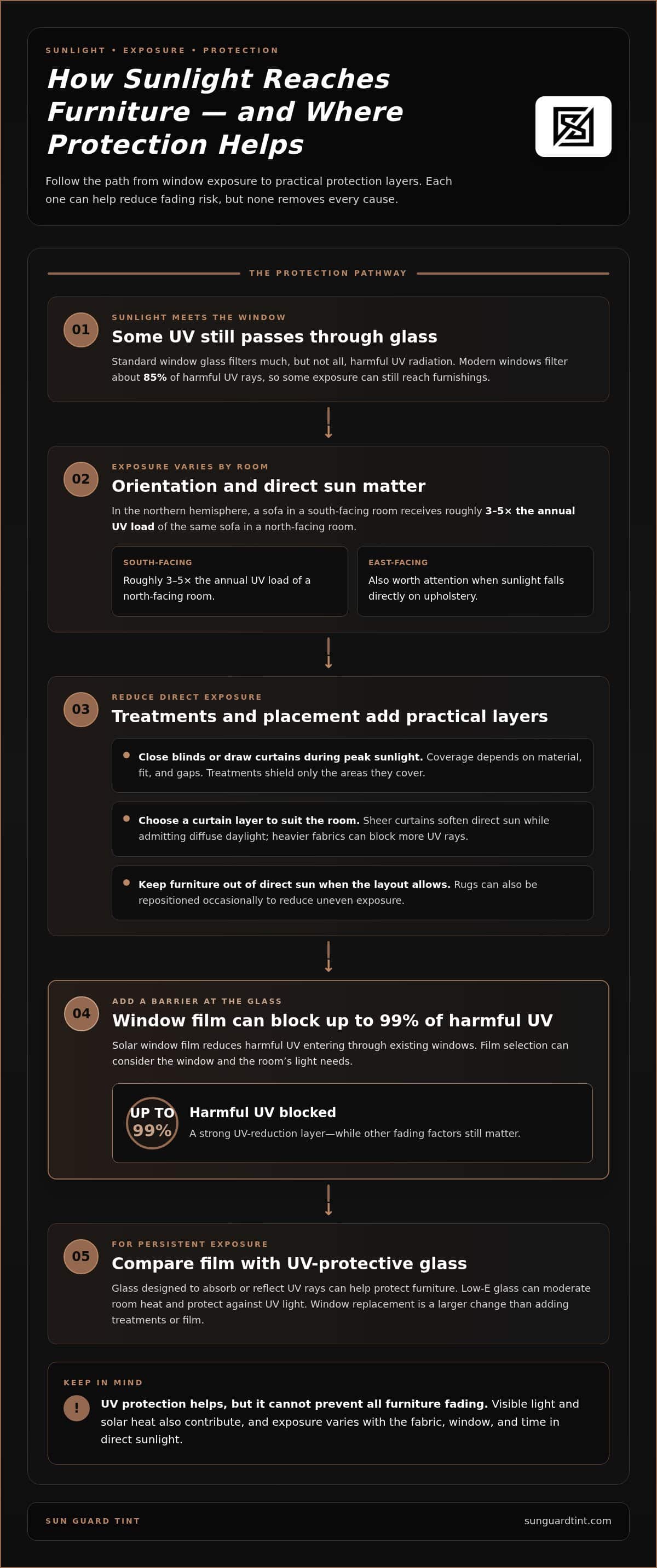
Closed blinds can reduce direct sunlight on a sofa, but they don’t remove every fading risk. Standard window glass filters much, but not all, harmful UV radiation. Modern windows filter about 85% of harmful UV rays, leaving some exposure to reach furnishings. A closed blind adds another layer between the glass and a chair, rug, or curtain, yet coverage depends on the blind’s material, fit, and gaps.
Window orientation helps identify which pieces may need more protection. In the northern hemisphere, a sofa in a south-facing room receives roughly three to five times the annual UV load of the same sofa in a north-facing room. East-facing rooms also deserve attention, especially when sunlight falls directly on upholstery. Track the sun across the room during the day and note whether a cushion, curtain, or rug sits in a bright patch for long periods.
Window treatments can limit exposure without replacing glass. Drawing curtains or closing blinds during peak sunlight hours can help protect furniture from fading. Sheer curtains soften direct sun while admitting diffuse daylight; heavier fabrics can block more UV rays. However, curtains shield only the areas they cover. A sofa beside an uncovered window may still receive radiation, and exposed furniture can receive light whenever treatments are open.
Furniture placement provides another practical layer of protection. When the layout allows, move fabric pieces away from windows and out of direct sunlight. For example, shifting an armchair beyond the bright strip on the floor can reduce direct exposure. Rugs can also benefit from occasional repositioning, since sunlight may leave visible differences between covered and exposed areas. These steps reduce exposure, but they don’t change how much UV passes through the glass.
For a more consistent barrier, window film can reduce harmful UV entering through existing windows. Solar window film can block up to 99% of harmful UV light, although no film prevents 100% of furniture fading. Fading also has other causes, including visible light and solar heat. Professional film selection considers the window and the room’s light needs, rather than treating every pane as identical.
Replacing windows with UV-protective glass is another option for rooms with persistent exposure. Glass designed to absorb or reflect UV rays can help protect furniture, while low-E glass can moderate room heat and protect against UV light. Since window replacement is a larger change than adding treatments or film, first compare the affected windows and existing frames. If you want to protect furnishings while keeping your current windows, film directly addresses UV entering through the glass.
2. UV light, visible light, and infrared heat
Sunlight reaches upholstery as more than one kind of energy. Ultraviolet light accounts for about 40% of furniture fading, while visible light and infrared heat contribute to the remaining solar-related damage. That distinction matters: blocking UV alone can’t stop every change in fabric color. A cushion may still fade where bright daylight and warmth repeatedly reach its surface.
Infrared energy is experienced largely as heat. A sunlit sofa or armchair can warm up beside a window, and prolonged solar heat contributes about a quarter of the furniture fading seen in homes. Heat can also make a sunny seating area uncomfortable, prompting people to close blinds and lose daylight. Reducing the solar energy entering through glass can address heat and brightness together.
Visible light plays a different role from UV radiation, but it can still affect vulnerable materials. Red and dark fabrics may show a contrast between sun-exposed areas and sections protected beneath cushions or throws. A pale rug beside a bright window may develop a noticeable difference between covered and uncovered areas. Exposure varies with the fabric, the window, and how long sunlight reaches the same spot.
Window film can help manage more than UV. Some window films can repel up to 71% of solar energy, which can reduce the energy entering a room through the glass. Less incoming solar energy can mean less heat buildup and less intense sunlight on nearby pieces. Film performance varies by product, so consider the room’s orientation, existing glass, and desired daylight when choosing protection.
For a simple comparison, notice how the room feels and looks before changing its window treatment. A sheer curtain softens direct sunlight while allowing diffuse light through. Closing blinds during peak sun can further limit exposure, though it also reduces visible light in the room. Replacing the current treatment on a bright, uncomfortable window with solar film can help address incoming energy without relying only on closed blinds.
Film that targets UV alone won’t eliminate fading, because visible light and infrared heat remain part of the equation. A solution should account for the room’s brightness, heat, and furnishings, not just one part of the spectrum. For Provo homes where sunlight reaches seating areas for long periods, residential window film offers a way to manage solar energy at the glass while helping protect furniture.
3. Causes of furniture fading
Furniture fades when prolonged sunlight changes the color of exposed materials. Ultraviolet rays can trigger photodegradation, a process that breaks down chemicals in fabric and carpet dyes. The change may appear first on a sofa arm facing a bright window, while the shaded side retains more of its original color. Cushions can also develop uneven color where exposed edges receive light but covered centers do not.
Exposure is only part of the explanation; material and color affect how clearly fading appears. Dark colors generally fade faster than lighter ones, and red fades fastest. Silk is more susceptible than cotton. For example, a red silk cushion near a sunny window may show a sharper contrast with a protected area than a pale cotton cushion in a shaded corner.
Time in direct sunlight matters, too. Standard cotton or polyester-blend fabric in a high-UV room can show significant color change within one to two summers. Fabric that looks unchanged in February may look different by September after months of exposure. A curtain facing the sun can also fade on its window-facing side, while folds and sections hidden behind furniture retain more color.
Sunlight isn’t the only contributor. Miscellaneous causes unrelated to windows account for 10% of furniture fading. Wear, contact, and other conditions can affect an item differently from sun exposure, so a single pale patch doesn’t automatically identify the cause. Compare exposed and protected areas: a clear difference between the two points toward sunlight as a contributor, while widespread wear may have another explanation.
Fading affects visible surfaces first, but the cushion’s construction matters when assessing what has changed. Upholstery fabric and its dyes receive light directly; foam beneath an intact cover is shielded from direct sunlight by the fabric. A faded cover alone doesn’t prove the foam has faded or deteriorated. If a cushion has lost its shape or comfort as well as color, those are separate signs from surface fading.
Fabric designed for outdoor use is sturdier than indoor fabric because it’s engineered to withstand the elements. It isn’t immune to prolonged exposure, but its construction can be a relevant distinction in a sunny room. By contrast, delicate indoor textiles beside direct sunlight may show wear sooner. For an expensive piece, consider its fabric type, color, and placement, not just its age.
To stop sun fading furniture in Provo, distinguish the visible symptom from its likely cause. Look for uneven color on window-facing surfaces, compare covered sections, and consider whether the material is silk, cotton, or a polyester blend. These clues can help show whether sunlight is affecting the finish. Changes in cushion comfort call for a separate assessment.
4. Film tint and fade protection
Window film puts a protective layer at the glass, reducing some solar exposure before it reaches upholstery, rugs, and cushion covers. Solar window film can block up to 99% of harmful ultraviolet light. That makes it a useful option for bright rooms where fabrics receive regular sunlight. It doesn’t prevent 100% of furniture fading, because other parts of sunlight and non-window causes also contribute.
Protection depends on more than a film’s UV performance. Visible light can still affect fabrics, and solar heat also contributes to fading. A film that addresses UV may reduce one important source of damage without stopping all color change. When evaluating film for a window, consider the furniture’s exposure, the room’s heat and glare, and how much daylight you want to preserve.
Film can help protect upholstery and cushion components by reducing sunlight entering the room. The cover receives direct light first, while foam beneath intact fabric is shielded from direct exposure. A film barrier can reduce incoming UV before it reaches either surface, but a faded cover alone doesn’t establish that the foam has been damaged. Changes in cushion shape or comfort are separate from visible color loss.
Film also offers an alternative to keeping blinds closed through every bright afternoon. Window film can reduce UV while allowing natural light and the view to remain, so the room can stay bright without relying solely on curtains. This can help in a living room where a sofa sits near a sunny window or in a bedroom where fabrics receive repeated exposure during summer.
For a practical assessment, identify the windows that illuminate fading-prone pieces, then consider the glass, room orientation, sunlight patterns, and desired brightness together. A south-facing window shining directly on a rug or sofa may call for a different approach from a shaded north-facing room. These details help match the film choice to the exposure instead of treating every pane alike.
Film installation quality matters because the protective layer must be applied to the glass as intended. High-quality solar film is best installed professionally. A professional installer can assess the window and the room’s needs, including heat and glare as well as UV protection. This is especially relevant for delicate fabrics or furniture with a visible difference between sun-exposed and covered areas.
Ultimately, film works as part of a layered plan: reduce direct exposure with window treatments or furniture placement, then address sunlight entering through the glass. That combination can help preserve fabrics while maintaining a comfortable, bright interior. Film is a preventive measure, not a way to reverse fading that has already occurred.
5. Does Provo’s high elevation or sunny climate increase UV damage indoors?
Provo’s elevation alone doesn’t explain how quickly indoor furniture fades. The key issue for a sofa is sunlight reaching its fabric through a window. The glass, window direction, time in direct light, and furniture placement all shape exposure. A chair in a sunlit window bay can receive more direct exposure than a similar chair across the room.
Utah’s sunny conditions can make window exposure noticeable, but UV rays are present on cloudy days and during cold weather, too. They’re strongest during warm summer months, when sunlight may reach a room for longer periods. A cloudy February day doesn’t eliminate UV exposure, and a bright summer afternoon can intensify it. Seasonal changes make consistent protection more useful than relying on the weather.
Window orientation offers a practical way to assess a room in Provo. South-facing windows receive substantial direct sun over the day, while east-facing glass brings morning light. A north-facing room may have a different exposure pattern, but furniture can still receive reflected daylight. Note which cushion, curtain, or rug sits in the brightest area and whether the light shifts as the day progresses.
Elevation and outdoor UV conditions don’t translate directly into the dose reaching a cushion indoors. Standard window glass filters much harmful UV while still allowing some exposure through. Curtains and blinds can add a barrier, but their protection depends on whether they cover the window and the furniture. For example, a curtain drawn over glass won’t shade a sofa beyond its coverage if sunlight enters elsewhere.
Assess each room rather than assuming every Provo window creates the same risk. Note the direction of the glass, when sunlight lands on upholstery, and any color difference between exposed and covered fabric. A pale outline beneath a cushion can reveal uneven exposure. A change across a whole seat may also reflect wear or other causes, so compare several surfaces before deciding what needs protection.
For rooms with persistent direct sunlight, reduce exposure at the window and consider film as part of the protection plan. Window film can reduce harmful UV entering through glass, while curtains or blinds can further limit direct light at selected times. The combination can help protect vulnerable furnishings without relying on Provo’s weather forecast to determine indoor exposure. Explore window protection options for rooms where sunlight regularly reaches furniture.
Sun Guard Tint: Residential Window Tinting
Sun Guard Tint provides Residential Window Tinting to help reduce sunlight entering through home windows. It’s a practical next step when you’ve identified furniture exposed to recurring direct sun and want protection at the glass. Window film can block up to 99% of harmful UV light, helping protect upholstery and cushion materials from one source of fading. It can’t prevent every cause, since visible light, solar heat, and other factors also contribute.
Residential window tinting can suit living rooms, bedrooms, or other spaces where furniture sits near bright windows. The right approach considers the affected rooms and the balance between solar protection and natural light. To discuss Residential Window Tinting for your home, contact Sun Guard Tint.
Protect the comfort and character of your home
Furniture is part of how a room feels, from a favorite reading chair to the cushions where family gathers. To stop sun fading furniture in Provo, make window protection part of your home’s long-term care. A considered film choice can complement your furnishings and help maintain a comfortable, light-filled space.
Sun Guard Tint offers Residential Window Tinting for homes, along with Commercial Window Tinting and Smart Window Film. The right service depends on the space and the protection you want to prioritize. If you’re ready to consider a film solution for your windows, contact Sun Guard Tint about window film. A thoughtful next step can help you care for the rooms and furnishings you value.
Frequently Asked Questions
Does sun damage affect the foam inside cushions, not just the fabric on top?
Sunlight reaches cushion foam directly if the upholstery is torn, open, or missing. With an intact cover, the fabric sits between the window and the foam, so fading on the outside doesn’t by itself show that the interior has changed. Check for separate signs, such as a cushion that feels less supportive or no longer holds its shape. Those changes concern comfort and structure, not just color.
Does the direction your windows face affect how quickly your furniture fades?
Yes, window direction affects when and how directly sunlight enters a room. In Provo, note whether morning light from an east-facing window lands on an armchair or later sunlight reaches a sofa near a south-facing window. Furniture location within the room matters, too. Two pieces in the same house can receive very different exposure because one sits in the sun’s path and the other does not.
What can you do right now to slow down sun damage to furniture and upholstery?
Start by limiting direct exposure to the piece that concerns you most. Close its curtain or blind during the sunniest part of the day, or use a temporary cover while the room is unoccupied. If strong sunlight repeatedly reaches the same spot, consider professional window film as a more consistent layer at the glass. These measures help limit future exposure; they won’t restore color that has already faded.
How does sunlight fade furniture and fabrics?
Sunlight gradually alters dyes and finishes on exposed surfaces. To spot the pattern, compare a cushion’s visible face with the fabric tucked underneath it. The difference can show how exposure affects that specific material and color. Fading may appear gradually, so no obvious change on a particular day doesn’t mean the fabric has had no exposure.
What are the best ways to prevent sun fading on furniture?
Use more than one protective measure, since each addresses a different part of the problem. Window film reduces harmful UV entering through glass, while curtains or blinds can provide shade at particular times. When the room layout allows, keep valuable upholstery out of persistent direct light. For an heirloom chair or delicate textile, consider its material and placement before deciding which windows need added protection.
Do UV-blocking window films reduce furniture fading?
Yes. UV-blocking film can reduce a major source of fading by limiting ultraviolet light entering through the window. It won’t stop every change, since visible light, solar heat, and factors beyond the window can also affect furnishings. Film is best understood as preventive protection for the room, not a treatment that reverses discoloration already present on a sofa, curtain, or rug.
How should furniture be positioned to avoid direct sunlight?
Place upholstered pieces outside the bright path cast by windows rather than directly opposite sunlit glass. For example, a sofa along a side wall may avoid the concentrated light that falls on a seat near the window. Consider the room at different times of day, since sunlight shifts. If moving a large piece isn’t practical, shade the window or consider film for that pane.
Are there local Provo businesses that install UV window film or repair faded furniture?
Sun Guard Tint provides residential window tinting for homes in Provo and nearby communities, including West Jordan, Salt Lake City, Orem, Lehi, Payson, Spanish Fork, South Jordan, and Saratoga Springs. Window film helps address ongoing sun exposure at the glass. It won’t restore upholstery that has already faded, so consider the furniture’s condition separately from the need for window protection.

Article by
Sun Guard Tint