

What if your windows could actively lower your cooling costs while shielding your family from 99% of harmful UV radiation? Many homeowners struggle with excessive heat in south-facing rooms and the slow destruction of expensive hardwood floors due to sun exposure. Upgrading home window tint is no longer just about adding shade; it’s a technical property enhancement designed to protect your interior assets and optimize your home’s climate control.
You deserve a living space that feels private and comfortable without sacrificing natural light. We understand that your home is a major investment that requires high-quality, professional solutions to maintain its value. This guide will show you how modern window film technology transforms energy efficiency and glass safety. We will also explore the latest performance standards and the 30% federal tax credit available for these sophisticated upgrades, ensuring your property remains both beautiful and secure.
Key Takeaways
- Learn to identify the telltale signs of aging film, such as bubbling or a purple hue, and why upgrading home window tint is essential for maintaining your property’s value.
- Discover how advanced ceramic technology provides superior heat rejection to stabilize indoor temperatures and lower your cooling costs during the summer.
- Understand the protective benefits of safety and security films that reinforce your glass against impacts and prevent dangerous shattering.
- Explore the modern aesthetic and functional possibilities of smart window film and decorative options for on-demand privacy and style.
- Gain insight into why a professional evaluation and precision installation are necessary to ensure the longevity and performance of your window upgrades.
Signs It’s Time for Upgrading Home Window Tint & Modern Benefits
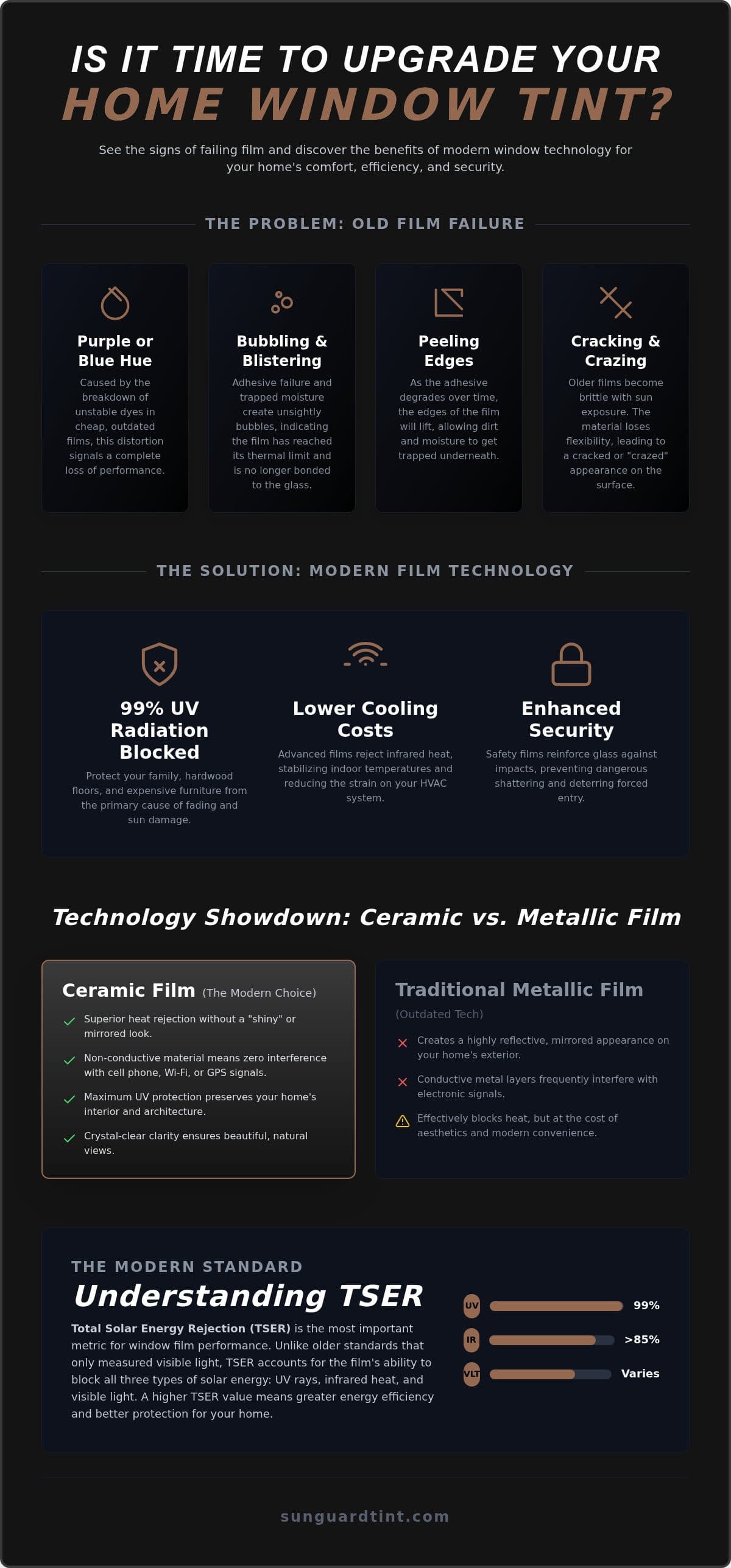
Recognizing when your current window protection has reached its limit is the first step toward reclaiming your home’s comfort. Many Salt Lake Valley residents notice visual degradation long before they realize the performance has vanished. If your windows display a distorted “purple” hue, you’re looking at the breakdown of cheap, dyed films that lack the chemical stability of professional-grade materials. Upgrading home window tint allows you to move past these outdated materials toward multi-functional solutions that prioritize both clarity and protection. Common signs of material failure include:
- A distorted “purple” or “blue” tint caused by dye degradation
- Bubbling or “blistering” across the glass surface
- Peeling edges where the adhesive has reached its thermal limit
- Visible cracking or a “crazed” appearance in the film’s top coat
Modern film technology has evolved significantly over the last decade. While older products focused solely on darkening a room to block light, today’s options provide sophisticated solar control without making your home feel like a cave. This shift helps reduce your property’s carbon footprint by decreasing the demand on your HVAC system. It essentially turns inefficient glass into a high-performance thermal barrier that preserves your interior assets while maintaining a welcoming atmosphere.
Detecting Performance Failure in Older Films
Older films often lose their UV-blocking capabilities long before they start to peel. This “silent failure” means your hardwood floors and upholstery are vulnerable to fading despite the presence of a tint. You can often identify this by the tactile state of the material; failed films become brittle and may flake off when touched. When the performance declines, you’ll notice significant temperature spikes in south-facing rooms, signaling that the thermal bond has broken. For a comprehensive overview of window film and its historical development, it’s clear that older polyester layers simply weren’t built for the longevity we expect from modern installations.
The 2026 Standard for Residential Window Performance
The industry has moved toward Total Solar Energy Rejection (TSER) as the primary metric for quality. Unlike simple visible light transmission, TSER measures the film’s ability to block infrared heat and UV rays simultaneously. Modern residential window film utilizes advanced PET (polyethylene terephthalate) technology. This ensures crystal-clear views while maintaining a neutral, almost invisible aesthetic. Homeowners no longer have to choose between a “tinted look” and high performance. These new standards focus on preservation and efficiency, allowing you to shield your interior assets while enhancing the natural beauty of your architecture. Upgrading home window tint ensures your glass meets these rigorous 2026 standards for durability and safety.
Maximizing Energy Efficiency with Advanced Thermal Upgrades
Energy efficiency in a modern home goes far beyond standard insulation and weather stripping. For many homeowners in the Salt Lake Valley, upgrading home window tint is the most effective way to address thermal imbalances caused by large glass surfaces. Modern films act as a sophisticated filter, selectively blocking the infrared spectrum responsible for heat while allowing natural light to illuminate your rooms. This precise climate control stabilizes your indoor environment, ensuring that south-facing rooms remain as comfortable as the rest of your home even during the most intense summer afternoons.
By effectively managing solar heat gain, you significantly reduce the daily strain on your HVAC system. When your air conditioner doesn’t have to cycle constantly to fight rising temperatures, you extend the operational lifespan of the compressor and other expensive components. This proactive approach to property maintenance safeguards your mechanical investments while lowering your monthly utility demands.
Ceramic vs. Traditional Metallic Films
In the past, high-performance tinting often required a metallic layer that created a mirrored, reflective look on the home’s exterior. While effective at blocking heat, these films frequently interfered with cell phone signals and Wi-Fi connectivity. Ceramic Window Tint is a non-conductive, non-metallic material that blocks up to 99% of UV rays. It’s the preferred choice for modern residential upgrades because it offers superior heat rejection without the “shiny” aesthetic or signal disruption. You get the protection of a high-end shield with a neutral finish that preserves your home’s original architectural beauty.
Combatting the Utah Sun: A Local Climate Perspective
Living in West Jordan or Salt Lake City presents a unique environmental challenge. Our high-altitude location means the sun’s rays are more intense, carrying a higher UV index than coastal regions. This concentrated solar energy accelerates the fading of high-value interior assets, including custom cabinetry, fine art, and designer upholstery. A professional residential window film installation provides a critical layer of defense against this altitude-driven damage.
Upgrading home window tint ensures that your property is equipped with the latest low-emissivity (Low-E) technology, which helps manage heat year-round. These coatings work to keep heat outside during the summer and retain internal warmth during our freezing Utah winters. If you’re ready to see how these materials look in real-world settings, you can view our recent projects to find the perfect match for your home’s architecture.
Enhancing Home Security and Privacy with Protective Film Upgrades
While thermal comfort is a primary concern for many, true peace of mind comes from knowing your property is physically secure. Upgrading home window tint often involves a transition from basic solar control to specialized safety and security layers. These advanced materials provide a dual benefit: they maintain aesthetic consistency across your architecture while creating a formidable barrier against external threats. High-performance privacy films allow you to enjoy your daytime views and natural light without the discomfort of knowing outsiders can peer into your private living spaces.
Security films are engineered with multiple layers of heavy-duty polyester and aggressive adhesives. In the event of an impact, whether from a severe storm or an attempted “smash and grab” burglary, the film holds the glass fragments together within the frame. This prevents the glass from shattering inward, which is a leading cause of injury during accidents. By making forced entry significantly more difficult and time-consuming, these films act as a powerful deterrent that protects both your family and your valuable interior assets. It’s important to understand that while no film makes glass “unbreakable,” these professional upgrades buy you the critical time needed for an emergency response.
Reinforcing Vulnerable Entry Points
The most effective security strategy focuses on ground-floor windows and glass entry doors, which are the most common points of entry for intruders. When you invest in a professional installation for residential window film, the material is precision-cut to the edge of the frame to provide maximum resistance. This physical reinforcement works in tandem with your existing home alarm systems. While the alarm alerts you to a breach, the security film provides a structural delay, often forcing an intruder to abandon their attempt due to the unexpected difficulty of penetrating the glass.
Balancing Natural Light and Total Privacy
Achieving privacy doesn’t mean living in a dark, shuttered environment. Modern upgrades include frosted, etched, and patterned options that are perfect for bathrooms or bedrooms. These films allow soft, diffused light to enter while completely shielding the interior from view. For those working from home in the Salt Lake Valley, cloaking window tint offers a revolutionary solution for home offices. This technology obscures digital screens from outside view while keeping the glass transparent to the naked eye. This ensures your sensitive data remains protected without sacrificing the open feel of your workspace. These specialty upgrades prove that you can optimize your home’s functionality while maintaining a high-end, professional appearance.
The Future of Your Windows: Smart Film and Specialty Upgrades
The evolution of window technology has reached a point where your glass can be as responsive as your smartphone. Upgrading home window tint now includes the integration of active materials that change their properties based on your immediate needs. While traditional films provide constant protection, specialty upgrades offer on-demand solutions for privacy, aesthetics, and even hygiene. These innovations allow you to solve complex architectural challenges, such as maintaining an open-concept feel while ensuring specific areas can be shielded at a moment’s notice.
Modern homeowners are increasingly looking for ways to blend high-tech functionality with their existing decor. These specialty films don’t just sit on the glass; they transform the way you interact with your environment. Whether you’re looking to eliminate the need for dusty blinds or want to prevent mirrors from fogging in a home spa, the latest developments in film science provide a precise, high-end solution for every room in your house.
Switchable Privacy at the Touch of a Button
At the forefront of this movement is smart window film, which utilizes Polymer Dispersed Liquid Crystal (PDLC) technology. When an electrical current is applied, the crystals align to make the glass transparent; when the current is cut, they scatter to create an opaque, private barrier. This technology is becoming a staple in modern Salt Lake Valley homes, particularly for master suites and large bathroom windows. You can integrate these systems with home automation platforms like Alexa or Google Home, allowing you to transition your entire living space from “open” to “private” with a simple voice command.
Decorative and Functional Interior Enhancements
The transformation doesn’t stop at your exterior windows. Many homeowners are now using interior office tinting to define workspaces within their homes. These decorative films can mimic the look of expensive etched or sandblasted glass at a fraction of the structural complexity. Whether you prefer a minimalist frosted look or a complex geometric pattern, these films add a layer of sophistication to glass partitions and doors without the permanence of custom glass replacement.
Beyond aesthetics, functional specialty films solve practical daily problems. Anti-fog coatings are a critical upgrade for high-moisture areas like home gyms, indoor pools, or steam showers. These films prevent condensation from obscuring your view, maintaining both visibility and hygiene in spaces where traditional glass would quickly become clouded. When you’re considering upgrading home window tint for the future, these specialty solutions offer the ultimate intersection of style and utility. If you are ready to modernize your property with these advanced technologies, contact us to discuss your specialty film options.
Navigating the Professional Upgrade Process in the Salt Lake Valley
Choosing the right partner for upgrading home window tint is just as important as the film technology itself. While some generic online resources suggest DIY kits as a viable option, these retail products often lead to premature failure, unsightly bubbles, and the potential voiding of your window manufacturer’s warranty. A professional installation ensures that the high-performance material is correctly bonded to the glass, providing the longevity and protection you expect from a high-end property investment. In the Salt Lake Valley, where environmental conditions range from intense high-altitude sun to freezing winters, a localized, expert approach is essential for a successful transformation.
Working with a locally owned specialist in West Jordan provides you with over 20 years of industry experience. This background is critical when transitioning from older, degraded films to modern ceramic or security solutions. Professionals don’t just apply a product; they manage a technical process that includes the safe removal of old adhesives and the precision application of new layers without damaging the glass or the surrounding frames. This meticulous attention to detail is what separates a temporary fix from a permanent property enhancement.
The Professional Assessment: More Than Just a Quote
A high-quality upgrade begins with a detailed evaluation of your home’s specific architecture. Professionals measure glass thickness and identify the type of glazing, such as tempered or dual-pane glass, to ensure the selected film is compatible. This step is vital for identifying thermal stress risks; applying the wrong film to certain types of glass can lead to heat absorption that causes the pane to crack. By customizing a film package based on the orientation of each room, an expert ensures that your south-facing windows receive maximum heat rejection while other areas focus on UV protection or privacy. This tailored strategy optimizes both your comfort and your budget.
Ensuring Long-Term Durability and Craftsmanship
The difference between a generic application and a professional result lies in the environment and tools used during the process. Experts utilize specialized cleaning solutions and high-precision cutting tools to create a clean-room effect on the glass surface. This prevents the contamination and edge-peeling often seen in amateur projects. When the installation is handled correctly, the film becomes a seamless part of the window, maintaining its clarity and bond for decades. You can explore the Sun Guard Tint gallery to see the visual impact of professional craftsmanship on local homes. This level of precision, backed by robust manufacturer warranties, provides the peace of mind that your assets are shielded by the best standards in the industry. If you’re ready to begin your property’s transformation, reach out to our West Jordan team for a professional consultation.
Secure Your Home’s Future with Advanced Window Technology
Upgrading home window tint is a strategic investment that preserves the integrity of your property while enhancing your daily living experience. By moving from outdated, failing films to modern ceramic or security-grade materials, you effectively shield your interior assets from high-altitude UV damage and stabilize your home’s climate. These advanced solutions offer more than just shade; they provide a sophisticated thermal barrier and structural reinforcement that generic retail products simply cannot match.
As a locally owned and operated business in West Jordan, we bring over 20 years of industry expertise to every project. We specialize in advanced Smart and Security films designed to meet the rigorous demands of the Salt Lake Valley climate. Our meticulous installation process ensures your glass remains a high-performance asset for years to come, backed by the reliability of professional craftsmanship.
If you’re ready to transform your property’s comfort and safety, we invite you to Request a Professional Window Tint Upgrade Consultation. We look forward to helping you protect your home while giving it the high-end finish it deserves.
Frequently Asked Questions
Can I install new window film over my old, existing tint?
No, you cannot install new film over existing tint. Layering materials prevents the adhesive from bonding correctly to the glass, which inevitably causes bubbling and peeling. When upgrading home window tint, we first perform a meticulous removal of the old layers and adhesive. This ensures the new high-performance film has a pristine surface for maximum clarity and longevity, effectively preserving your view and your investment.
Will upgrading my home window tint void my window manufacturer warranty?
While some window manufacturers have strict policies, many professional film brands offer a secondary warranty that matches your original window coverage. This secondary protection ensures that if a thermal stress fracture or seal failure occurs, you are still covered. We always review your specific glass type before installation to ensure the film is compatible, which is a key part of our specialized protector approach to property maintenance.
How long does the professional window film upgrade process take?
A standard residential project typically takes one business day to complete. If we are removing old, degraded film as part of upgrading home window tint, the process may take longer depending on the condition of the existing adhesive. We work efficiently to minimize disruption to your home while maintaining the high standards of precision required for a flawless, bubble-free finish that stands the test of time.
Does home window tinting make the inside of the house too dark?
Modern window films are designed to be virtually invisible while still providing elite protection. You can choose films with high visible light transmission that allow natural brightness to fill your rooms without the accompanying heat or UV damage. This technology ensures your home remains bright and welcoming, unlike the dark or mirrored films used in the past that often made interiors feel cave-like and gloomy.
Can modern window film really help lower my Utah energy bills?
Yes, high-performance window film significantly lowers energy bills by reducing solar heat gain. In Utah’s intense climate, this leads to substantial savings on cooling costs during peak summer months. Additionally, the Inflation Reduction Act of 2022 extended a federal tax credit through 2032, allowing homeowners to claim 30% of the cost of energy-efficient window film, up to a maximum of $600 annually for primary residences.
Is there a window film that provides privacy at night with the lights on?
Standard reflective or tinted films provide daytime privacy but lose this effect at night when interior lights are on. To achieve total privacy after dark, you must utilize specialty products like frosted films, decorative textures, or smart window film. Smart film is particularly effective because it allows you to switch from transparent to opaque at the touch of a button, ensuring your family remains shielded from outside view at all hours.
What is the difference between ceramic and carbon window films for homes?
Ceramic films offer superior heat rejection and durability compared to carbon options. While carbon film is effective at blocking UV rays and won’t fade over time, ceramic technology uses non-conductive particles to block a much higher percentage of infrared light. This makes ceramic the premium choice for homeowners seeking maximum thermal comfort without the metallic interference or signal blockage associated with older, traditional technologies.
How do I clean and maintain my new upgraded window film?
Maintaining your new film is simple but requires specific care to protect the specialized top coat. You should wait at least 30 days for the film to fully cure before the first cleaning. Once cured, use a soft microfiber cloth and a non-ammonia cleaner to gently wipe the surface. Avoiding abrasive tools and harsh chemicals ensures the material remains crystal clear and continues to perform at its peak for years.