

True climate control isn’t about darkening your living room or hiding behind heavy drapes; it’s about mastering balanced thermal performance. If you live along the Wasatch Front, you already know the frustration of an air conditioner running continuously while summer heat pours through your glass, creating unbearable glare and fading expensive hardwood floors. Investing in energy efficient window tinting West Jordan homeowners can rely on solves this exact dilemma, shielding your interior comfort while preserving crystal-clear views of the mountains.
In this comprehensive guide, you’ll discover how advanced energy-efficient window films reduce utility bills and stabilize indoor temperatures against Utah’s extreme seasonal shifts. We will examine the difference between simple solar shading and balanced thermal control, explain how ceramic and low-e technologies perform through freezing winters and scorching summers, and outline what local property owners should know to protect their valuable spaces year-round.
Key Takeaways
- Learn how advanced multi-layer ceramic and low-emissivity films control solar heat gain without darkening living spaces or obstructing mountain views.
- Discover why energy efficient window tinting West Jordan homes and businesses adopt is engineered to combat high-elevation UV intensity and severe Wasatch Front glare.
- Understand how balancing thermal transfer stabilizes room-to-room temperatures, eliminating hot spots and reducing daily strain on HVAC equipment.
- Explore how high-performance architectural films defend expensive interior investments, shielding hardwood floors and furnishings from aggressive sun bleaching.
- Find out why precision installation techniques, including multi-stage glass preparation and factory-backed warranties, ensure long-term durability and peak performance.
How Energy Efficient Window Tinting Works in Utah’s Climate
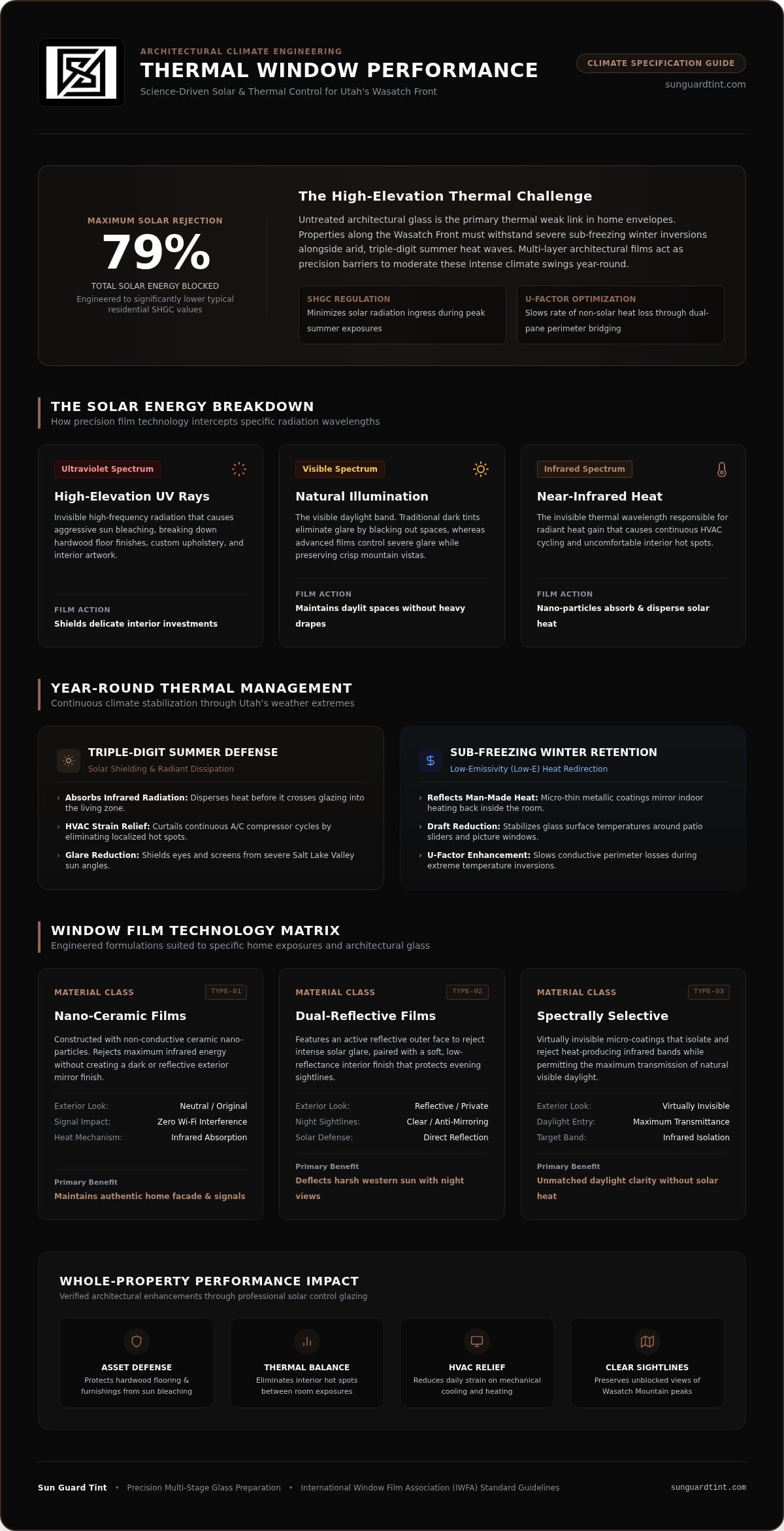
Architectural glass is often the weakest thermal link in any building envelope. While untreated dual-pane glass allows intense seasonal temperatures to penetrate indoor spaces, high-performance films function as engineered thermal regulators. Understanding how window film works begins with recognizing that modern architectural coatings are precision multi-layer polyester barriers designed to manage light, radiation, and conduction simultaneously. Properties along the Wasatch Front face unique environmental extremes, enduring sub-freezing winter inversions alongside arid, triple-digit summer heat waves. Applying energy efficient window tinting West Jordan properties need transforms basic glass into an intelligent solar shield that moderates these intense climate swings year-round.
The Science of Solar Heat Gain and Infrared Rejection
Solar energy reaches your windows in three primary bands: visible light that we see, ultraviolet radiation that degrades fabrics and artwork, and invisible near-infrared wavelengths that produce intense radiant heat. Spectrally selective ceramic nano-particles within modern films target this infrared spectrum directly. Rather than relying on dark dyes that absorb heat and darken rooms, these microscopic ceramic particles absorb and disperse infrared radiation before it crosses the glazing threshold.
Solar Heat Gain Coefficient, or SHGC, measures the exact fraction of solar radiation admitted through a window system, with lower values indicating superior heat rejection. High-performance films drop typical residential glass SHGC values significantly, blocking up to 79% of total solar energy while keeping indoor spaces naturally illuminated.
Winter Thermal Retention and Low-Emissivity Performance
Energy conservation in Utah requires balanced seasonal insulation rather than one-way summer shade. Specialized Low-E (low-emissivity) window films feature micro-thin metallic coatings that actively reflect radiant indoor heating back toward the interior during freezing winter months, reducing cold drafts near patio doors and picture windows.
Dual-pane windows naturally experience thermal bridging around glass panes and frame perimeters. Installing Low-E coatings improves the overall U-factor of existing glazing, helping slow the rate of non-solar heat loss during cold winter nights. As highlighted in our dedicated analysis of residential window tinting, these upgrades deliver consistent room-to-room temperature stability across all exposures. This exact thermal management strategy also applies to commercial spaces seeking steady comfort, as seen with specialized interior office tinting solutions that control glass-walled climate zones efficiently.
Evaluating Window Film Types for Maximum Energy Savings
Choosing the right film formulation isn’t a one-size-fits-all decision. The optimal selection balances exterior appearance, directional sun exposure, and the architectural construction of your glass panes. As recognized by the International Window Film Association, matching film properties to local climate conditions is essential for maximizing efficiency and long-term durability. For property owners seeking energy efficient window tinting West Jordan architecture demands, distinguishing between film compositions ensures you achieve peak thermal comfort without sacrificing daylight or curb appeal.
Ceramic vs Dual-Reflective vs Spectrally Selective Films
Different film technologies manage solar energy through distinct material sciences, each tailored to specific architectural needs:
- Ceramic Films: Engineered with non-conductive nano-ceramic particles, these coatings deliver exceptional infrared heat rejection without creating a shiny, mirrored exterior. They preserve the original look of your home while preventing electronic signal interference with cellular devices or home Wi-Fi networks.
- Dual-Reflective Films: Built with a reflective outer layer and a softer, low-reflectance interior finish, these films deflect punishing solar heat from suburban properties across the Salt Lake Valley. Crucially, they prevent the interior mirrored effect at dusk, allowing clear sightlines outside after sunset.
- Spectrally Selective Films: These virtually invisible micro-coatings isolate and reject invisible infrared wavelengths while welcoming abundant visible daylight, keeping rooms bright and vibrant without the associated heat buildup.
Matching Film Performance to Home Exposure and Glazing
Window orientation heavily influences which film delivers the best return on investment. West-facing windows bear the brunt of blistering afternoon heat along the Wasatch Front, requiring high solar rejection to prevent late-day thermostat spikes. South-facing glass demands steady, balanced heat rejection to counter uninterrupted sunlight throughout all four seasons.
Glass compatibility is equally vital. Modern homes often feature double-pane insulated glass units (IGUs). Applying an incompatible film with excessively high solar absorption can trap thermal energy within the sealed airspace, creating uneven expansion and risking thermal stress cracks. Consulting with experienced technicians ensures your glass is surveyed properly before installation. You can discover specialized layout options tailored to your floor plan through our residential window film solutions. If you want to see how these high-clarity films complement local architecture, explore our project gallery to view real installations.
The Financial & Environmental Return of Efficiency Tinting
Investing in thermal upgrades shouldn’t require gutting your window frames or undertaking disruptive construction. While replacing entire window units represents a massive capital expenditure with a lengthy payoff horizon, professional film retrofits transform the energy performance of existing glass quickly and cleanly. Applying energy efficient window tinting West Jordan properties need offers a fast return on investment by attacking thermal gain at the glass surface, immediately curbing excessive utility consumption and lowering household environmental impact.
Reducing HVAC Strain and Cooling Demand Peaks
During peak summer afternoons, unfiltered solar radiation pours into living spaces, forcing central air conditioning compressors into relentless duty cycles. This constant mechanical strain drives up electricity bills and accelerates component wear on expensive HVAC systems. Architectural films level this operational spike. By stopping raw solar heat before it penetrates your home, window films stabilize interior zones, eliminating the sweltering upstairs hot spots typical in multi-story suburban layouts.
This thermal balance provides continuous mechanical relief. According to findings from the U.S. General Services Administration, low-e window film retrofits in federal facilities achieved average perimeter HVAC energy savings of 29%. Similar operational gains extend directly to local enterprises managing large glazed footprints through specialized commercial window film retrofits. Additionally, commercial property managers participating in regional programs like the Rocky Mountain Power Wattsmart Business incentive can earn energy savings credits based on window orientation and film efficiency ratings.
Preserving Interior Finishes from Sun Bleaching
Protecting your property extends well beyond the monthly power bill. Interior fading is triggered by three distinct factors acting together:
- Ultraviolet Radiation: The primary culprit, responsible for roughly 40% of sun damage.
- Solar Heat: Infrared wavelengths that bake natural fibers and floor finishes, accounting for about 25% of fading.
- Visible Light: Raw daylight brightness, contributing approximately 25% to color breakdown.
- Miscellaneous Factors: Interior lighting, humidity, and fabric dye stability, making up the remaining 10%.
Museum-grade architectural films block up to 99.9% of harmful ultraviolet radiation. This level of defense preserves the rich stain of hardwood flooring, shields fine leather furniture, and prevents premature discoloration of custom window treatments. For commercial offices and workspace environments, tackling sun glare while securing complete asset preservation is easily accomplished using custom interior office tinting setups, ensuring comfortable, fade-free productivity throughout every season.
Why West Jordan Properties Require Specialized Solar Film
Geographic setting plays an overlooked role in building performance. Situated at an elevation exceeding 4,300 feet, West Jordan rests beneath a thinner atmosphere that filters out far less solar radiation than coastal or low-altitude regions. Buildings along the Wasatch Front receive roughly 25% more ultraviolet radiation than properties at sea level. Combined with radiant glare bouncing off the nearby Oquirrh and Wasatch mountain ranges, local windows face severe, concentrated exposure. Choosing energy efficient window tinting West Jordan specialists configure specifically for this terrain prevents extreme high-desert elements from degrading indoor living environments.
High-Altitude Solar Radiation and Arid Climatic Swings
Solar intensity accelerates rapidly as elevation rises. In our dry Great Basin climate, low relative humidity allows unfiltered infrared and UV energy to strike exterior glass without atmospheric softening. Once the sun drops behind the Oquirrh Mountains, temperatures plummet swiftly, frequently creating diurnal swings of 30 degrees within a single twelve-hour cycle.
These rapid temperature changes cause repetitive thermal contraction and expansion along window seals and framing materials. Standard window treatments struggle to regulate this rapid cycling. Exploring comprehensive thermal defenses through specialized heat control window film configurations helps your home maintain consistent indoor temperatures through these sharp daytime-to-evening transitions.
Architectural Window Considerations Along the Wasatch Front
Modern homes throughout West Jordan and neighbouring communities frequently feature expansive architectural designs, including:
- Two-story vaulted great rooms that funnel rising heat directly to upper bedrooms.
- Oversized west-facing sliding glass doors opening onto backyard patios.
- High clerestory windows designed for daylighting that unintentionally amplify midday glare.
- Walkout daylight basements with large south-facing glass panes.
Covering these expansive glass surfaces with traditional drapery or interior slatted blinds simply traps heat against the inside pane. That trapped heat radiates back into the living area like a radiator, defeating the purpose of drawn shades while completely blocking treasured mountain views. High-performance architectural coatings reject thermal energy right at the exterior surface before it enters your home.
For large ground-floor sliders and accessible basement windows, you can also combine high solar rejection with specialized security films that hold shattered glass fragments firmly in place against impact. If you are ready to stabilize your home’s indoor climate and safeguard your views, reach out to our West Jordan team to schedule a comprehensive glass consultation.
Selecting a Professional Architectural Film Partner
Even the most advanced film formulations fail if installed improperly. Achieving flawless performance isn’t simply a matter of sticking material to glass; it requires clinical precision, rigorous environmental control, and deep diagnostic experience. When investing in energy efficient window tinting West Jordan property owners need assurance that their installation will endure decades of environmental exposure without bubbling, optical haze, or perimeter delamination. Partnering with a dedicated architectural specialist guarantees both product performance and lasting peace of mind.
The Critical Difference in Professional Surface Preparation
Flawless installation begins long before any film touches glass. Unlike factory-glazed windows produced in sterile manufacturing facilities, residential retrofits take place in active living spaces full of airborne fibers, dust, and pet dander. Professional installers execute thorough multi-stage decontamination procedures to isolate the glazing surface.
Technicians use specialized scrapers and mechanical scrubbing pads to strip away microscopic construction residue, silicone overspray, and chemical contaminants. Window frames and rubber gaskets undergo deep channel flushing to prevent hidden particles from migrating beneath the adhesive layer. This meticulous preparation delivers optical clarity, allowing the specialized mounting layer to bond permanently across the entire glass surface.
Custom Consultations and Lifetime Film Protection
A reputable installation partner never relies on guesswork. With over 20 years of hands-on architectural experience in Salt Lake County, Sun Guard Tint conducts detailed on-site property assessments before recommending a specific product. Technicians evaluate window orientation, glass thickness, and frame construction, using digital BTU solar meters to measure exact solar heat transfer.
This diagnostic approach prevents thermal stress while ensuring full manufacturer warranty compliance. Factory-backed coverage protects your investment against premature bubbling, discoloration, demetallization, and edge peeling. When you want precision thermal control tailored to your home’s unique layout, contact our local team to schedule a comprehensive property assessment and protect your living spaces for years to come.
Transform Your Indoor Comfort and Protect Your West Jordan Property
Achieving dependable energy efficiency along the Wasatch Front requires more than just masking bright sunlight. By integrating advanced ceramic and spectrally selective architectural films engineered for high-altitude climates, you actively insulate your living areas, relieve continuous HVAC stress, and defend valuable interior furnishings against harsh UV degradation. Investing in energy efficient window tinting West Jordan properties trust delivers lasting, balanced thermal control across every season without compromising your expansive mountain views.
With over two decades of proven window film expertise across West Jordan and Salt Lake County, Sun Guard Tint pairs technical diagnostic precision with manufacturer-backed warranties that ensure enduring optical clarity. You don’t have to endure fluctuating room temperatures or escalating utility demands. Upgrade your property’s comfort with Sun Guard Tint today!
Frequently Asked Questions
How much can energy efficient window tinting reduce my cooling costs?
Professional film installations can lower overall cooling costs by moderating solar heat gain before it enters your home. High-performance films block up to 79% of incoming solar energy, directly shortening daily air conditioner run cycles. While exact utility savings depend on window orientation, shading, and local weather patterns, homeowners experience noticeably lower electricity consumption during peak summer cooling months along the Wasatch Front.
Will installing solar window film darken my home interior or block views?
Modern architectural films do not require dark, mirrored glass to reject heat. Advanced spectrally selective and ceramic coatings target invisible infrared wavelengths while letting clear, natural daylight pass through into living spaces. Your rooms remain bright and inviting without harsh glare, allowing you to enjoy vibrant views of the Oquirrh and Wasatch ranges without feeling like you are sitting behind sunglasses.
Can energy efficient window film cause double-pane windows to crack?
Thermal stress fractures only happen when an improper, high-absorption film is incorrectly applied to vulnerable insulated glass units. Installing energy efficient window tinting West Jordan homes require starts with a thorough glass diagnostic check. Professional installers evaluate pane thickness, frame construction, and glass coatings to ensure the selected film stays well within manufacturer-specified thermal absorption limits, keeping your seals and glass completely safe.
How does architectural window tint perform during cold Utah winters?
Specialized Low-E architectural films actively retain indoor warmth throughout frigid Utah winters. While standard films primarily block summer sun, low-emissivity technology features microscopic metallic layers that reflect radiant heat back toward your interior living areas. This process reduces perimeter drafts near large patio doors and slows thermal transfer, helping your heating system maintain steady indoor comfort during sub-freezing weather.
How long does professional residential window film typically last in West Jordan?
Quality architectural window film generally lasts 15 to 20 years or longer when professionally installed on residential glass. High-grade ceramic and solar films utilize durable, scratch-resistant coatings and advanced adhesives that resist high-elevation ultraviolet degradation. Sun Guard Tint backs installations with extensive manufacturer warranties, shielding your investment against peeling, bubbling, cracking, or premature discoloration over decades of seasonal weather changes.
Does energy efficient window film provide privacy during both day and night?
Standard solar and dual-reflective films provide exceptional daytime privacy by reflecting exterior sunlight, preventing outsiders from seeing inside while preserving your outward visibility. At night, however, when interior lights are switched on, that reflective balance shifts inward. If continuous nighttime privacy is a priority, pairing your thermal window film with standard evening blinds or installing switchable smart window film gives you complete visual control.
Can energy efficient window film protect furniture and floors from sun bleaching?
Yes, architectural films deliver exceptional defense against fading by filtering out up to 99.9% of harmful ultraviolet radiation. Sun damage stems from a mixture of UV rays, radiant heat, and unfiltered visible light. By neutralizing UV exposure and significantly lowering interior glass temperatures, energy efficient window tinting West Jordan specialists install prevents premature discoloration across hardwood floors, leather upholstery, and custom draperies.