
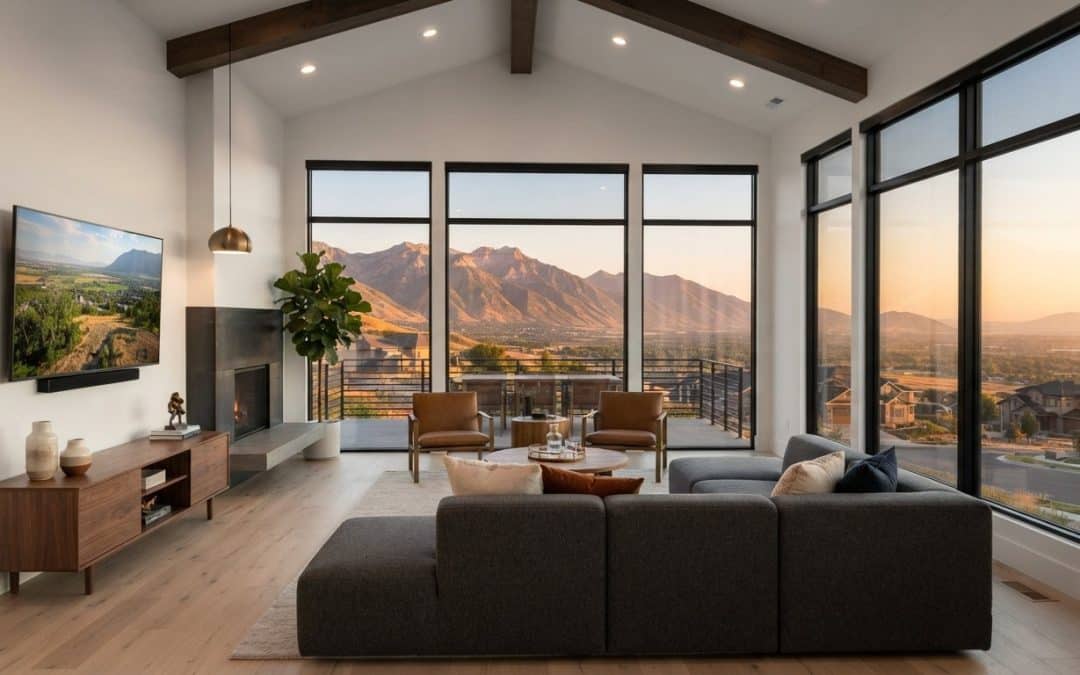
What if enjoying clear afternoon television didn’t require sitting in total darkness? For homeowners across Traverse Mountain and Silicon Slopes, discovering how to reduce glare on TV from windows Lehi living spaces often feels like an impossible compromise between scenic views and everyday indoor comfort. You love the expansive windows framing Mount Timpanogos, yet intense western sunlight routinely washes out high-definition displays, creates uncomfortable living room hot spots, and risks fading your expensive hardwood floors and furnishings.
You shouldn’t have to draw heavy blinds and turn a bright, open-concept great room into a dreary cave just to relax. In this 2026 guide, you’ll discover how specialized residential window tinting eliminates blinding television screen glare and blocks solar heat gain without sacrificing your natural daylight or stunning Utah mountain vistas. We will explore why high-altitude sunlight creates severe visual reflection on modern TV screens, how advanced architectural films safeguard your interior, and how to permanently restore crisp, comfortable daytime viewing throughout your home.
Key Takeaways
- Understand how Utah Valley’s high elevation and low-angle western sun overpower modern high-definition displays in open-concept floor plans.
- Discover why specialized residential window tinting is the most effective way to reduce glare on TV from windows Lehi families face, avoiding the cave-like gloom of closed blinds.
- Learn how matching Visible Light Transmission (VLT) ratings to your room’s specific sun exposure eliminates visual wash-out while keeping spaces naturally bright.
- Explore how advanced solar control films reject intense afternoon heat pockets and filter out 99% of damaging UV rays to shield hardwood and furniture.
- See why professional assessment and installation ensure pristine optical clarity while safeguarding dual-pane Low-E glass against thermal stress.
Why Afternoon Sun Causes Blinding TV Glare in Lehi Living Rooms
Television glare happens whenever incoming ambient light overpowers the luminance output of your screen. In northern Utah County, this optical battle is particularly fierce. Homeowners who want to reduce glare on TV from windows Lehi spaces contend with an environmental double-whammy: dramatic high-altitude sunlight paired with modern architectural glazing that funnels unfiltered light across spacious living areas. When raw daylight strikes glossy television panels, picture clarity vanishes instantly.
The Impact of High-Altitude Utah Sunlight and Open Floor Plans
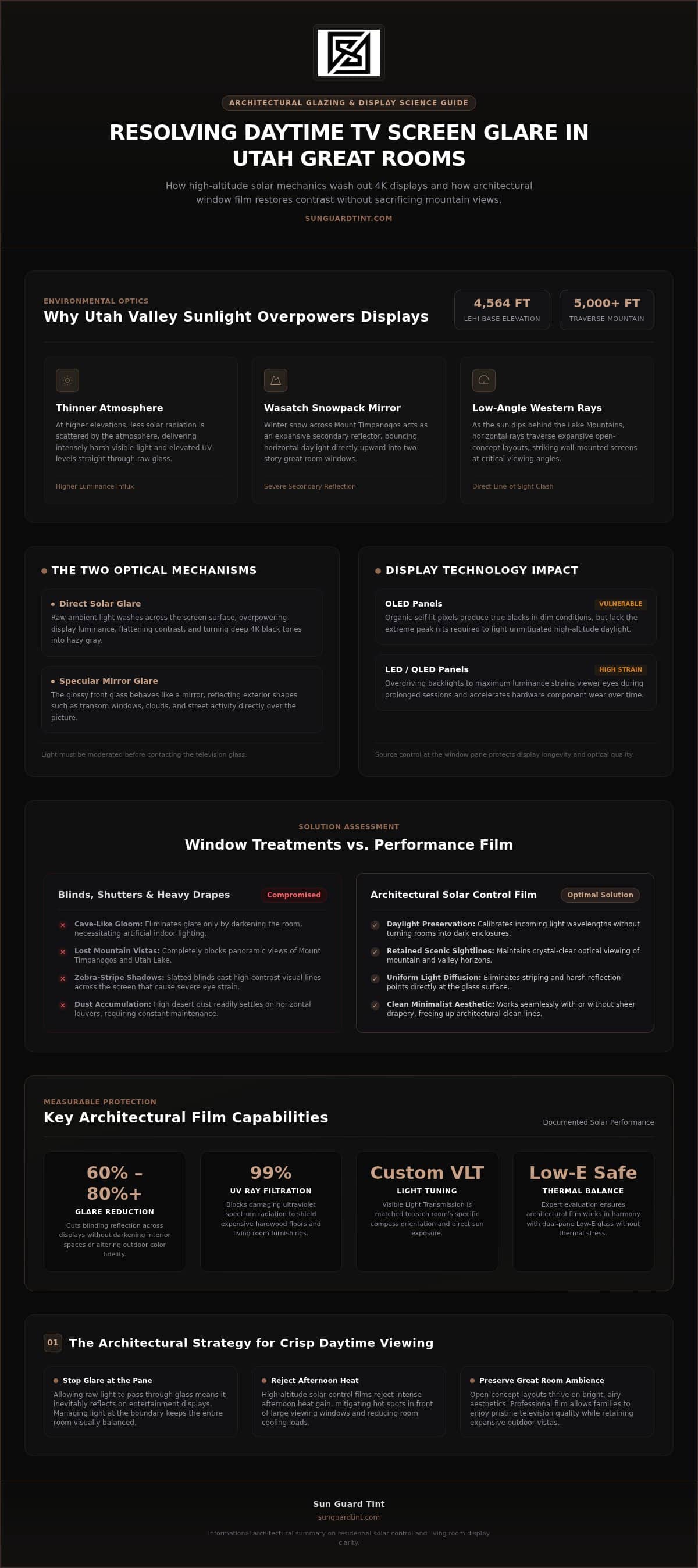
Lehi sits at an average base elevation of 4,564 feet, with hillside neighborhoods in Traverse Mountain climbing above 5,000 feet. Thinner atmosphere at these altitudes scatters less solar radiation, resulting in noticeably harsher visible light and UV intensity than coastal regions experience. During winter months, heavy snowpack across Mount Timpanogos and the Wasatch Range acts like a giant reflective mirror, directing intense secondary glare straight through two-story living room windows. In contemporary open-concept floor plans, late-day sun dips low over the Lake Mountains, shooting horizontal beams straight across great rooms and striking wall-mounted displays at the worst possible viewing angles.
Direct vs. Specular Glare on Modern OLED and LED Screens
Modern entertainment panels interact with natural light in two distinct ways, both of which ruin picture quality:
- Direct Glare: Raw sunlight washes directly over the screen, washing out dark scenes, flattening dynamic range, and turning vibrant 4K resolution into a hazy, unreadable gray.
- Specular Glare: The television’s glass front reflects distinct objects outside, displaying mirror-like reflections of transom windows, white clouds, or passing cars directly over your movie.
Premium OLED panels produce peerless contrast and true black levels in darkened environments, but their organic self-lit pixels often lack the sheer nit output required to fight unmitigated daylight. Standard LED and QLED displays can crank their backlights higher, yet this overdrive rarely compensates for intense western sun. Pushing brightness to its limit also accelerates component wear and strains your eyes during long viewing sessions. Resolving this visual clash requires controlling light at the glass surface using specialized residential window film, stopping glare before it ever reaches your display.
Window Film vs. Blinds and Curtains for Living Room Glare Control
When afternoon sun turns your living room display into an unwatchable surface, the instinctive reaction is closing the blinds or pulling heavy drapery shut. While traditional coverings block raw illumination, they introduce frustrating compromises. Fabric drapes and wooden shutters force a binary choice: suffer through blinding reflections or sit in a dim cave. Slatted blinds are equally problematic, casting harsh zebra-stripe shadow lines directly across media consoles that strain your eyes during daytime viewing.
The Caveat of Heavy Drapes: Losing Natural Light and Mountain Scenery
Covering large windows sacrifices the exact features that make Utah homes so appealing. Drawing curtains hides stunning panoramas of Mount Timpanogos and Utah Lake, replacing natural daylight with artificial lamps. Horizontal blinds also gather dust rapidly in our dry desert climate, requiring constant upkeep. Choosing expert residential window tinting allows you to preserve panoramic outdoor sightlines while effectively managing incoming rays. Many homeowners find that pairing architectural film with sheer decorative curtains provides an ideal aesthetic balance, framing the window beautifully without demanding closed shades.
How Glare-Reduction Film Manages Visible Light Transmission
Architectural glass films address visual interference at the glass pane itself. By carefully calibrating Visible Light Transmission (VLT), these treatments filter out the specific wavelengths that cause reflection while allowing safe, usable daylight to illuminate the interior. Unlike basic window treatments, performance films provide distinct structural advantages for homeowners trying to reduce glare on TV from windows Lehi neighborhoods experience:
- Optical Clarity: Solar films reduce incoming glare by 60% to over 80% without distorting outdoor colors or creating dark interior shadows.
- Heat and UV Rejection: Advanced films reject substantial solar heat gain and stop 99% of damaging UV rays, preserving sensitive television electronics and fine furniture.
- Dual-Reflective Optics: Proprietary dual-reflective technology utilizes a slightly reflective exterior face to bounce away intense afternoon light while maintaining a clear, non-reflective interior view after dusk.
You don’t need to surrender your mountain scenery just to enjoy daytime entertainment. If you are ready to balance natural light with pristine screen contrast, consulting an experienced local team can help identify the ideal glazing balance for your floor plan.
Selecting the Right Glare-Reduction Film for Your Lehi Property
Every living room layout presents unique lighting dynamics. Successfully calibrating glass treatments requires matching material specifications to your home’s orientation and window dimensions. When you aim to reduce glare on TV from windows Lehi properties feature, choosing the correct film ensures you solve reflection issues without creating an overly dark living space.
Balancing Visible Light Transmission (VLT) and Screen Visibility
Visible Light Transmission (VLT) measures the percentage of daylight that passes through treated glass. Lower VLT percentages, such as 15% to 25%, deliver aggressive glare suppression ideal for west-facing picture windows that face punishing late-afternoon sun. For dual-purpose living areas where you want to maintain ambient brightness while watching TV, medium VLT films between 35% and 50% soften harsh reflections while preserving a sunlit interior. Homeowners seeking dynamic privacy and light diffusion can also explore smart window film options that adapt to varying lighting demands throughout the day.
Ceramic and Solar Control Options for Heat and Glare
Traditional metallic tints often give homes an undesirable mirrored finish from the street and can disrupt wireless electronics. Advanced nano-ceramic films solve this problem entirely. These modern formulations incorporate microscopic ceramic particles that selectively target infrared heat and visible glare without dark dyes or metals. Key performance benefits include:
- Signal Integrity: Non-conductive ceramic layers will not disrupt Wi-Fi signals, smart home hubs, or streaming devices located near entertainment centers.
- Thermal Balance: Rejecting concentrated solar heat eliminates uncomfortable temperature spikes around large window bays.
- Natural Appearance: Neutral tones preserve true outdoor colors and satisfy strict neighborhood design guidelines across Lehi subdivisions.
Protecting Interior Furnishings from Utah UV Damage
Controlling screen glare delivers immediate visual relief, but architectural films provide long-term protection for your physical assets as well. High-altitude sunlight accelerates the breakdown of dyes and organic materials. Premium solar films reject 99% or more of ultraviolet radiation, shielding valuable investments like aniline leather couches, hardwood flooring, and delicate media components from premature fading. You can explore real-world transformations and clean aesthetic finishes inside our project photo gallery.
Key Architectural Window Types in Lehi Causing Screen Reflections
Contemporary residential architecture across Lehi embraces abundant natural lighting, featuring dramatic glazing that highlights the surrounding valley landscapes. In master-planned communities like Traverse Mountain and Thanksgiving Point, homes are built with voluminous floor plans and specialized window configurations. While visually striking, these assemblies act as massive funnels for raw daylight. To reduce glare on TV from windows Lehi homeowners must first identify which specific glass features are compromising their entertainment spaces.
Two-Story Great Room Windows and High Clerestory Glass
Double-height great rooms often showcase soaring two-story window walls and elevated clerestory glass. Because these upper panes sit fifteen to twenty feet above floor level, fitting them with motorized shades or heavy custom draperies is mechanically complex, expensive, and visually disruptive. Left untreated, overhead daylight enters at steep downward trajectories, bouncing off light-colored ceilings and casting a diffused haze over media walls below.
Applying professional residential window tinting directly to upper glass assemblies solves this overhead wash permanently. There are no dangling cords, noisy electric motors, or dust-trapping fabrics to maintain. Instead, the film evenly absorbs and filters solar radiation at the exterior envelope, maintaining clean architectural lines while safeguarding your screen visibility.
West-Facing Patio Doors Facing Utah Lake and Valley Views
Multi-panel sliding patio doors and modern bi-fold glass walls connect open-concept living spaces to outdoor patios overlooking Utah Lake. Unfortunately, west-facing patio glass takes the direct brunt of low-angled afternoon sunlight. This timing directly conflicts with prime family streaming hours, evening news broadcasts, and sports viewing. Because patio doors consist of large, continuous sheets of glass, even minor reflections can blanket an entire entertainment center in blinding specular glare.
Precision-installed solar control film tames intense light before it crosses the threshold. You preserve stunning golden hour sunset views across the lake without squinting through harsh optical wash.
Ready to shield your living space from distracting glare while keeping your home open and bright? Contact the team at Sun Guard Tint to evaluate your home’s unique window configurations and restore clear, effortless daytime viewing.
Professional Film Installation in Lehi: What Homeowners Should Expect
Achieving a crystal-clear television picture requires more than picking a film off a shelf. When aiming to reduce glare on TV from windows Lehi residents quickly learn that professional execution separates a flawless, invisible barrier from an eyesore. Certified installation starts with an on-site evaluation of your room’s specific sun exposure, assessing how direct light travels across your living area throughout the year.
Why Professional Precision Glass Prep Beats Temporary Fixes
Utah’s dry climate means airborne dust and microscopic mineral residues settle constantly on window surfaces. Professional technicians utilize a specialized multi-stage mechanical decontamination process, removing tiny particulates that standard glass cleaners miss. Trapping even minor contaminants under architectural laminate leads to permanent bubbling, haze, and premature edge peeling.
Expert installers follow rigorous technical protocols to protect both the film and your home:
- Thermal Stress Verification: Technicians assess your existing dual-pane Low-E glass units, selecting films engineered to prevent thermal shock fractures under Utah’s intense high-altitude solar load.
- Micro-Edge Precision: Advanced trimming techniques cut the film within fractions of an inch of the window gaskets, eliminating annoying perimeter light leaks while maintaining clean architectural lines.
- Factory-Grade Adhesion: Professional mounting solutions ensure optical bonding that cures completely clear, preserving glass warranties while delivering lasting durability.
Consulting with Local Experts for Custom Glare Solutions
Every home layout is different. During an on-site consultation, technicians bring physical film swatches directly to your living room. By holding samples against your specific glass during peak sunlight hours, you can see firsthand how various light transmission levels counteract reflections on your OLED or LED display without dampening the room’s welcoming feel.
Sun Guard Tint brings over two decades of Utah industry experience to homeowners across Lehi, Saratoga Springs, and surrounding communities. Our specialized team understands the distinct lighting challenges created by regional architecture, helping you protect your living space with tailored solar solutions. To discuss your home layout and explore options for your windows, reach out through our contact page today.
Restore Picture Clarity and Protect Your Utah Mountain Views
Living with sweeping Wasatch Range panoramas shouldn’t force you into choosing between blinding reflections and pitch-black living rooms. By choosing high-performance ceramic films rather than heavy blinds, you effectively reduce glare on TV from windows Lehi homes encounter while keeping your great room bright and welcoming. These specialized solar treatments eliminate harsh surface wash, manage intense high-altitude light, and filter 99% of damaging UV rays to protect your media equipment and home furnishings.
Sun Guard Tint brings over 20 years of dedicated window tinting experience across Utah to every project. As a locally owned team serving Lehi, West Jordan, and Salt Lake County, we specialize in high-performance ceramic films that provide superior optical clarity without altering your home’s exterior appeal. Enjoying crystal-clear daytime entertainment without closing off your view is entirely within reach. Reach out today to schedule your residential window tinting consultation and restore effortless comfort to your favorite living space.
Frequently Asked Questions
Can window film completely stop TV glare without making my room dark?
Yes, architectural window film significantly suppresses visual reflections while maintaining ample ambient daylight. By filtering specific high-intensity visible light wavelengths, solar films diminish screen reflections without blacking out the space. Selecting a balanced Visible Light Transmission level allows natural illumination to fill your living areas comfortably. You don’t have to choose between a pitch-black media room and an unwatchable screen.
Is ceramic window film better than traditional tinted film for screen glare?
Ceramic window film outperforms dyed or metallic films because it relies on non-reflective nanoparticles to absorb glare and heat. Unlike metalized films, ceramic options won’t interfere with your streaming devices, smart TV receivers, or home Wi-Fi networks. They also prevent artificial exterior shine while delivering superior optical clarity, ensuring your interior retains clear, natural contrast without looking unnaturally dark.
How much does professional residential window tinting cost in Lehi?
Total investment depends on your window dimensions, the overall pane count, accessibility requirements, and the film technology selected. Higher specialty glass, such as two-story transoms or large patio sliders, requires specialized staging and precision handling. Rather than relying on rigid package rates, professional installers evaluate your home’s unique layout during an on-site consultation to provide an accurate estimate tailored to your property’s specific needs.
Will glare reduction window film alter my mountain view from the living room?
Professional glare-reduction films preserve and enhance your outdoor mountain views rather than distorting them. By curbing intense solar wash and harsh atmospheric haze, these films actually heighten outdoor color contrast and detail. Dual-reflective and ceramic technologies maintain natural exterior colors, allowing you to appreciate Mount Timpanogos and Utah Lake without dealing with internal reflection or darkened glass after the sun sets.
Can I reduce TV glare on high two-story windows in my great room?
Yes, applying specialized residential window film is one of the most practical ways to reduce glare on TV from windows Lehi two-story great rooms feature. Upper transom and clerestory glass can be treated permanently without the ongoing maintenance, visual clutter, or motor failures of heavy motorized blinds. Professional installation ensures seamless coverage that halts overhead downward glare directly at the glass surface.
What happens if my television faces a direct west-facing window?
Televisions directly opposite west-facing glass suffer severe specular reflection as low-angle afternoon sun hits the panel head-on. Lower Visible Light Transmission films, often combined with dual-reflective properties, are specifically engineered to counteract this intense horizontal exposure. This installation allows homeowners trying to reduce glare on TV from windows Lehi properties endure to enjoy early evening movies without needing blackout curtains.
Does residential window tint also help reduce living room heat in summer?
Residential window film dramatically lowers solar heat gain by blocking substantial infrared energy before it enters your home. Unfiltered glass turns living areas into greenhouse hot spots during Utah’s dry summers. Quality solar control films balance indoor room temperatures, relieve strain on air conditioning systems, and create a comfortable entertainment space where you can watch television without baking in afternoon sun pockets.