
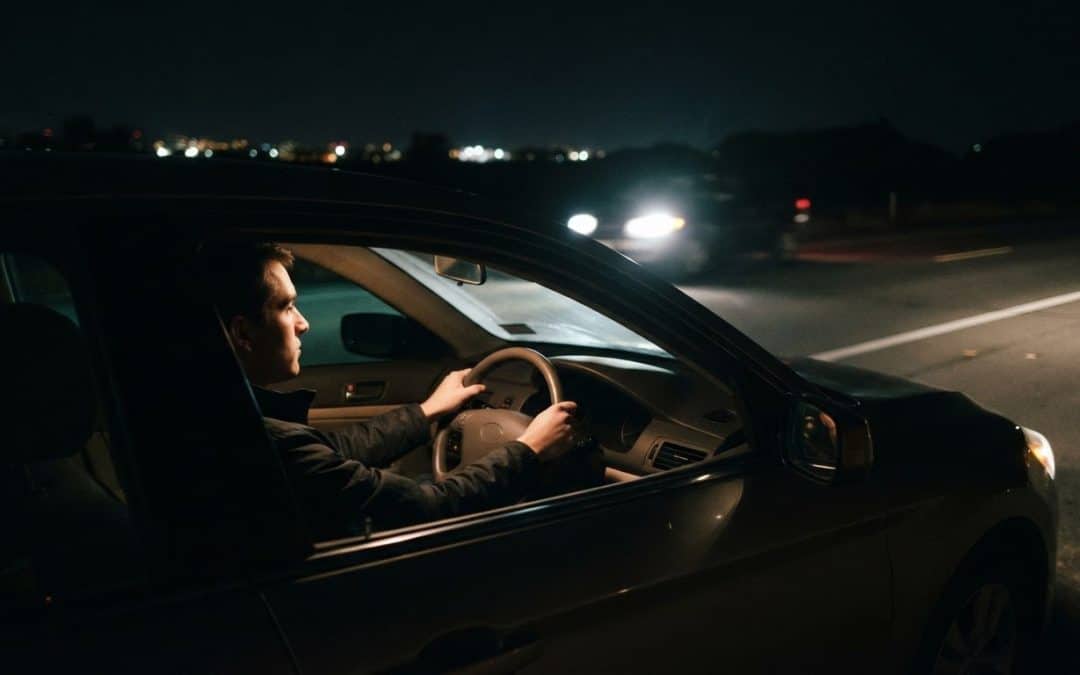
A darker tint can soften some harsh light, but it also lets less light through when you need to see the road. To decide whether car tint helps with night driving glare, weigh this trade-off: lighter tint is generally the lower-risk choice for nighttime visibility, while darker film can make details harder to see, especially on unlit roads.
It makes sense to want relief from bright headlights and reflections without sacrificing a clear view of the road. Tint can reduce incoming light, so its effect depends on the shade and where the film is installed; it doesn’t automatically improve nighttime visibility or eliminate glare. For night driving, 50% VLT and lighter tint is the lowest-risk option, while 35% to 50% VLT is a typical safer range.
This guide explains how tint affects glare, visibility, and eye strain, and what to consider if you often drive at night or on rural roads. It also covers why very dark film can make hazards harder to spot and how to balance daytime comfort with a clear view after dark.
Key Takeaways
- Tint can soften some glare, but reducing the light entering the vehicle can also make nighttime details harder to see.
- Visible light transmission (VLT) helps explain how much light passes through a tinted window, making it a useful factor when weighing comfort against visibility.
- Rural roads and nighttime driving call for extra care with darker tint, especially where lighting is limited.
- Glare reduction and eye strain aren’t the same as improved visibility; consider how tint affects both before choosing a shade.
- In Ohio, the Ohio General Assembly allows windshield tint only above the manufacturer AS-1 line or, if there is no AS-1 line, typically within the top 5 inches.
Can Window Tint Improve Night Driving or Make It Worse?
Tint may soften some bright light, but it also reduces incoming light. At night, that trade-off can make road details harder to see.
Tint Darkness and Night Visibility
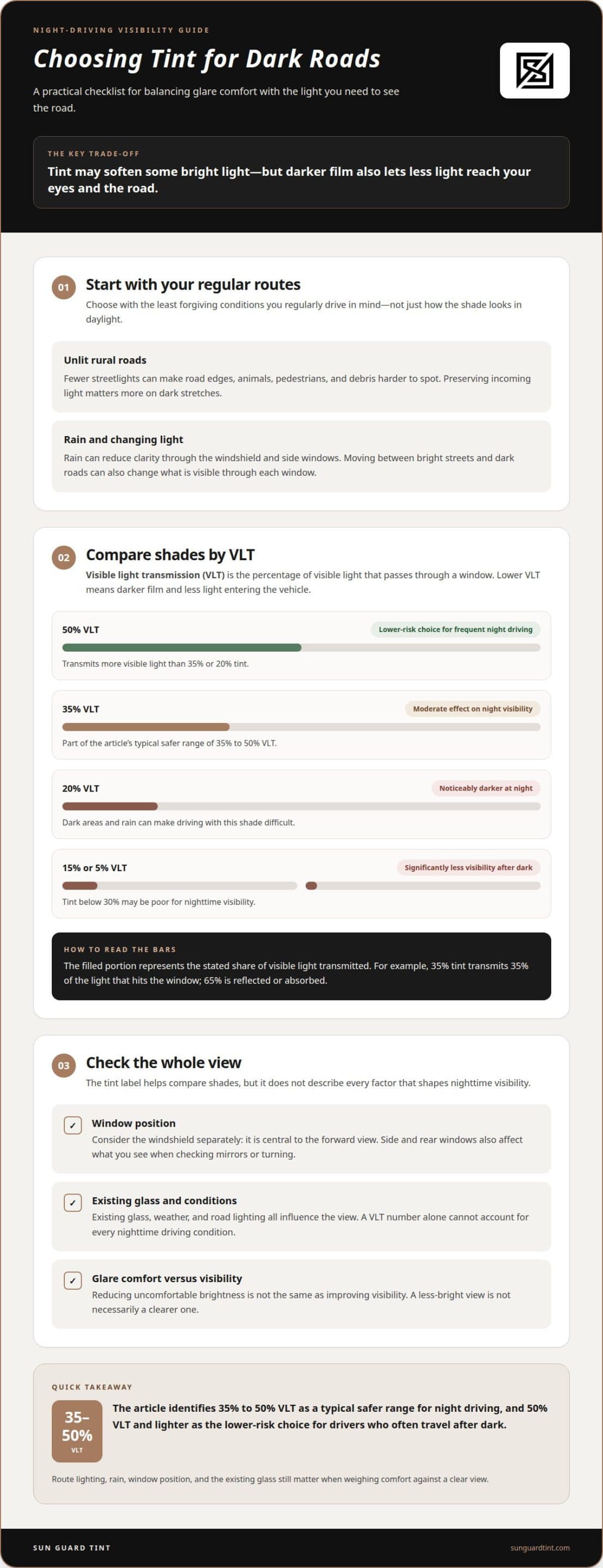
Tint darkness describes how much visible light passes through treated glass. A 20% tint is noticeably darker at night and can make details harder to see. A 35% tint can have a moderate effect on nighttime visibility. For drivers who often travel after dark, 50% VLT and lighter tint is the lower-risk choice.
Route conditions matter. A well-lit street is different from a dark rural road, where spotting animals, pedestrians, or debris may be harder. Rain adds another challenge by reducing clarity through the windshield and side windows.
Visible Light Transmission and Visibility
Visible light transmission, or VLT, is the percentage of visible light that passes through a window. Tint labeled 35% transmits 35% of the light that hits it, while 65% is reflected or absorbed. Lower VLT means darker film and less light entering the vehicle.
Available tint commonly ranges from 5% to 70% or more. A typical safer range for night driving is 35% to 50% VLT. Tint below 30% may be poor for nighttime visibility, while 15% or 5% tint significantly reduces visibility after dark.
Glare Reduction Versus Light Blocking
Glare reduction limits uncomfortable brightness, while light blocking reduces the light reaching your eyes and the road. Tint can reduce some glare, including reflections from vehicles behind in side-view mirrors. But darker film also dims objects outside, so a less-bright view is not necessarily a clearer one.
Window tint limits vary by state and window position. In Utah, “Front side windows must allow more than 35% of light in.” “Windshield can be tinted down to a 70%.” Non-reflective tint is allowed above the manufacturer’s AS-1 line or top 4 inches.
Nighttime Risks and Glare Alternatives
Dark tint can make road edges, pedestrians, and hazards harder to see when lighting is limited. In Utah, “Back side windows: any darkness can be used” and “Rear window: any darkness can be used.” Even when darker tint is permitted, nighttime visibility remains important.
To reduce glare without dark window tint, keep windows and mirrors clean, adjust mirrors to limit reflections, and lower dashboard brightness if it distracts. Use the sun visor for bright light sources, and avoid staring directly at oncoming headlights.
Automotive tint costs depend on factors such as the vehicle, windows covered, and film selected. A quote request can provide the price for a specific project. For Utah window-film information, see window tint options.
Choosing tint for rural or nighttime driving
Choose tint with the darkest roads you regularly travel in mind. A shade that feels comfortable in daylight can affect visibility after sunset, especially where streetlights are limited. Route lighting, weather, window position, and existing glass all shape your view. If you often drive at night, preserving incoming light should guide your choice.
Match the shade to your regular routes
Rural roads can have fewer streetlights than urban streets. On a dark stretch, road edges, animals, pedestrians, and debris may be harder to spot. For frequent nighttime driving, 50% VLT and lighter tint is the lower-risk choice. A 35% tint can moderately affect night visibility, so consider how often your route includes unlit sections.
A 20% tint is noticeably darker at night. Dark areas and rain can make driving with that shade difficult. If your usual trip moves between brightly lit streets and dark roads, consider how the change in ambient light affects what you can see through each window.
Use VLT to compare tint choices
VLT measures the percentage of visible light transmitted through a window. A 50% VLT shade transmits more visible light than 35%, while 20% transmits less. The label helps compare shades, but it doesn’t describe the entire nighttime view. Existing glass, window position, weather, and road lighting also influence visibility.
A typical safer range for night driving is 35% to 50% VLT. Tint below 30% may be poor for nighttime visibility. Shades of 15% or 5% significantly reduce visibility after dark. These values help identify darker options that deserve extra caution on unlit routes.
Consider the windshield separately
The windshield is central to the forward view, so consider it separately from side and rear windows. In Utah, “Windshield can be tinted down to a 70%” and non-reflective tint is allowed above the manufacturer’s AS-1 line or top 4 inches. Window-tint limits can vary by location and window, so check the applicable rules before choosing a shade.
Local tint limits don’t determine which shade feels best at night. Your route, the weather, and your visibility needs still matter. Keep the windshield’s forward view clear when weighing comfort against the ability to see road details.
Weigh the trade-offs before choosing
Base the choice on your least forgiving driving conditions, not only daytime appearance. If you regularly drive unlit roads in rain, a 20% shade may reduce useful light when visibility is already demanding. A lighter option can preserve more of the view through the windows.
Consider how tinted windows feel on familiar roads after dark. Notice whether signs, road edges, and roadside objects remain easy to see. Think about side and rear visibility too, especially when checking mirrors or turning onto a narrow rural road.
Ceramic tint can block UV and infrared heat without being overly dark. Those heat and UV properties don’t, by themselves, establish how well it performs against nighttime glare. Treat light transmission and heat control as separate factors when comparing tint.
Glare reduction and eye strain
Tint changes the light entering a vehicle, which can affect glare comfort and visibility differently. Bright headlights, reflections, and dashboard illumination each create distinct nighttime viewing conditions. A film that dims one light source also reduces other visible light. The key question is whether the glare relief outweighs that loss on your regular routes.
How glare can contribute to visual fatigue
Repeated changes in brightness can make nighttime driving feel more demanding. For example, oncoming headlights may seem especially bright against a dark road. Reflections from a vehicle behind can also reach the driver through side-view mirrors. Tint may reduce some reflected brightness, but it won’t remove every source of glare.
Eye strain isn’t a reliable measure of visibility. A dimmer view may feel more comfortable while hiding low-contrast details. That distinction matters on rural roads, where you may need to spot an animal near the shoulder or a turn without streetlights. Comfort and clear perception are separate considerations.
Why darker glass can change the balance
Tint that reduces visible light affects more than headlights. It also dims signs, road markings, and objects beside the vehicle. If the road is already dark, less incoming light can make those details harder to distinguish. The effect may feel sharper when you move from a brightly lit area to an unlit stretch.
A 90% windshield tint was reported by one local shop as potentially causing halos or other visual artifacts. That report doesn’t mean every driver experiences them. It illustrates why glare reduction cannot be judged by darkness alone. The windshield’s position in the forward view makes visual clarity especially important.
Separate glare sources before choosing
Headlight glare, mirror reflections, and dashboard brightness call for different responses. Tint can reduce light entering through glass, while adjusting mirrors can change the direction of reflected light. Lowering dashboard brightness may reduce the contrast between the cabin and the dark road. These steps address separate sources rather than relying on darker windows alone.
For example, if headlights from behind bother you, focus on side-mirror reflections. If you struggle to see road edges, preserving incoming light matters more. Identifying the source clarifies the trade-off. Darkening every window may reduce some glare, but it can also dim your entire nighttime view.
Film appearance isn’t the whole story
Carbon tint has a non-reflective matte finish and blocks UV rays. Ceramic tint blocks UV and infrared heat without being overly dark. These properties describe finish and heat or UV performance, not a promise of nighttime glare reduction. Film darkness and window location still shape how much light reaches the driver.
Consider eye comfort, mirror reflections, and road visibility together. Tint that feels comfortable under city lights may perform differently on an unlit road. Keep the main goal clear: reduce distracting glare without unnecessarily dimming the view you need to drive safely after dark.
How tint affects nighttime visibility and glare
Headlight glare is bright light that stands out against a darker scene. Halos or visual artifacts can also occur through tinted glass.
Tint Effects on Nighttime Visibility
Tint changes how much visible light reaches the driver, affecting both brightness and detail. At night, road signs, lane markings, and roadside objects may already be dim. A dark rural road, for example, offers less ambient light than an illuminated street. Tint can reduce some incoming glare, but it also dims the view through the window.
A 90% windshield tint was reported by one local tint shop as potentially causing halos or other visual artifacts. That report illustrates that a light-looking tint isn’t automatically free of visual effects. The windshield provides the forward view, so changes there can matter differently from tint on side or rear windows. The shade and window position both influence what the driver sees.
Factory glass and aftermarket film can differ. A forum commenter said factory tint should not be a problem, while aftermarket tint may be. That isn’t a universal rule, but it highlights an important distinction: drivers may notice a change after film is added, especially if reflections or distortion affect the windshield view.
Headlight Glare and Halos
Headlight glare is uncomfortable brightness that competes with the surrounding scene. A halo is a ring or bloom around a light source. The two can occur together, but they describe different visual effects. A bright oncoming headlight against a dark road is a clear example of strong contrast at night.
Tinted glass may reduce the intensity of some light entering the cabin, including reflections from vehicles behind. But reducing overall light can also make nearby details harder to distinguish. That’s why the same tint may feel comfortable under city lighting but less suitable on an unlit road. Glare relief alone doesn’t show whether visibility remains clear.
Windshield tint deserves particular attention because it sits in the forward line of sight. If a driver notices halos after aftermarket film is installed, the tint or glass may affect the appearance of headlights. A reported concern about 90% windshield tint shows that high light transmission doesn’t rule out visual artifacts.
Consider the full driving scene, not just one bright source. An oncoming vehicle, a dark shoulder, and road markings all compete for attention. Tint that softens a headlight may also dim the surroundings. The goal is to reduce distracting brightness while retaining enough visible detail to read the road.
Factory tint, aftermarket film, windshield position, and road lighting all shape the experience. A driver who mostly travels on lit streets, for example, may perceive glare differently from someone using dark rural roads. That’s why tint’s effect can’t be judged by appearance alone. What matters is how clearly you can see the road at night.
Do anti-glare coatings or clear films help with nighttime headlight glare?
Clear films and anti-glare coatings aren’t interchangeable. A clear film may preserve a bright view, but transparency alone doesn’t mean it will reduce headlight glare. An anti-glare treatment is intended to manage reflections or brightness, but its effect depends on the material and the surface receiving it. For vehicle windows, preserving light transmission and reducing glare are separate goals.
What a clear film can and can’t do
A transparent film can avoid the visibly dark appearance of tinted glass, which may appeal to drivers who want a bright cabin view after dark. But a clear appearance doesn’t establish how a film changes reflections, halos, or headlight brightness. Light viewed through glass can still feel uncomfortable, even when the glass looks clear.
A clear layer on a window isn’t automatically an optical filter. Its effect depends on the film’s design and how light interacts with the treated glass. Don’t assume that “clear” means glare-free or that it improves nighttime visibility. Those are separate performance claims.
What anti-glare means in practice
Anti-glare describes an aim to limit distracting reflected brightness. It doesn’t necessarily mean reducing every bright light entering the vehicle. Oncoming headlights, reflections from a vehicle behind, and a bright dashboard are different sources. A treatment aimed at reflections may not address all three in the same way.
That distinction matters on a dark road. Reducing a reflection may help, while lowering overall light can make the roadside harder to see. Consider both the visual comfort of a coating and the clarity of the view through the windshield, side windows, and mirrors.
Why optical artifacts matter
Halos and other visual artifacts can change how headlights appear through glass. One reported concern involved even a 90% windshield tint potentially causing halos or visual artifacts. High light transmission, therefore, doesn’t by itself establish that a film will be free of optical effects.
Window position matters too. The windshield sits in your forward line of sight, while side windows shape views of mirrors and roadside areas. A coating that seems unobtrusive in daylight could feel different at night, when headlights stand out against darker surroundings.
Choose by the problem, not the label
Start by identifying the glare source. Reflections in side-view mirrors are different from discomfort caused by oncoming headlights. If road details already seem dim, an option that reduces incoming light may make visibility worse. The words “clear” and “anti-glare” alone don’t explain these trade-offs.
For nighttime driving, compare whether a treatment reduces a specific distracting reflection while preserving a clear view. Consider the windshield separately from other windows, and weigh glare comfort against visibility on familiar roads. This keeps the decision focused on actual nighttime performance, not appearance or a product label alone.
Sun Guard Tint
Sun Guard Tint helps property owners choose window film for homes and businesses. This article focuses on vehicle windows, but the same careful consideration of light, comfort, and visibility matters when selecting film for a building. Sun Guard Tint offers residential and commercial window tinting, along with Smart Window Film, to address property-specific needs. The right solution depends on the glass, the space, and what you want the film to do. For vehicle-specific nighttime glare concerns, use the visibility principles above when weighing your options.
If you’re considering window film for your home or business, contact Sun Guard Tint to discuss your project.
Make your next window-film decision with clarity
If you’re weighing whether car tint helps with night driving glare, focus on the visibility you need on your regular routes. Comfort around bright lights matters, but so does seeing the road clearly. Treat these as separate considerations rather than assuming one tint choice will solve both.
For vehicle decisions, keep nighttime conditions at the center of your evaluation. For a home or business window-film project, consider the space’s purpose, the light you want to manage, and the protection you need. A tailored discussion can help clarify your priorities and which film options suit your property.
Sun Guard Tint works with residential and commercial window film needs, including Smart Window Film. If you’re planning a property project, start a conversation with Sun Guard Tint about your goals. A thoughtful choice begins with understanding how you use the space, and you can take that next step when you’re ready.
Frequently Asked Questions
Are ceramic tints better for night driving?
Not automatically. Does car tint help with night driving glare? Ceramic film can block UV and infrared heat without being overly dark, but those features don’t establish better nighttime visibility or glare control. Compare its VLT and intended performance separately. A heat-focused ceramic option may preserve a lighter appearance, while nighttime suitability still depends on how much light passes through the glass and the routes you travel.
Can factory tint impact night visibility?
Factory tint usually shouldn’t be a problem by itself, but adding aftermarket film can change the view. For example, factory privacy glass and a later film layer both affect the light passing through a side window. Consider the complete window rather than judging its appearance alone. If you often drive on unlit roads, preserving a clear view of roadside objects and mirrors is especially important.
Is glare reduction more important than darkness at night?
Should you prioritize car tint for night-driving glare over visibility? Glare comfort matters, but clear visibility should come first. A dimmer view can hide low-contrast hazards, such as a pedestrian beside a poorly lit road. Identify the source: mirror reflections differ from oncoming headlights. Reducing one distraction shouldn’t make signs, lane markings, or road edges harder to distinguish.
Can tinted car windows make night driving visibility worse?
Yes. Tinted windows can worsen night visibility when they reduce incoming light, particularly in rain or poorly lit areas. Dark side or rear windows may also make it harder to notice objects while checking mirrors or changing lanes. The practical question isn’t just how the cabin looks, but whether you can identify road edges, signs, and nearby hazards in the conditions you regularly drive.
What tint darkness is safest for nighttime driving?
For nighttime visibility, 50% VLT and lighter is the lowest-risk choice. A typical safer range is 35% to 50% VLT. VLT measures the share of visible light transmitted, so lower values mean less light passes through. If your regular routes include unlit rural roads or rain, favoring the lighter end helps preserve incoming light rather than choosing tint by daytime appearance alone.

Article by
Sun Guard Tint