
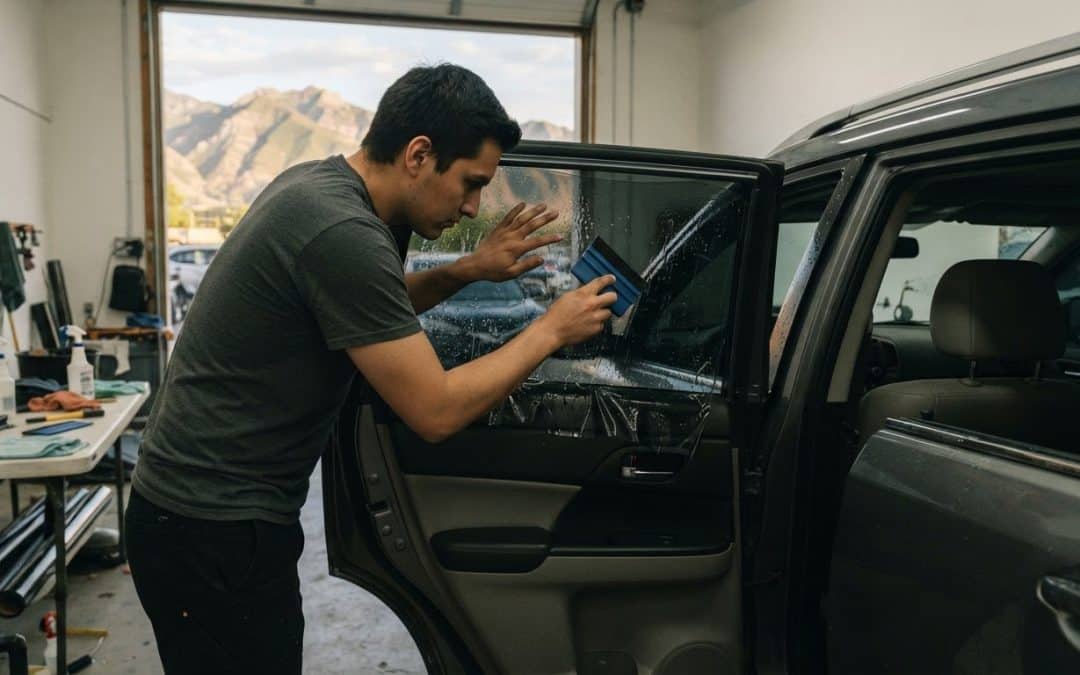
The cost to tint an SUV in Orem depends on the vehicle’s window layout, the film you choose, and how much glass you want covered. A professional full-vehicle tint installation averages 2 to 4 hours, with the exact work shaped by the SUV and selected coverage.
When comparing the cost to tint an SUV in Orem, weigh the upfront expense against the film’s benefits. Tint options differ in appearance, heat rejection, and UV protection, so choose based on your priorities for driving comfort and protecting the vehicle’s interior.
This guide explains the factors that shape SUV tinting costs, compares common film options, and outlines what to expect during professional installation. You’ll also learn how installation time can vary and what details help make the result look clean and perform as intended.
Key Takeaways
- See how an SUV’s size, window layout, and requested coverage shape a tinting quote.
- Understand the differences between dyed, carbon, and ceramic films before choosing what best fits your priorities.
- Learn how tint can support cabin privacy and reduce glare while preserving a clean look.
- Discover why vehicle type and the number of windows make simple price comparisons less useful.
- Find out when professional window tinting can help protect comfort and appearance, and what to expect from the service.
How Much Does Car Window Tinting Cost in Utah?
There’s no single price for every SUV in Utah. The estimate depends on the vehicle’s glass, the windows you want covered, the film selected, and the installation work involved.
For an Orem estimate, the useful first step is defining the job: which windows need tinting, whether existing film needs removal, and what performance matters most. A professional full-car tint installation takes an average of 2 to 4 hours, though an SUV’s window layout and selected coverage shape the work.
Average Utah SUV Tinting Prices
A general price range is only a starting point, not a reliable quote for every SUV. Vehicles with different window layouts may require different amounts of film and installation work, even if both are described as SUVs.
Coverage matters, too. Tinting side and rear windows is a different scope from including additional glass. When requesting an estimate, list the windows and film you want, then compare estimates for the same work rather than relying on a broad statewide average.
SUV Tinting Price Range
SUV tinting estimates vary with vehicle size, glass area, coverage, film choice, and installation requirements. A compact crossover and a larger SUV can involve different work, so the vehicle category alone doesn’t determine the estimate.
Existing tint may require removal, and the film’s performance features affect material selection. These details can explain differences between estimates in Orem. A useful estimate clearly describes the windows and film included rather than treating every SUV tinting job as identical.
Professional installation involves fitting film to the glass and applying it to the agreed coverage. Accurate measurements, careful application, and attention to edges and curved rear glass all help produce a clean result. The selected film and coverage should also suit the vehicle and your needs.
DIY kits are a separate option, but they require the vehicle owner to handle film application and fitting. This comparison doesn’t require a how-to: professional service places the installation work with a trained installer, while DIY means taking on that application personally. For a clean, consistent finish across several SUV windows, the scope and installation quality matter alongside film choice.
In Orem, start by describing the SUV, the windows you want covered, and your priorities, such as appearance, glare control, or cabin comfort. A professional tinting estimate can then account for the specific vehicle and requested work. Learn about window tinting in Orem as you consider the installation approach that fits your vehicle.
What Factors Affect the Cost to Tint Car Windows?
An SUV’s window count and glass area help define the job. More glass requires more film to be measured and fitted, and complex shapes call for precise work. Small rear quarter windows, for example, present different fitting requirements from broad rear glass. Vehicle size alone doesn’t describe the full scope.
Coverage is another key factor. A basic tint job generally includes all side windows, including triangle windows, and the rear window. It doesn’t include the sunroof or windshield. List any additional glass you want covered so the estimate clearly defines the work.
Window shape matters, too. Curved rear glass, small corner panes, and tight edges call for careful fitting. A sunroof is a separate area, and a windshield has different considerations from side and rear glass. Pane size, curvature, and accessibility all affect the installation process.
For an SUV, clarify the scope using these details:
- Which side windows and rear window are included.
- Whether triangle windows or other small panes need coverage.
- Whether existing film needs removal before new tint is installed.
- Whether the request includes a sunroof or windshield.
Film selection affects the balance between privacy, glare reduction, and visibility. A darker appearance may provide more visual privacy, while the chosen coating should also suit the driver’s comfort and the vehicle’s use. Utah’s front side windows must allow at least 35% visible light transmission. Non-reflective windshield tint is allowed only on the top 4 inches, and rear windows can be tinted as dark as desired, subject to safety guidelines.
Tint can help reduce glare and create a more private cabin, but those priorities need to work with visibility requirements. For example, a driver prioritizing a uniform dark look still needs to account for the front side-window limit. Film type also affects the material choice: ceramic window tint is one option, and its selection should reflect the performance priorities for the vehicle.
Finally, existing film and detailed glass can add installation steps. A rear window with complex curves may demand more careful fitting than a simple side pane. Discussing the SUV’s window layout, the requested coverage, and film priorities gives the installer a practical basis for defining the job without treating every vehicle as identical.
Professional tint prices by vehicle type
Vehicle category helps describe a tinting job, but it doesn’t set a universal price. Sedans, coupes, trucks, and SUVs vary in glass area, window shape, and coverage, affecting the film and fitting work required. Compare estimates for the specific vehicle and windows, not just the vehicle category.
A sedan’s window layout differs from an SUV’s. A coupe may have long door glass, while a truck’s rear-cab windows vary by cab design. SUVs can have additional rear-quarter glass, and minivans often have broad side windows. These differences affect how film is measured, positioned, and finished, so a useful estimate reflects the specific vehicle.
Vehicle-type comparisons can be misleading when coverage differs. One estimate may include side windows and rear glass, while another covers fewer panes. Existing tint removal can also change the work. Compare the included windows, film type, and removal work to understand why estimates for a sedan and SUV may differ.
Interior protection is another reason drivers choose tinted windows. Film can block up to 99% of UV rays, helping limit ultraviolet exposure inside the vehicle. For a family SUV, that can matter across the front seats, rear seating, and cargo area. Tint also changes the cabin’s appearance, creating a more cohesive finish across different panes.
Vehicle tint can improve comfort by reducing incoming light and glare. The result depends on the film and windows covered: tinting only the rear windows differs from tinting all eligible side and rear windows. Balance privacy, visibility, and your preferred appearance when choosing coverage.
Before comparing estimates, note the vehicle’s make and model, body style, and the windows you want covered. A three-row SUV with small quarter windows, for example, has a different glass layout from a two-door coupe. These details clarify the scope and help you compare similar installations.
- Sedan: Confirm whether all side glass and rear glass are included.
- Coupe: Note the shape and length of its door windows.
- Truck: Specify the cab style and rear-window layout.
- SUV or minivan: Identify additional quarter or passenger windows.
Professional installation accounts for each vehicle’s glass rather than using one approach for every body style. Clear coverage details make estimates easier to compare and keep the focus on film, fit, and the protection you want for the interior.

Dyed, ceramic, and carbon tint options
Dyed, carbon, and ceramic films differ in heat rejection, UV protection, and durability. Those differences help explain why film choice affects an SUV tinting estimate. Compare each film’s stated performance with your priorities, such as cabin comfort or long-term use. A dark appearance alone doesn’t show how well a film rejects infrared heat.
Dyed film offers a straightforward option for drivers focused on appearance and basic protection. It has infrared heat rejection of 10% to 30% and blocks up to 99% of UV rays. Its typical lifespan is 2 to 5 years. That combination can suit an SUV owner prioritizing a familiar tinted look, while accepting a shorter expected service life.
Carbon film offers a different balance. Its infrared heat rejection is 40% to 60%, and it typically lasts 5 to 10 years. For an SUV used regularly in bright conditions, those figures may make carbon a practical middle ground. Consider expected durability alongside the level of heat reduction you want, rather than judging the film by appearance alone.
Ceramic film provides the highest listed infrared heat rejection of these options, at 70% to 95%. It typically lasts 10 or more years and blocks more than 99% of UV rays. That performance profile may suit drivers who place a high priority on heat and UV protection over time. Its properties make it a distinct choice, not simply a darker version of dyed film.
Use these distinctions to clarify your priorities before selecting film:
- Dyed: 10% to 30% infrared heat rejection, with a typical lifespan of 2 to 5 years.
- Carbon: 40% to 60% infrared heat rejection, with a typical lifespan of 5 to 10 years.
- Ceramic: 70% to 95% infrared heat rejection, with a typical lifespan of 10 or more years.
These figures describe different performance characteristics, not identical testing conditions across every film. Ask what the stated heat-rejection figure measures, and compare the same property between options. UV protection and infrared heat rejection are separate considerations. For example, dyed film can block up to 99% of UV rays while offering lower infrared heat rejection than carbon or ceramic.
For an SUV in Orem, consider how long you plan to keep the vehicle and which benefit matters most. Someone seeking a short-term appearance change may weigh dyed film differently from a driver prioritizing durability and heat control. Compare film performance with your needs instead of choosing by shade alone.
Privacy and glare reduction
For an SUV in Orem, window tint can increase cabin privacy and reduce bright light entering through the glass. The result depends on the windows covered and film selected. Rear-seat passengers may value reduced visibility into the cabin, while drivers may prioritize comfort in bright daylight. Consider privacy and glare as separate goals when planning coverage.
Privacy varies with lighting. A tinted rear window may make the cabin less visible from outside, but the effect changes with interior and exterior light. Bright daylight outside and a shaded cabin can look different from a brightly lit cabin after dark. Tint isn’t a substitute for securing belongings or maintaining a clear view around the vehicle.
Glare reduction matters when sunlight hits the side glass or rear window. Low sun through a driver’s side window may cause a different problem from bright light through the rear glass. Identify which seats and windows get the most bothersome light to clarify whether your priority is driver comfort, passenger comfort, or a consistent look.
- Rear passengers: Consider privacy and light entering through rear side windows.
- Driver: Focus on glare through side glass while preserving clear visibility.
- Cargo area: Think about how visible stored items appear through rear glass.
- Whole vehicle: Consider how different window coverage affects the SUV’s overall look.
Coverage involves trade-offs. Tinting only the rear windows can address rear-seat privacy, while including side windows creates a more uniform appearance. Front side windows must still provide safe visibility and comply with Utah’s requirements. For an SUV carrying several passengers, balance rear privacy with a clear view ahead.
Glare and privacy also depend on the film’s visible appearance, not just the vehicle’s size. A darker look may change how the cabin appears from outside, but shade alone doesn’t describe heat rejection or UV performance. Those are separate film characteristics. Compare the intended appearance with the performance qualities discussed earlier before choosing a tint for the vehicle.
Before installation, describe a specific driving situation, such as afternoon glare on the driver’s side or visibility into the rear seating area. Then identify the windows involved. This helps the installer discuss coverage and appearance. For Orem SUV owners, matching film to real privacy and glare concerns is more useful than choosing based only on a dark exterior look.
Sun Guard Tint
Sun Guard Tint helps readers weigh window film choices around comfort, privacy, and protection. For this SUV question, the vehicle’s glass area, requested coverage, and desired film performance are useful details to understand when comparing installation needs. Sun Guard Tint also provides film solutions for homes and commercial spaces, including residential window tinting, commercial window tinting, smart window film, and graffiti protection film.
For home or business window film, Sun Guard Tint provides residential and commercial window tinting in the Orem area.
Choose the Tint That Fits Your Next Drive
Before moving ahead, decide which result matters most for your SUV: a more private cabin, less glare, or stronger heat control. That priority gives your tint decision a clear direction. The cost to tint an SUV in Orem depends on the vehicle and chosen work, so a useful next step is to describe your SUV, the windows you’re considering, and the outcome you want. This keeps the conversation focused on your actual needs rather than a one-size-fits-all solution.
Sun Guard Tint can help you discuss window film options and how they relate to comfort and protection. Share what you want the finished vehicle to look and feel like, then take time to consider the options that fit. A thoughtful choice can support a comfortable drive and a polished appearance. Contact Sun Guard Tint to discuss your SUV, and take the next step toward a tint choice that feels right for you.
Frequently Asked Questions
How Much Does Full (All-Around) Tint Cost?
The total for all-around tinting depends on the vehicle, film, and windows included, so there’s no universal price. Define “all-around” by listing the side and rear windows you want covered. An SUV with extra glass or existing tint may involve different work from one with a simpler layout. The cost to tint an SUV in Orem depends on the specific vehicle and coverage.
What is the average cost to tint an SUV in Orem, Utah?
There’s no single average that applies to every SUV tinting job in Orem. Glass area, film choice, and coverage all affect the estimate. Clarify which windows are included and which film features matter to you, then compare estimates for similar work instead of relying on a broad figure for a different vehicle or package.
How do ceramic, carbon, and dyed window tint prices compare for SUVs?
Pricing varies by film type, but each option offers a different performance balance. Dyed film has lower infrared heat rejection than carbon or ceramic. Carbon provides a middle option, while ceramic offers the highest listed infrared heat rejection among these three. Ask for the film type and its stated performance details in the estimate. Comparing the same properties helps you understand differences without choosing by shade alone.
Do Orem tint shops charge extra for large SUVs or third-row windows?
Vehicle size and extra panes can change the scope, though the work varies by installation. Third-row windows add glass to the coverage, and their shape or accessibility can affect fitting. List those windows when describing the job rather than assuming they’re included in an all-around package. A large SUV with extra rear glass may have a different estimate from a smaller vehicle.
Which window tint shops in Orem, Utah offer SUV tinting and what are their prices?
Sun Guard Tint provides in-shop automotive window tinting for SUVs and serves Orem. Its pricing isn’t stated here, and the total depends on the vehicle, film, and requested coverage. Mobile automotive tinting isn’t offered. For a useful quote, describe the SUV and the windows you want tinted. That helps define the work clearly without comparing prices for different coverage or film choices.
What does an SUV window tint quote typically include, such as labor and warranty?
A quote should make the scope clear, including the windows covered, film selected, installation work, and any existing tint removal. Warranty terms depend on the specific product and service agreement, so don’t assume coverage is identical across every film. For example, an estimate for rear and side windows may differ from one that includes extra panes. Review the written scope and warranty terms together before approving the job.
Are there extra fees to remove old tint or tint a windshield in Orem?
Removing old tint adds work, and windshield tinting is a separate scope from side and rear window coverage. Whether those tasks affect the estimate depends on the vehicle and requested service. Utah allows non-reflective tint only above the manufacturer’s AS-1 line or on the top 4 inches of the windshield. Discussing the existing film and windshield request upfront helps clarify what the installation includes.
How long does SUV window tint installation take, and how long should it cure?
A professional full-car tint installation takes an average of 2 to 4 hours, while an SUV’s glass layout and coverage can affect the appointment. After installation, wait at least 48 to 72 hours before rolling down the windows. That waiting period gives the film time to set. Avoid operating the windows during that interval, particularly if passengers regularly use the rear doors.

Article by
Sun Guard Tint