
Winter has a funny way of exposing your home’s vulnerabilities. A chilly draft may creep under your back door or a single room might refuse to get warm even with the thermostat at a cozy 72 degrees. Our instincts lead us to stuff weatherstripping in cracks or stuff more insulation in the attic, but we often ignore one of the biggest offenders: windows.
Glass is a notoriously poor insulator. Heat loves to escape through windows, making your furnace work harder than it needs to. But you can’t go swapping out all of your windows for more insulated models without major (read: expensive) construction projects. Thankfully, there is a smarter, more cost-effective alternative that won’t require heavy equipment or a second mortgage.
This post is all about how residential window tinting is a seriously underrated winter energy hack. We’ll dive into the science of thermal window film, how it helps retain heat, and why this is the smartest investment you can make for your home this winter.
The Cold Hard Truth About Windows and Heat Loss
It’s always good to know why a product does what it does, before you understand how it does it. The U.S. Department of Energy reports that heat gain and loss through windows account for 25%–30% of residential heating and cooling energy use. That’s almost one-third of your energy bill going right out the window.
Heat loss through standard glass is also a problem. During winter, the warm air inside your house naturally flows toward the cold air outside. When it hits the cold glass surface, it rapidly loses heat, creating a convection current that makes your home feel drafty. You crank up the thermostat to compensate, and the energy meter spins faster.
How Window Tinting Helps With Insulation

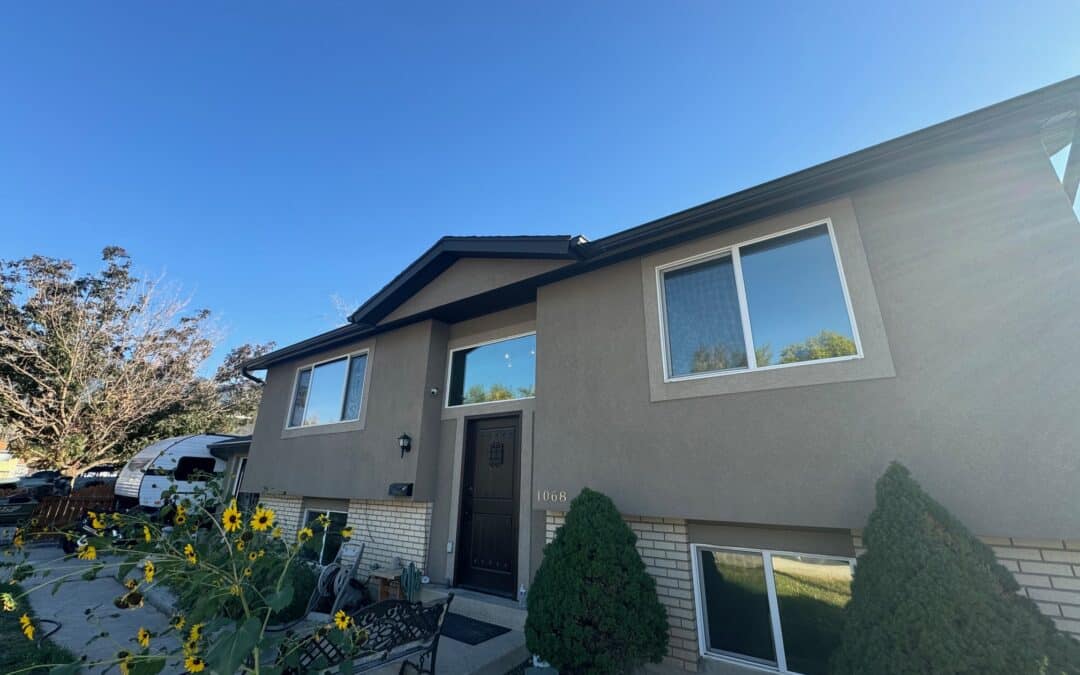
Home window tinting Utah
When most people think of window tinting, they think about how it keeps the car cooler in the summer, or how it adds privacy to an office building. But the residential window films of today are made with state-of-the-art technology for thermal insulation.
Regular, dyed films block light, but energy-efficient window films (also called Low-E, or low emissivity) control radiant heat.
The Magic of Low-E Films
Low-E, short for “low emissivity,” is a term used in window film to describe a surface’s ability to absorb radiant energy. “Emissivity” is a material’s ability to radiate absorbed energy in the form of heat. The higher the emissivity rating of a material, the greater its ability to radiate heat energy. Normal, uncoated glass has a high emissivity value, which means it readily absorbs radiant heat and then radiates the heat outdoors. Window film with a low-E coating has a microscopic layer of metal or ceramic particles that reflect the radiant heat back into the room.
Window film acts as a thermos for your home. The silver lining in a vacuum thermos reflects the heat radiating from your hot coffee inward to keep the coffee hot for hours. Window film does the same thing with your home’s interior heat. Window film reflects that heat back into the room, rather than allowing the heat to escape through the glass window.
Energy Cost Savings
Installing window film isn’t just an investment in the comfort of your home. It’s also an investment in your financial future. Here’s how tinting can really pay for itself, especially during the winter season.
Lower Heating Bills
Window film greatly improves the insulating factor of your existing windows. When your home’s windows don’t lose heat as quickly, your HVAC system doesn’t have to work as hard to keep your home warm. If your home holds heat more efficiently, your furnace will need to kick on less often to keep the interior temperature of your home comfortable. In fact, some studies have shown that by simply installing energy-efficient window film, annual energy costs can be reduced by as much as 30%, depending on your climate and the specific film installed.
Consistent Interior Temperatures
We’ve all got that one “cold room” in the house. The culprit is usually a big wall of windows, or glass doors. Window tinting evens out temperature differences between rooms in your home. By cutting back on heat loss where it happens, you prevent hot and cold spots from developing, so you won’t have to blast the heat in the living room just to stay cozy in the bedroom.
A Cost-Effective Alternative to Replacement
Swapping out single-pane windows for double/triple-pane glass works, of course, but the ROI might take decades to materialize because of the enormous up-front cost. Window film provides nearly the same thermal benefit for a tiny fraction of the price. You get an instant upgrade in performance, without the hassle and expense of full-on window replacement.
Beyond Warmth: Additional Perks of Window Film
Home window tinting near me
While energy savings are the headline act, window tinting brings several supporting benefits that improve your quality of life year-round.
UV Protection for Your Interiors
Think winter sun is a non-issue? Think again. Even on cold, overcast days, UV rays penetrate clear glass, bleaching your hardwood floors and carpets and cooking the life out of your furniture. Most commercial-grade window films filter out up to 99% of the sun’s UV rays. It’s like sunscreen for your house, keeping your interiors looking vibrant and protecting your family’s skin from sun damage, even when they’re indoors.
Glare Reduction
Winter sun also sits lower in the sky, which means more of it tends to shine directly into the eyes at window-ledge level. This can create serious glare problems, which are no fun when you’re trying to watch TV or type on your computer. Window film tames this glare by filtering the sunlight, so it’s less harsh without making your room go dark. You still get the natural light and the view, without having to squint.
Year-Round Performance
The great news about “winter-proofing” with window film? It’s a two-fer. The film you use to bounce heat back into your home in the winter also bounces solar heat out of your home in the summer. It’s a passive system that works 365 days a year to help regulate the temperature inside your house.
Is Window Tinting Right for Your Home?
If you want to reduce heating costs and increase comfort without a full-on construction project, window tinting is one of the best ways to go. It’s a great solution for:
- Single-pane windows.
- Large expanses of glass or floor-to-ceiling windows.
- Historic homes that would lose character if original windows had to be replaced
- Homeowners interested in an immediate green upgrade
Conclusion
Winterizing your home doesn’t have to be hard. The trick is to work smarter, not harder. When it’s cold outside, resist the urge to just crank up the thermostat and overheat your house. Instead, take a good look at the envelope of your home. Chances are, your windows are the weak link in your energy-efficient chain.
Window tinting is an invisible, stylish barrier that keeps the heat where it belongs—inside your home. It’s an investment that will keep on giving, in the form of lower bills, higher comfort and preserved interiors. Want to stop heating up the neighborhood? Get in touch with a local window film expert today to find out how you can assess your home’s requirements and start saving energy before the next freeze. For home window tinting in your area, reach out to Sun Guard Tint at (801) 657-9260 or fill our our online quote form. We’ll be happy to swing by and provide you a free estimate!
Sun Guard Tint
https://www.google.com/maps?cid=5789725123746519054
7879 S 1530 W #400, West Jordan, UT 84088, United States
(801) 657-9260
https://sunguardtint.com/