
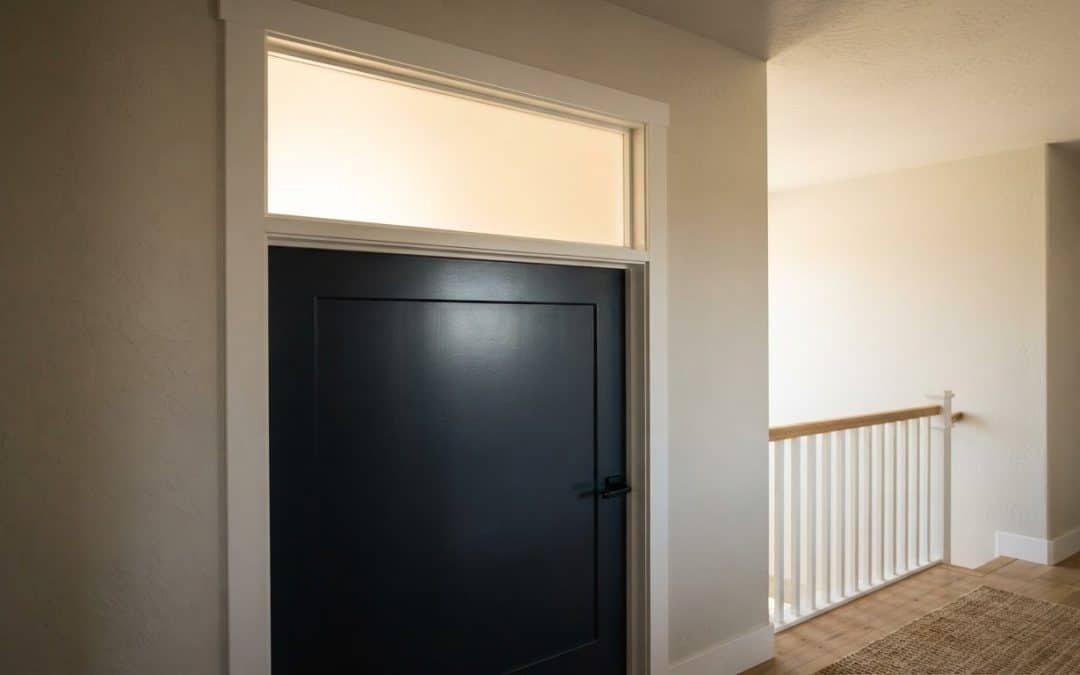
A transom window can bring daylight into a room while sitting above a door or another window, but clear glass may raise privacy concerns. When choosing transom window privacy film in South Jordan, consider how much privacy you want while preserving the daylight and light control the space needs.
Transom windows sit above interior or exterior doors and windows. They can brighten a room or add a decorative detail, and may be rectangular, semicircular, or custom-shaped. Because they sit higher on the wall, they can let light through while the opening below stays closed.
Privacy film lets you adjust the glass while preserving the balance that makes a transom useful. This article explains what defines a transom window and how different film finishes affect privacy, light, and daylight, along with the factors to consider when choosing a finish for your space.
Key Takeaways
- Recognize transom windows by their position above a door or window, and understand how their shape can affect a film installation.
- See why accurate templating and careful edge finishing matter, especially when a transom isn’t perfectly square.
- Compare how privacy film can limit views and light, then consider the balance that best suits the room.
- Assess how the window’s height, glass style, and desired daylight influence privacy choices.
- Learn when residential privacy window tinting can help address concerns about visibility and light in your home.
What is a Transom Window?
A transom window sits above a door or another window, over the beam separating the opening from the wall. It may be on an interior wall, such as above a doorway between rooms, or on an exterior wall above an entry. Its elevated position distinguishes it from the larger opening below.
Transoms often bring daylight into spaces that might otherwise feel dim, while adding a distinct architectural detail. Many are fixed rather than operable. Shapes range from simple rectangles to custom forms fitted around a sloped ceiling. A traditional semicircular design with panes divided into radiating sections is sometimes called a fanlight.
Adding a transom during new construction is generally simplest because the opening can be planned with the wall and door layout. Adding one to an existing home involves creating a new opening above a door or window. Since this changes the existing wall, the work calls for a licensed contractor.
Film choices for a transom can take the glass shape into account. Older transoms may not be perfectly square, and some have angled or curved sections. The shape and condition of the glass can help inform which film is suitable for the window.
Transom panes can vary in size and layout, which may affect how film looks on the glass. A small pane can make slight alignment differences more noticeable, while muntins or dividers create separate glass sections. A fanlight with separate panes has a different appearance from one uninterrupted pane.
The transom’s frame and glass layout are useful considerations when choosing film. An even-looking finish can complement the frame, while the presence of muntins or dividers may influence the overall appearance.
- Glass shape: transoms may have rectangular, angled, or curved outlines.
- Pane layout: muntins or dividers separate the glass into sections.
- Appearance: film can be considered in relation to the frame and glass layout.
Utah requirements and HOA covenants in South Jordan can vary by property and by whether a finish changes the exterior appearance. Consider local requirements and community design rules before choosing a film finish visible from outside.
Film suitability depends on the film type, glass dimensions, and the transom’s shape. Small or curved panes may call for particular consideration when selecting film. A qualified professional can help assess the window and available options.
Film life depends on its construction, exposure, and installation quality, so there is no fixed lifespan for every transom. For maintenance, follow the care directions for the specific film and avoid abrasive cleaning that could mark its surface.
Window film as an option for blocking light
Film can reduce the light passing through a transom, but the effect depends on its appearance and how much glass it covers. A darker or more opaque-looking finish changes the view and light differently from a clearer finish. Choose based on the room’s purpose, not just its brightness at one moment.
Consider a bedroom where early daylight feels disruptive. Film selected to limit incoming light may help, but it stays in place throughout the day. Unlike curtains or blinds, it cannot be opened when you want daylight and closed when you do not. Fixed film suits consistent preferences; movable coverings suit changing needs.
For a transom above an entry, the goal may be to soften glare rather than darken the whole area. A less obstructive-looking film can preserve more of the window’s visual openness, while a choice that blocks more light can make the space dimmer. The result depends on the material and the glass area it covers.
Film treats the glass itself, so its effect is not limited to a particular time of day. A curtain or blind, by contrast, provides more direct control over the opening. A narrow transom may not suit conventional coverings, making film one option to consider alongside custom blinds or curtains.
- For steady light reduction: consider film with an appearance suited to the desired level of dimming.
- For changing conditions: consider blinds or curtains that can be adjusted during the day.
- For a bright room: avoid choosing a finish solely for maximum light blockage if daylight remains important.
Before deciding, distinguish between blocking light and improving privacy. A finish that obscures a view may also change how much daylight enters, but the effects are not automatically identical. Consider the view from both sides, when the room is used, and whether the window should remain bright. These priorities help narrow the options.
Transom size and shape also affect the practical choice. A small rectangular pane may need a different approach from a wide transom divided into several sections. Dividers, surrounding trim, and desired coverage all affect the film’s appearance at the edges. For a curved fanlight, consider the pane layout when aiming for a uniform look.
In South Jordan, a room facing strong daylight may call for a different balance than a shaded interior doorway. Consider how much light the room needs for its daily use, then weigh fixed film against adjustable coverings. Residential window film options provide a starting point for understanding how film can serve different home glazing needs.
Film privacy levels
One-way privacy film does not provide dependable privacy at night when indoor lights are on. Its reflective effect depends on the brightness difference between the two sides, so a lit room may become more visible from outside after dark.
Privacy levels describe how much a film obscures a view, but there is no universal scale shared by every film. A clearer finish can soften visibility while preserving an open appearance. A more obscuring finish can conceal details more effectively, but changes the view through the glass.
Consider a transom above a bedroom door. If you want to obscure shapes while retaining some visual connection between rooms, a translucent appearance may suit the space. If clear sightlines matter less than separation, a more opaque-looking finish may be preferable. Match the privacy level to the room’s use.
Privacy and daylight are related, but they are not interchangeable. A film can obscure a view without making the window completely dark, while a denser appearance may reduce the sense of openness. The effect depends on the film and glass together, so do not assume a privacy label alone predicts brightness.
- Lower visual obstruction: suits spaces where openness and light remain priorities.
- Moderate obscurity: balances a softened view with a defined separation between spaces.
- Greater obscurity: prioritizes blocking direct views over a clear view through the pane.
For an interior transom between a hallway and a room, the view usually changes with activity on both sides. A decorative or textured finish can obscure details while preserving a design feature. For an exterior-facing transom, consider daytime visibility and nighttime lighting before selecting a privacy level.
At night, a brighter interior can make a one-way effect work in reverse. If nighttime privacy matters, consider the film’s daytime appearance and after-dark performance separately. A covering that can be closed after sunset provides a different kind of control from film, which remains fixed on the glass.
Before selecting a finish, define what you want to block: faces, movement, or recognizable objects. Then consider the viewing angle and whether the transom faces an occupied area, such as a neighboring room or walkway. These details help distinguish a subtle privacy preference from a need for stronger visual separation.
For South Jordan homes, the right privacy level depends on the transom’s position and the room’s purpose. A high window above an entry may need a different balance from an interior transom beside a bedroom. Compare privacy from both sides of the glass and account for nighttime lighting.
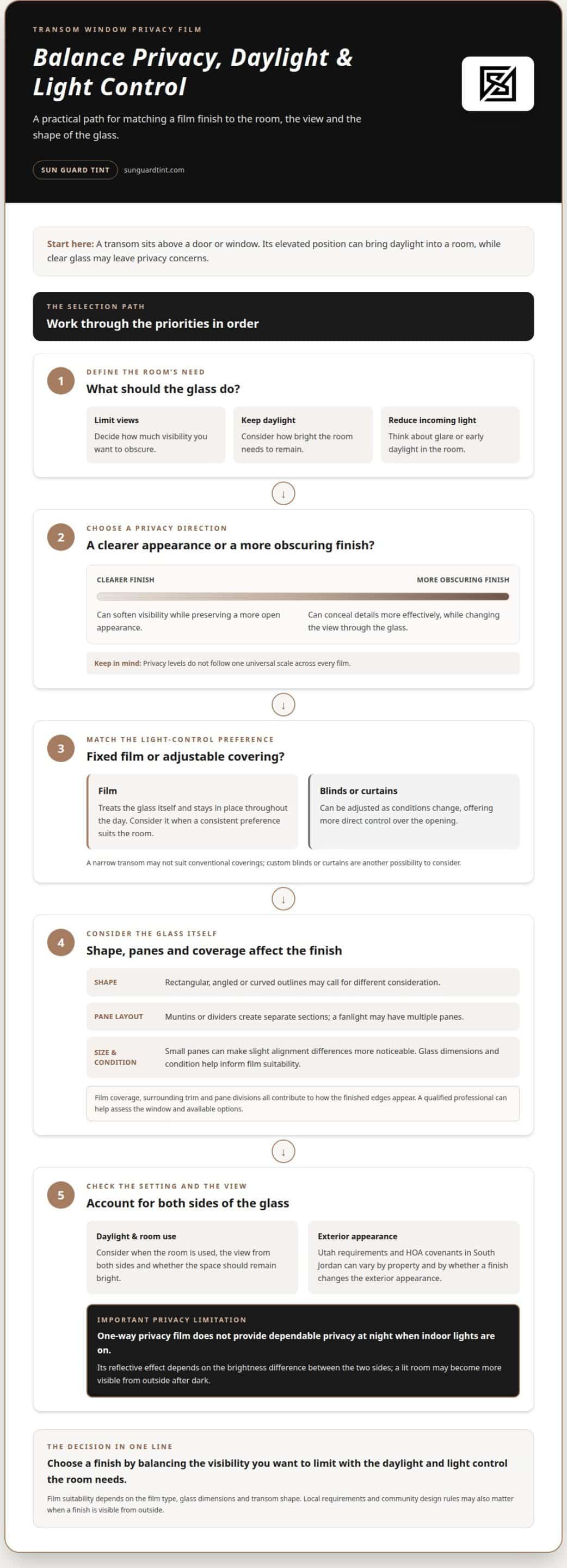
Transom window privacy and daylight
A transom can add daylight while the doorway below stays closed. Film changes how clearly someone can see through the glass, so consider privacy and brightness together. A hallway transom, for example, may need a different balance from one above a bedroom entry.
Start by considering the view the window provides. A transom facing a neighboring room, walkway, or nearby window may expose movement or interior details. If the glass mainly admits light from a private interior space, preserving a clearer appearance may matter more than obscuring the view.
Next, consider the room beneath the transom. A dark hallway may benefit from retaining more daylight, while a bedroom doorway may call for greater visual separation. The same film appearance can feel different in each location because the room’s purpose and surrounding light differ.
Privacy also depends on where someone can see the glass from. A high transom above an entry may limit direct views into the room, while a lower interior transom can reveal more from an adjoining space. Consider sightlines from standing areas, stairs, and nearby rooms before choosing a finish.
The glass’s existing appearance also matters. Transom glass may be clear, textured, or frosted. Film can change the appearance of clear glass, while existing texture or frosting already affects the view. For example, adding a strongly obscuring finish to frosted glass may put separation ahead of visual openness.
Use these considerations to define the preferred balance:
- Preserve daylight: favor a less obscuring appearance where the room needs light from the transom.
- Increase separation: prioritize obscuring views where the glass overlooks a private area.
- Keep the design cohesive: consider how the finish looks beside the door, trim, and adjacent panes.
A divided fanlight needs a consistent visual result across its individual panes. A single rectangular transom looks different, even if both openings serve the same room. The number and arrangement of glass sections affect how a chosen finish appears across the whole feature.
Daylight needs can vary by room and time of use. An interior transom above a bedroom door may be most useful during the day, while privacy matters more after dark. Exterior-facing glass also has different surroundings from a transom between indoor spaces, so consider both sides.
For transom window privacy film in South Jordan, start with the view, the room’s daylight needs, and the glass already in place. These factors help identify whether the priority is a brighter interior, a more obscured view, or a balance between the two.
Transom windows and privacy
A transom’s height can help preserve privacy below it. In many layouts, the door or window beneath can stay closed while daylight passes through the upper glass. For example, an entryway can receive light without leaving its main door open.
That benefit depends on where the transom sits and what it faces. A high pane above a front door may offer less direct visibility into a home than a lower window. A transom above an interior doorway, however, may reveal activity between adjoining rooms. The glass’s position matters as much as its appearance.
Before choosing a privacy treatment, identify the view that matters most. Consider sightlines from a walkway, neighboring window, or nearby room. Then determine whether the concern is seeing faces, movement, or the general outline of objects. These distinctions help match the treatment to the actual privacy need.
The glass itself can contribute to privacy. Transom windows may use clear, textured, or frosted glass. Clear glazing offers the least visual obstruction, while texture or frosting softens what can be seen through the pane. Film changes the glass’s appearance, so the existing finish is a useful starting point.
Privacy needs can differ across a home. A clear transom above a living-room entry may preserve an open connection between spaces, while a frosted pane above a bathroom doorway may provide more visual separation. For an exterior entry, the important view may be from outside; for an interior transom, consider both adjoining rooms.
Use these checks to frame the decision:
- Location: note whether the glass faces outdoors or another room.
- View: identify the specific sightline or activity you want to obscure.
- Existing glass: account for clear, textured, or frosted glazing.
- Room use: weigh openness against separation for that doorway.
A transom can support privacy without replacing the door’s function. Keeping the door closed still provides a physical boundary, while the upper pane admits light. Film can adjust visibility through the glass, but it does not turn the transom into a wall or close the opening itself.
For a divided fanlight, privacy can look different across its separate panes than across one clear rectangle. The dividers and existing glass finish affect the overall appearance. Consider the complete window to avoid choosing a treatment that suits one pane but looks inconsistent across the feature.
For a home with several transoms, assess each location separately rather than applying one privacy choice everywhere. A treatment should reflect the view, glass, and purpose of that particular opening. Explore window privacy options as you consider the right balance for your home.
Sun Guard Tint: Privacy Window Tinting For House
Sun Guard Tint provides Privacy Window Tinting For House for homeowners seeking greater privacy through residential glass. If a transom lets daylight in but exposes a view you would rather soften, residential window tinting can address that concern while keeping the window’s role in the room in focus.
The right choice depends on the transom’s location, its existing glass, and how much daylight you want to retain. Share whether the window faces outdoors or another room, and describe the privacy and light balance you want. Those details help guide a discussion about suitable residential film options, since no two transoms are alike.
For a considered approach to privacy and daylight in your home, contact Sun Guard Tint to discuss your transom window.
Shape a More Private, Light-Filled Space
Use your transom as a starting point for considering privacy throughout the property. The right approach for one pane may differ from what nearby windows need, so consider how each space is used and which views matter most. A transom window privacy film project in South Jordan can help you weigh the room’s daylight and privacy needs together.
Sun Guard Tint offers residential and commercial window tinting, along with Smart Window Film. If you are considering a treatment for a transom or other glazed areas, these services provide options to discuss based on your property’s needs.
When you’re ready to take the next step, contact Sun Guard Tint to discuss your window film needs. A thoughtful choice can help your space feel more comfortable while preserving the qualities you value.
Frequently Asked Questions
What types of privacy film work best for transom windows?
The right film depends on whether you prioritize obscuring views, maintaining daylight, or creating a decorative finish. A translucent or frosted appearance can soften visibility while letting diffused light into the room. A more opaque-looking film offers stronger visual separation but makes the window feel less open. For a transom with divided panes, consider how the finish will look across every section, not just one pane.
Which transom window privacy films preserve natural light while obscuring views?
Translucent and frosted films can soften views while letting daylight through the glass. They diffuse the view rather than providing a clear sightline, which can suit a hallway transom that brightens an interior. The balance varies with the film’s appearance and the existing glass. Consider how the room looks in daylight and whether preserving a clear view matters as much as keeping the space bright.
Where can I buy or get privacy film installed near South Jordan, Utah?
Sun Guard Tint offers residential window tinting and privacy window tinting for homes, including service in South Jordan. The company also serves West Jordan, Salt Lake City, Provo, Orem, Lehi, Payson, Spanish Fork, and Saratoga Springs. Professional installation can be useful when a transom’s shape, divided panes, or position makes precise fitting important. Contact Sun Guard Tint to discuss residential privacy film for your window.
How do frosted, reflective, and one-way privacy films compare for transom windows?
Frosted film diffuses views through the glass and does not rely on a difference in brightness between indoors and outdoors. Reflective and one-way films rely on that lighting contrast for a more private-looking side, and their effect can change after dark when interior lights are on. If privacy matters at different times, weigh the daytime appearance against nighttime visibility.
How do you measure and install privacy film on a transom window?
A professional installer assesses the glass outline and accounts for dividers before fitting film. A divided fanlight needs attention to its separate panes, while an older or irregular transom requires an assessment of its actual shape. A professional installer can determine the appropriate fit and installation approach for the window.
How long does transom window privacy film last, and what maintenance does it need?
Film life depends on its construction, exposure, and installation quality. Follow the care directions for the specific film and avoid abrasive cleaning that could mark its surface.

Article by
Sun Guard Tint