
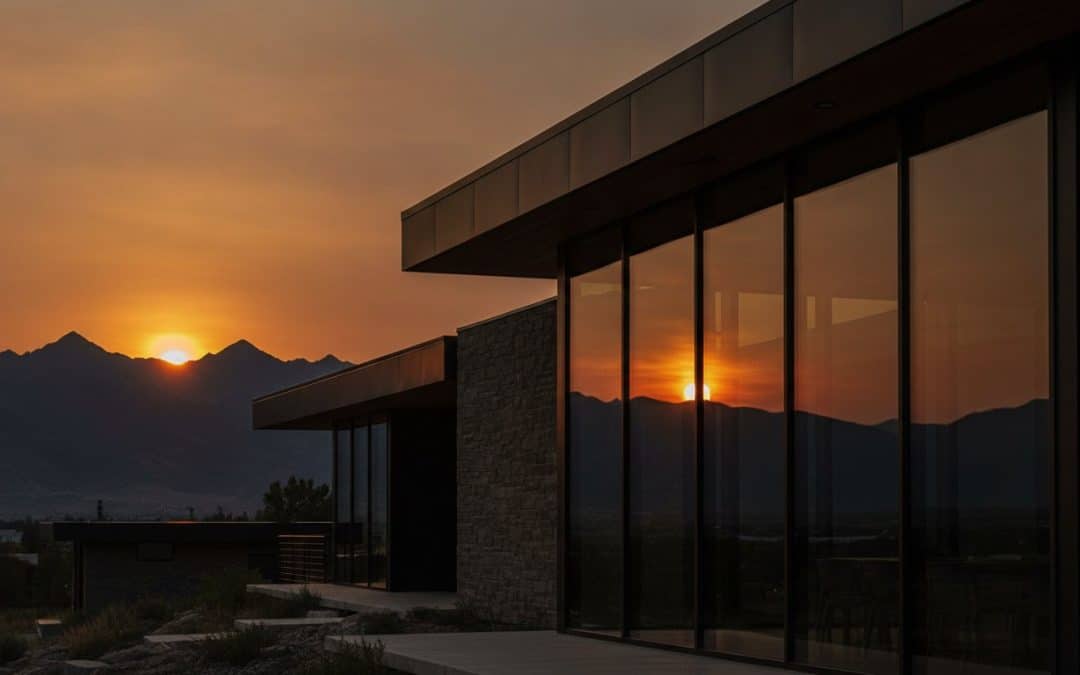
In Utah’s high-altitude climate, your windows are often the weakest link in your property’s defense against the elements. While the mountain views are breathtaking, the intense UV radiation at this elevation can quickly turn a comfortable living room into a sweltering greenhouse. Investing in energy saving window film Utah property owners trust is no longer just an aesthetic choice; it’s a strategic move to shield your interior from 90°F summers and relentless sun glare. This specialized protection acts as a thermal barrier, ensuring your home remains a sanctuary regardless of the temperature outside.
You’ve likely felt the frustration of watching your cooling costs climb while your expensive hardwood floors and upholstery slowly lose their luster to sun damage. This guide will show you how high-performance films provide a professional-grade barrier that lowers your utility bills and preserves your interior beauty without the need for heavy, light-blocking curtains. We’ll explore the technical advantages of modern solar control technology, the 2026 shift toward long-term ROI, and why specialized craftsmanship is the key to maintaining a comfortable, high-end environment year-round.
Key Takeaways
- Understand how Utah’s 4,000-foot elevation amplifies UV intensity and why standard glass requires a specialized thermal shield to manage solar heat.
- Discover how professional energy saving window film Utah applications can reduce year-round energy consumption by up to 25% while improving indoor comfort.
- Learn to distinguish between Ceramic and Smart films to maximize infrared heat rejection without sacrificing natural light or your property’s aesthetic.
- Identify strategies to preserve high-end interior assets, such as hardwood floors and upholstery, from irreversible sun damage and fading.
- Explore why expert installation is critical for long-term performance and how to avoid the bubbling or glass breakage risks associated with non-professional methods.
The Utah Climate Challenge: Why Windows are Your Property’s Greatest Energy Leak
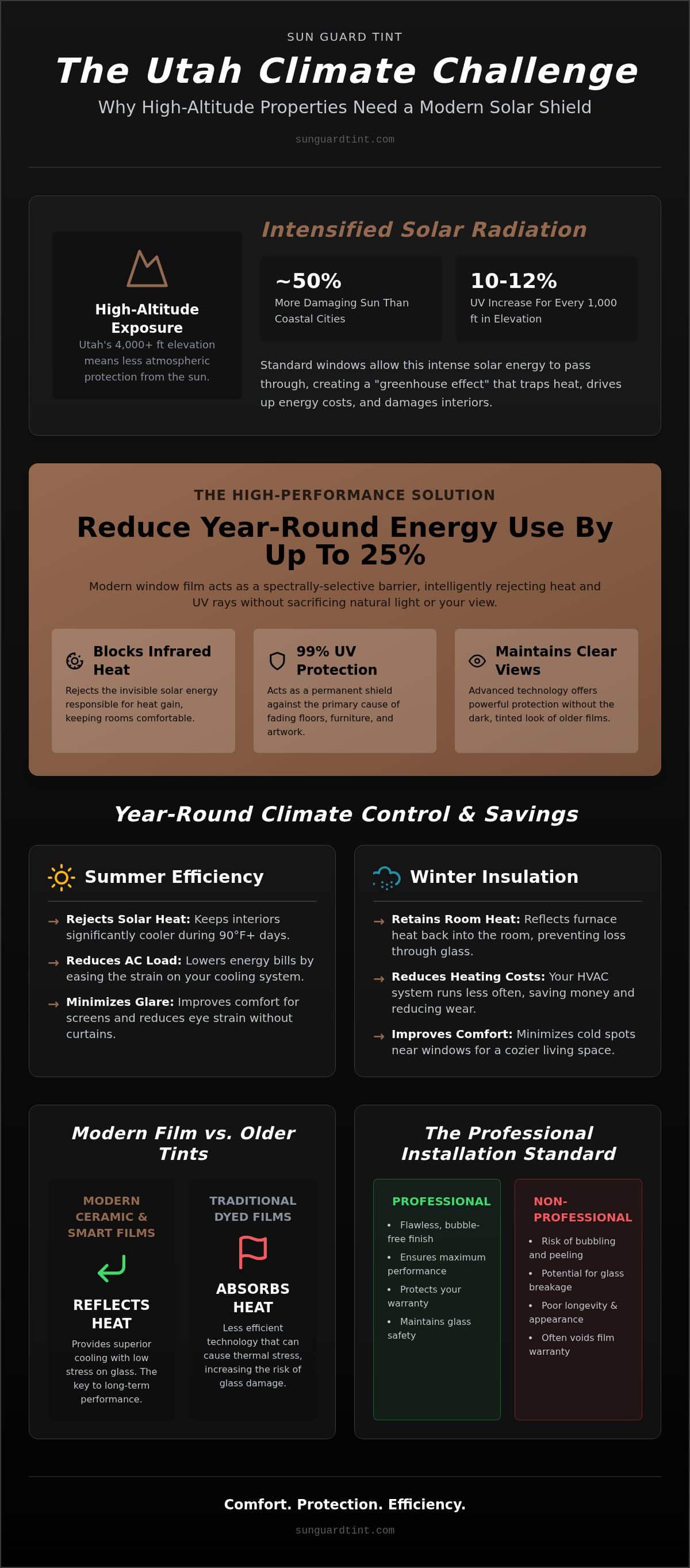
Utah’s geography creates a specific set of challenges for property owners that many standard building materials aren’t equipped to handle. At an elevation of 4,000 feet or higher, the atmosphere is thinner, providing less natural filtration for the sun’s raw energy. This means your windows are bombarded with more intense solar radiation than they would be at sea level. While standard double-pane windows provide basic insulation against outside air, they are frequently transparent to infrared light. This specific wavelength carries the heat that turns your living or workspace into an oven during the peak months of July and August.
This phenomenon happens when solar energy passes through glass and is absorbed by interior surfaces like rugs, desks, and furniture. These objects then radiate that energy as heat, which becomes trapped and cannot escape back through the glass. High-quality residential window film serves as a sophisticated, semi-permeable barrier. The science of window film has evolved significantly, allowing natural light to fill your rooms while selectively rejecting the specific wavelengths responsible for heat gain and interior damage. By using energy saving window film Utah residents can effectively “tune” their windows to block the heat while keeping the view.
High-Altitude UV Exposure in the Salt Lake Valley
UV radiation is significantly more aggressive in our mountain climate. For every 1,000 feet of elevation gain, UV levels increase by approximately 10% to 12%. This makes Utah’s sun nearly 50% more damaging than the sun in coastal cities. The hidden cost of this exposure shows up in faded hardwood floors, bleached upholstery, and ruined artwork. Beyond property damage, these rays pose a health risk to family members or employees who spend hours near untreated glass. Professional film provides a permanent shield that blocks 99% of these harmful rays, protecting both your physical health and your interior investments.
Energy Efficiency Beyond the Summer Heat
Your windows are also the primary exit point for expensive heat during a Utah winter. Cold snaps can send temperatures plummeting, and untreated glass allows your furnace’s warmth to leak right out. Modern thermal films act as an extra layer of insulation, reflecting indoor heat back toward the interior. This year-round temperature regulation means your HVAC system doesn’t have to cycle as frequently. Reducing this mechanical stress helps extend the lifespan of your heating and cooling equipment, protecting one of your property’s most expensive assets from premature failure.
The Science of Savings: How Modern Window Films Manage Heat
Selecting the right protection for your property involves looking beyond the surface level of a simple tint. To truly maximize the benefits of energy saving window film Utah owners must understand how different technologies interact with solar energy. While older, dyed films primarily work by absorbing heat into the glass, modern high-performance films utilize advanced ceramic or spectrally selective layers to reflect heat away before it ever enters your space. This distinction is vital because heat-absorbing films can actually stress your glass; however, reflective technologies provide a more durable and efficient thermal shield.
Performance standards are rigorously maintained by organizations like the International Window Film Association, ensuring that the specifications you read on a product sheet translate to real-world comfort. When evaluating options, the Total Solar Energy Rejected (TSER) is the comprehensive measure of a film’s cooling power. This metric combines the rejection of UV, visible light, and infrared energy into one clear number, giving you a reliable benchmark for comparing different products during a professional consultation.
Understanding the Solar Spectrum
Solar energy is composed of three distinct parts: ultraviolet radiation, visible light, and infrared light. Infrared energy is the invisible source of ‘burning’ heat you feel on your skin when standing near a window. By targeting this specific part of the spectrum, specialized films can block the heat without significantly altering the view. Visible light control remains a matter of personal preference. You can choose films that maintain a crystal-clear look or opt for a darker shade to reduce the intense glare that often makes screens unreadable in our bright climate. UV radiation, while invisible, remains the primary culprit behind interior fading and requires a 99% rejection rate for proper asset preservation.
Performance Metrics for Utah Homeowners
The Solar Heat Gain Coefficient (SHGC) is perhaps the most critical number for local properties. It measures how much solar heat passes through the glass. A lower SHGC is critical for South-facing Utah windows, which bear the brunt of the sun’s intensity for the longest duration each day. Balancing this with the Visible Light Transmission (VLT) ensures you don’t accidentally darken your rooms too much. Choosing an energy saving window film Utah properties can rely on means finding that ‘sweet spot’ where heat is rejected but the mountain views remain vibrant. A high-quality residential window film can offer a low SHGC while maintaining a high VLT, providing the perfect blend of protection and natural ambiance. If you’re unsure which metric to prioritize for your specific floor plan, reaching out for a professional assessment can help clarify the best path forward for your investment.
Comparing Energy Saving Technologies: From Traditional Tint to Smart Film
Choosing the right technology is about matching a specific product to your property’s unique orientation and usage. While traditional dyed films are mostly a thing of the past, modern homeowners now choose between several sophisticated layers of protection. Ceramic window films represent the gold standard for high-performance heat rejection in our region. These films use non-conductive, nano-ceramic particles to block infrared heat without the metallic, shiny appearance of older products. Because they don’t contain metal, they won’t interfere with your cell signals or GPS, making them a reliable choice for the modern, connected home.
For those prioritizing privacy alongside efficiency, dual-reflective films offer a unique solution. They feature a reflective outer layer to bounce solar energy away during the day while maintaining a neutral, less reflective inner layer. This design allows you to enjoy the Salt Lake Valley views at night without seeing your own reflection in the glass. When addressing Utah’s extreme seasonal shifts, Low-E (Low Emissivity) films provide a critical advantage. These films are engineered to keep heat inside during the winter; they effectively turn your existing windows into high-performance thermal barriers that work 365 days a year.
The Rise of Smart Window Film in Utah
The most significant advancement in recent years is the adoption of smart window film. This technology allows glass to transition from clear to private with the touch of a button or an automated sensor. According to Department of Energy research on smart window films, these adaptive technologies can significantly reduce cooling loads by dynamically responding to solar intensity. For high-end residences in West Jordan and Salt Lake City, this offers an unparalleled blend of energy management and on-demand privacy. It integrates seamlessly with modern home automation systems, positioning your property at the forefront of efficiency.
Commercial vs. Residential Film Applications
While homeowners often prioritize aesthetics and UV protection, commercial window film applications focus heavily on rapid ROI and tenant comfort. Large office buildings in downtown SLC frequently suffer from “hot spots,” where certain offices become unusable due to solar gain while others remain cold. Installing energy saving window film Utah businesses trust helps balance these temperatures across the entire floor plan. This reduces the constant demand on HVAC systems and creates a more productive environment for employees. For a deeper look at business-specific benefits, see our commercial window film Salt Lake City guide.
Maximizing ROI: Choosing the Right Film for Your Property
To secure the highest return on your investment, you must first identify which areas of your property are most vulnerable to thermal gain. In the Salt Lake Valley, South and West-facing windows typically require the most robust protection; these surfaces endure the longest hours of direct, high-angle sunlight. By prioritizing these specific elevations for energy saving window film Utah property owners can address the largest energy leaks first. This targeted approach ensures that your HVAC system doesn’t have to work overtime to compensate for a few problematic rooms, leading to more balanced indoor temperatures throughout the entire structure.
The financial logic behind this upgrade is compelling. Data from the U.S. Department of Energy indicates that window attachments can reduce cooling and heating energy use by up to 25%. In our specific climate, some local providers suggest that the resulting utility savings can lead to a total payback period of less than three years. Achieving these results requires professional-grade materials. While hardware store alternatives might seem tempting, they often lack the sophisticated spectrally selective coatings found in commercial-grade films. High-end films offer superior clarity and heat rejection, whereas retail versions frequently rely on heavy dyes that can bubble, peel, or even cause glass breakage due to improper heat absorption.
Glare Reduction and Visual Comfort
Beyond the monthly utility savings, the impact on your daily quality of life is immediate. We’ve all experienced the frustration of “TV glare” in a sunny living room or the eye strain that comes from working at a computer screen near an untreated window. Professional film can reduce this harsh glare by up to 80% without forcing you to live behind closed blinds. This allows you to maintain your connection to the outdoors and enjoy the stunning views of the Wasatch Front while keeping your interior cool and comfortable. It’s about enhancing the functionality of your space so every room is usable at any time of day.
Long-Term Protection and Warranty
A professional installation is more than just a service; it’s a safeguard for your property’s future. Most leading manufacturers require certified installation to keep their comprehensive warranties valid. These warranties protect you against rare issues like seal failure or film delamination, providing the peace of mind that your investment is secure for the long haul. Modern films are engineered to withstand Utah’s extreme temperature swings, from 100°F summer days to sub-zero winter nights, without losing their structural integrity. For more details on choosing the right fit for your home, you can read our Expert Guide to Residential Window Tinting. If you are ready to see how these solutions can transform your specific floor plan, contact our team for a professional consultation.
Professional Installation: The Sun Guard Standard for Utah Properties
While the technical specifications of modern films are impressive, the actual performance of energy saving window film Utah property owners invest in depends entirely on the precision of the application. A high-performance film that is poorly installed won’t just look unprofessional; it will fail to provide the thermal protection you’ve paid for. Achieving a flawless, high-end finish requires more than just a steady hand. It demands a controlled environment and a deep understanding of how different glass types react to Utah’s unique atmospheric conditions. We take pride in a meticulous approach that ensures every project meets our proprietary quality standards, providing the longevity and performance our clients expect.
To ensure your property is ready for a professional application, we recommend a few simple preparation steps. Clearing the area around your windows by moving furniture or fragile decor helps our team maintain a clean workspace and prevents dust from interfering with the film’s adhesive. Whether we are serving a residence in West Jordan, a corporate office in Salt Lake City, or a commercial space in Provo, our goal is to minimize disruption while delivering a transformative result. Our team manages the entire process across the Wasatch Front, ensuring that your assets are shielded from the elements with technical expertise and care.
The Dangers of DIY Window Film
Attempting a self-installation often leads to more than just unsightly bubbles and peeling edges. One of the most significant risks is thermal stress. If the wrong type of film is applied to a specific glass unit, it can trap excessive heat within the pane. In Utah’s climate, this uneven expansion often results in glass breakage or seal failure in double-pane windows. Professional installers use specialized tools and software to calculate the thermal compatibility of a film before it ever touches your glass. Cheap, consumer-grade films often fail after a single harsh summer, whereas a professional-grade installation is designed to last for decades without degrading or losing its protective properties.
The Sun Guard Commitment to Quality
With over 20 years of industry experience, we’ve positioned ourselves as a specialized protector of Utah’s most valuable properties. Our meticulous 5-step installation process includes a comprehensive glass inspection, multi-stage decontamination, custom-fit precision trimming, controlled application, and a final edge-sealing inspection. This attention to detail is what defines our residential window film craftsmanship. We don’t just provide a service; we offer a long-term investment in your property’s comfort and durability. If you’re ready to enhance your home or business with a high-performance thermal shield, Contact Sun Guard Tint today for a professional consultation and expert assessment.
Secure Your Investment with Advanced Solar Protection
Managing Utah’s intense solar radiation requires more than a temporary fix. By choosing a high-performance energy saving window film Utah property owners can effectively shield their interiors from UV damage while maintaining year-round thermal comfort. We’ve explored how modern ceramic and smart technologies provide a sophisticated barrier that standard glass simply cannot match. From reducing 90°F summer heat gain to insulating against winter cold snaps, the right film transforms your windows into active energy-saving assets.
Sun Guard Tint brings over 20 years of local Utah experience to every project. As a West Jordan-based, locally owned business, we specialize in high-performance Smart and Ceramic films designed to withstand our specific high-altitude climate. We take pride in a level of craftsmanship that preserves your mountain views while protecting your furniture, flooring, and peace of mind. Our team is ready to help you navigate the technical specifications to find the perfect fit for your residential or commercial property.
Request a Professional Window Film Consultation for Your Utah Property today and take the first step toward a more comfortable, efficient future.
Frequently Asked Questions
How much can energy saving window film really save on my Utah utility bills?
You can expect a significant reduction in your monthly cooling and heating costs. The U.S. Department of Energy states that window attachments can reduce energy use by up to 25%. In our high-altitude climate, this efficiency translates to lower utility bills year-round as your HVAC system operates more effectively without the constant battle against solar gain or winter heat loss.
Will window film make my home too dark during the winter?
Modern films are engineered to maintain high visible light transmission, so your home won’t feel dark during the shorter winter days. You can choose spectrally selective films that are virtually invisible to the naked eye. These products block infrared heat and UV rays while allowing the natural light you need for a bright, welcoming interior even when the sun is low.
Can energy-saving film be installed on double-pane (IGU) windows?
Yes, energy-saving film can be safely installed on double-pane windows when performed by a professional. Our specialists use thermal stress analysis to ensure the film’s heat absorption properties are compatible with your specific glass type. This professional assessment prevents the risks of seal failure or glass breakage that often occur with improper non-professional applications.
How long does professional window film last in Utah’s climate?
Professional window film is designed to last for decades in Utah’s extreme climate. High-quality ceramic and solar control films are built to withstand 100°F summers and sub-zero winters without bubbling, peeling, or fading. Most professional installations come with comprehensive manufacturer warranties that protect your investment for as long as you own your property.
Does window film provide privacy during the day and night?
Most solar control films provide excellent daytime privacy by creating a reflective exterior, but they don’t provide privacy at night when interior lights are on. If night-time privacy is a priority, we recommend exploring smart window film. This technology allows you to transition your glass from transparent to fully opaque with a switch, ensuring complete seclusion regardless of the time of day.
Will window film stop my furniture and floors from fading?
While no product can stop fading entirely, energy saving window film Utah property owners choose can reduce it by up to 99%. Fading is caused by a combination of UV rays, visible light, and solar heat. By blocking nearly all UV radiation and a significant portion of heat, these films dramatically extend the lifespan of your expensive hardwood floors, rugs, and upholstery.
Is there a difference between ‘tint’ and ‘energy-saving film’?
Traditional ‘tint’ often relies on simple dyes to darken glass, whereas energy-saving film uses advanced ceramic or metallic layers to manage the solar spectrum. While a basic tint might reduce glare, an energy-saving film specifically targets infrared heat and UV radiation. This technical distinction allows for superior thermal protection without necessarily making the windows look dark or reflective.
How do I clean my windows after the film has been installed?
You can clean your filmed windows using a soft cloth or squeegee and a mild, ammonia-free soap solution. It’s important to wait approximately 30 days after installation for the film to fully cure before the first cleaning. Avoid using abrasive pads or harsh chemicals, as these can scratch the protective hard coat that keeps your film looking pristine for years.