
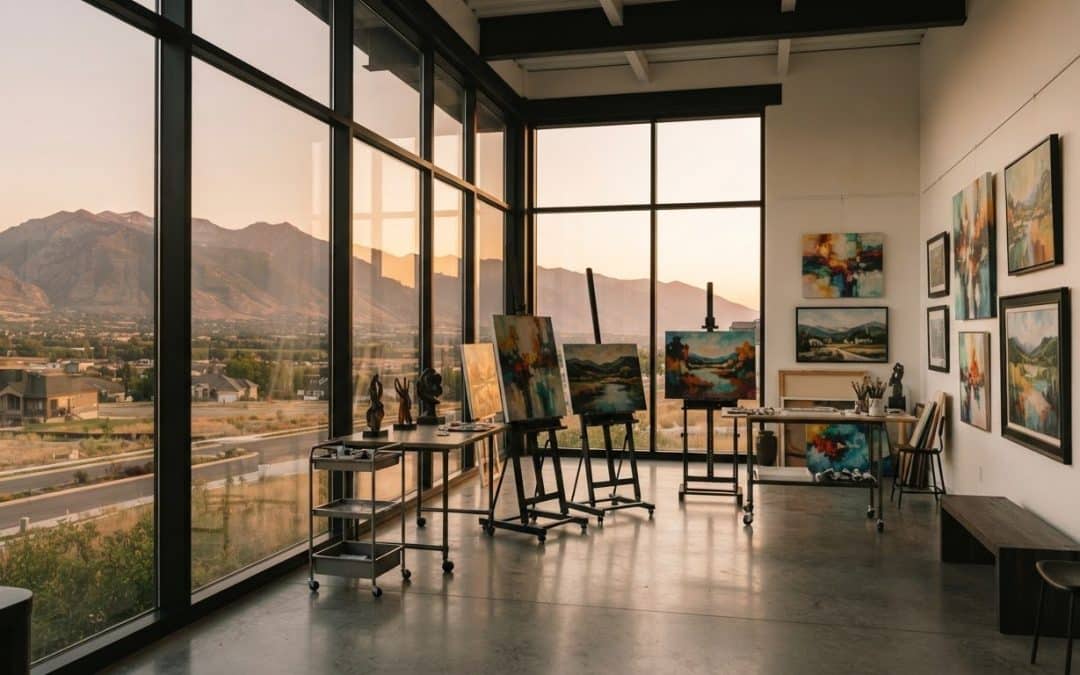
Blocking UV is an important step in protecting artwork, but it does not address every studio concern. Film also needs to be considered for heat, glare, and the natural light artists rely on. If you’re considering UV protection film for art studio Spanish Fork windows, start by looking at how each space is used, not just one performance claim.
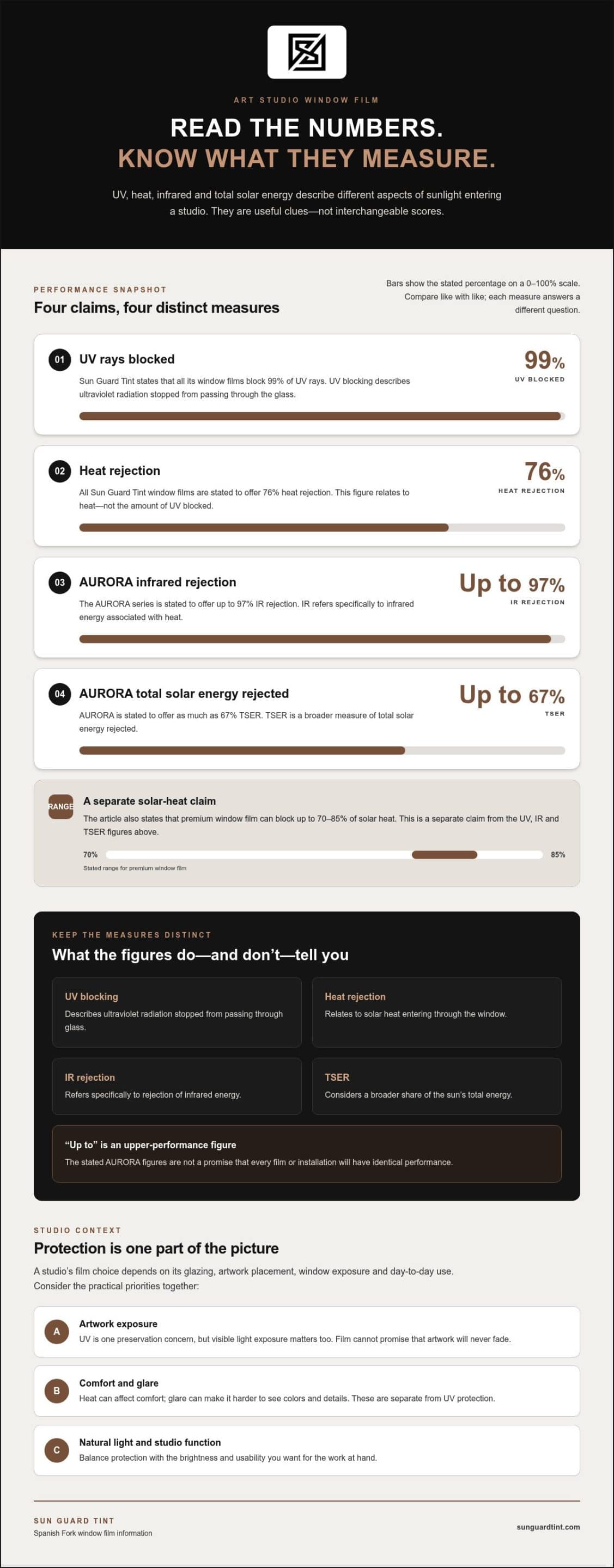
All our window films offer 76 % heat rejection and block 99 % of UV rays. These features can help address UV exposure and indoor comfort, but window film cannot promise that artwork will never fade. Visible light exposure matters too, so weigh protection alongside the brightness and usability you want in your studio.
This guide explains what UV-focused film can and cannot do, how to compare priorities for artwork, comfort, and natural light, and how professional window tinting can be matched to your glazing. Sun Guard Tint serves Spanish Fork with commercial window tinting, free estimates, and free consultations, making it easier to discuss a suitable solution for your space.
Key Takeaways
- Choose UV protection film for art studio Spanish Fork windows by balancing artwork protection with the light and comfort your studio needs.
- Understand how UV, infrared, and solar heat differ so you can compare film performance claims more clearly.
- Compare film priorities such as solar control, glare reduction, privacy, decorative appearance, and added security before deciding what matters most.
- A professional assessment can consider your artwork, window exposure, natural-light preferences, and comfort goals when matching film to your studio.
- Sun Guard Tint’s professional window tinting can help protect your workspace while preserving its function.
Why UV Protection Film Matters for Art Studios in Spanish Fork
Artists need a workspace that supports careful work, but bright windows can raise concerns about artwork displayed or stored nearby. The aim is to protect creative pieces while keeping the studio comfortable and functional, with enough natural light for the work at hand. UV protection film for art studio Spanish Fork windows can be part of that plan, but the right choice depends on more than a UV rating.
UV protection film is professionally applied to existing window glazing to reduce ultraviolet exposure passing through the glass. Window film comes in different types and serves different purposes, so distinguish UV filtering from other performance goals rather than treating every film as interchangeable.
How sunlight can affect artwork in a working studio
Window exposure is worth considering when placing finished pieces, works in progress, or materials near glass. The amount and character of light reaching artwork can vary with the window, glazing, room, and artwork itself. A paper piece near a bright window, for example, may have different preservation needs from a canvas used during a working session.
UV exposure is one preservation concern, but it is not the same as heat or glare. Heat can affect studio comfort, while glare can make it harder to see colors and details clearly. Film selection should account for these separate issues without assuming that addressing one automatically solves the others. No window film should be presented as a promise that artwork can never fade.
What a window film solution is intended to address
Professionally installed window film is applied to existing glazing to provide selected performance benefits while retaining the window’s role in the studio. UV protection focuses on reducing ultraviolet exposure. Heat rejection relates to solar heat entering through the window, while glare reduction addresses visual discomfort from brightness. A film may support more than one goal, but these terms describe distinct outcomes.
“All our window films offer 76 % heat rejection and block 99 % of UV rays.” This describes Sun Guard Tint’s stated UV-blocking and heat-rejection performance, not a guarantee against fading. Artwork can still be affected by light and conditions that vary across a studio, so film is one protective consideration rather than a complete conservation plan.
A professional assessment can connect a film’s intended function with the studio’s glazing, artwork placement, and day-to-day use. Sun Guard Tint serves Spanish Fork with professional window tinting. Its graffiti protection film addresses surface marking on glass, a different concern from reducing UV exposure for artwork. Matching the solution to your priority helps maintain a bright, usable workspace while adding a considered layer of protection.
How UV, Heat, and Infrared Performance Relate to Studio Windows
Film performance claims describe different aspects of sunlight entering a studio. UV means ultraviolet radiation, one factor artists may consider when protecting work near windows. Infrared, or IR, is part of the sun’s energy associated with heat. Solar heat refers to warmth passing through glazing, while glare is visual discomfort caused by bright light. These terms relate to sunlight, but they do not measure the same thing.
What UV blocking and heat rejection tell an art studio
UV blocking describes how much ultraviolet radiation a film stops from passing through glass. Heat rejection describes how much heat the film helps keep out. A UV figure alone does not show a film’s overall solar performance, and a heat figure does not tell you how much UV it blocks. For a studio, these distinctions clarify whether the priority is reducing UV exposure, easing warmth near windows, or addressing both.
All our window films offer 76 % heat rejection and block 99 % of UV rays. Premium window film can block up to 70-85 % of solar heat. These figures describe different performance claims and should not be treated as interchangeable. UV blocking measures ultraviolet protection, while total solar energy rejection describes a broader share of the sun’s energy.
Reducing incoming heat may support a more comfortable workspace, and a suitable film may help with glare. These benefits can matter when an artist works near a bright window or needs visual comfort, but they do not establish a specific outcome for any individual artwork. Light exposure is broader than UV alone; the Library of Congress explains this preservation concern in Light Damage to Collections.
How to read AURORA performance claims
We mostly use AURORA, the most elegant architectural film on the market. ASWF’s AURORA series offers up to 97 % IR rejection and as much as 67 % TSER.
IR rejection refers specifically to the film’s stated rejection of infrared energy. TSER means total solar energy rejected, a broader measure of solar energy the film rejects. They are not alternate names for the same result: one figure addresses infrared, while the other considers total solar energy. The phrase “up to” matters too. It describes the stated upper performance for the series, not a promise that every film or installation will have identical figures.
For an art studio, these numbers are useful starting points, not a substitute for matching film to the windows and the way the space is used. If you’re weighing UV protection film for art studio Spanish Fork windows, Sun Guard Tint can help relate film performance to your glazing and comfort priorities.
Compare Window Film Priorities for an Art Studio in Spanish Fork
Studio windows have different jobs. They bring in daylight, shape the room’s comfort, and may face artwork or work surfaces where exposure is a concern. Comparing film by its main function can make the choice clearer than relying on one performance figure. Use the table as a starting point, then weigh each function against how you use the space.
| Primary concern | Relevant film function | Studio consideration |
|---|---|---|
| Sun exposure and solar heat | Solar-control film | Consider for windows where incoming sunlight contributes to warmth, while keeping UV protection and desired daylight in view. |
| Bright, uncomfortable light | Glare-reduction film | May make viewing a canvas or working at a nearby table more comfortable; consider how the change affects the studio’s brightness. |
| Visibility into the studio | Privacy film | Relevant when privacy matters. Balance screening views with the sense of openness you want in the room. |
| Appearance or visual separation | Decorative film | Can serve an aesthetic purpose or distinguish areas; consider how its appearance fits the studio and its natural-light needs. |
| Added glass protection | Security film | Addresses a different priority from UV or comfort control and may suit studios where protecting the glazing is also a concern. |
Prioritize artwork protection, comfort, or privacy
Start with the concern that matters most in the room. If protecting artwork from UV exposure leads, make UV performance central to the discussion. If a window also creates uncomfortable warmth or brightness, consider heat and glare control as separate priorities. Privacy and decorative appearance are useful when they fit the space’s needs, rather than being added by default.
A single studio may need a balance rather than one dominant feature. For example, a work area beside a bright window might call for UV protection and greater visual comfort, while a street-facing display area could make privacy more relevant. The right combination depends on artwork placement, window exposure, and how the studio is used throughout the day.
Consider the windows and the studio’s daily use
Think about which windows receive direct sun, where finished work and materials sit, and how much natural light you want for color-sensitive tasks. The glazing and studio layout also shape which film priorities make sense. For context on how window technologies can address solar energy, the Department of Energy discusses Transparent Thermochromic Smart Window Films.
Sun Guard Tint’s commercial window film options suit studio glazing. A professional assessment can connect your exposure, artwork locations, light preferences, and comfort concerns with a suitable approach. The goal is a considered balance: protection that supports the studio without overlooking how it needs to function.
Choose UV Protection Film for Your Spanish Fork Studio with a Professional
Choosing film for an art studio is a practical decision, not a one-size-fits-all product match. A professional can assess the glazing and relate its exposure to the way you use the room, helping you weigh artwork concerns alongside natural light, comfort, privacy, and appearance. For UV protection film for art studio Spanish Fork windows, a clear conversation about your priorities is a strong starting point.
What to discuss during a studio film consultation
Describe the artwork you want to protect and what you’ve noticed about sunlight in the space. Finished pieces near a bright window, work surfaces affected by glare, and areas that feel warm may point to different priorities. Your input helps shape a recommendation around how the studio operates, rather than focusing on a performance number in isolation.
During a consultation, discuss:
- Which windows receive the most direct sunlight and where artwork or materials are positioned.
- How much natural light you want to retain for viewing colors and working comfortably.
- Whether heat, glare, privacy, or the appearance of the glazing is also a concern.
- How the studio’s windows support daily activities, from creating work to displaying or storing it.
This gives the professional a fuller picture of the space and helps align film function with the studio’s needs. If markings on glass are a separate concern, graffiti protection film addresses that surface issue, rather than serving as a substitute for film selected for UV or comfort priorities.
What professional installation and care mean
Once the priorities are clear, professional assessment and installation connect the chosen film to the existing glazing. Window tint does not damage glass when installed by a professional. All window film can be removed or replaced by a professional installer without damaging your windows. This can reassure studio owners considering a lasting change to the workspace without treating the film as permanent.
Project timing depends on the work involved. Most residential and commercial window film projects can be completed in just a few hours. Complex projects may take up to a day.
Sun Guard Tint provides free consultations and free estimates for a professional discussion of your studio’s windows and priorities. Use the consultation to describe how you want the room to feel and function, so the recommendation considers both protection and the experience of working in the space. Arrange a free studio film consultation to discuss the next step.
Protect Your Art Studio with Sun Guard Tint’s Window Film Service
Sun Guard Tint provides professional window tinting for homes and businesses in Spanish Fork and Utah communities. For a studio, selecting film means more than choosing a product based on one number. A recommendation should reflect the artwork and materials in the space, how windows affect daily work, and the balance you want between protection, natural light, and comfort.
A professionally selected film for the studio’s priorities
Residential or commercial window tinting can suit different studio settings, from a workspace in a home to a dedicated business location. A professional assessment connects the window film to the glazing and the studio’s use. The aim is to understand what matters most before settling on a solution, whether that is UV exposure, heat, glare, privacy, or the look of the windows.
During a consultation, consider describing:
- Where finished artwork, works in progress, and supplies are located in relation to the windows.
- Which windows bring in the most sunlight and how the light changes the workspace.
- How much daylight you want to preserve for creating, viewing colors, or displaying work.
- Whether comfort, glare, or privacy is part of the concern alongside UV exposure.
This context supports a recommendation based on your studio rather than a general promise about what film will do. Window film can reduce UV exposure, but it cannot guarantee artwork will never fade. It is one considered layer of protection that may be combined with other choices about where and how work is displayed.
We mostly use AURORA, the most elegant architectural film on the market. ASWF’s AURORA series offers up to 97 % IR rejection and as much as 67 % TSER. These figures are useful for understanding film performance, but they do not guarantee a particular result for every artwork or room.
Request a consultation for your Spanish Fork art studio
A professional consultation gives you a chance to explain the studio’s layout, window exposure, and goals while discussing a film approach suited to how you work. Sun Guard Tint offers free estimates and free consultations, so you can explore options with your priorities in mind. A clear conversation can help you decide what matters most and what kind of window film solution best supports the space.
If you’re considering UV protection film for art studio Spanish Fork windows, share what you want to protect and how you want the workspace to feel and function. Sun Guard Tint can help you consider a professional window tinting solution for your studio. Request free estimates and free consultations.
Make Your Studio a More Considered Creative Space
The light that supports your creative process deserves the same thoughtful attention as the work it illuminates. A professional film assessment can help you consider how your windows fit into the studio’s plans, whether you’re arranging a new workspace, displaying finished pieces, or adapting a room for changing projects. The goal is not to eliminate daylight, but to make an informed choice about how your space looks and feels while adding a layer of protection.
For UV protection film for art studio Spanish Fork windows, start with the priorities that matter most to you: protecting artwork, maintaining a comfortable work area, and keeping the natural light you value. Sun Guard Tint can help you explore a solution suited to your studio and its glazing.
Request free estimates and free consultations to discuss your art studio’s windows and goals. Sun Guard Tint serves Spanish Fork, West Jordan, Salt Lake City, Provo, Orem, Lehi, Payson, South Jordan, and Saratoga Springs.
Frequently Asked Questions
Can UV protection film prevent artwork from fading completely?
No. UV protection film can reduce ultraviolet exposure through a window, but it cannot guarantee that artwork will never fade. Visible light and other conditions can also affect materials over time. For example, a work on paper displayed in a bright spot may need more than a film choice alone. Consider the artwork’s sensitivity and display location as part of a broader preservation plan.
Does window film change the appearance of an art studio’s windows?
It can, depending on the film selected. Some films may change how the glass looks or how light feels in the room, while decorative options are chosen partly for their visual effect. If color accuracy and natural light are important for your work, include those priorities in the professional discussion. The aim is to choose film that suits the studio’s appearance and use, not just its protection goals.
How long can high-quality window film last in a studio?
High-quality window film can last upwards of 10-20 years. Actual service life depends on the film type and conditions, so this is a broad expectation rather than a fixed lifespan for every studio. Windows exposed to different amounts of sunlight or used in different environments may not age identically. Office window tinting can last between 10 to 15 years or longer. A professional can help match a film solution to your studio’s glazing and priorities.
Can window film be removed without damaging studio windows?
Yes. All window film can be removed or replaced by a professional installer without damaging your windows. This can be helpful if the studio’s purpose changes, you renovate, or your light and privacy preferences shift over time. Removal is professional work. An installer can address film removal or replacement as part of a future change to the space.
Does window tint damage glass when professionally installed?
Window tint does not damage glass when installed by a professional. Professional installation is the appropriate route for applying film to studio windows. If you have concerns about the glazing or the way the room is used, mention them during the consultation. A clear discussion can help you understand how the proposed film relates to your specific studio windows.
How long does professional window film installation take?
Most residential and commercial window film projects can be completed in just a few hours. Complex projects may take up to a day. The time depends on the scope and complexity of the project, so an art studio with multiple windows may differ from a smaller, simpler job. A professional estimate can give you project-specific expectations before installation is scheduled.
Can window film help if my art studio has skylights?
Film can be considered for skylights, and Sun Guard Tint includes skylights among its window-film service categories. A professional assessment can account for overhead exposure, the artwork or work surfaces below, and how much daylight the studio needs. Sun Guard Tint serves Spanish Fork, West Jordan, Salt Lake City, Provo, Orem, Lehi, Payson, South Jordan, and Saratoga Springs. A skylight’s role in the room should guide the discussion.