
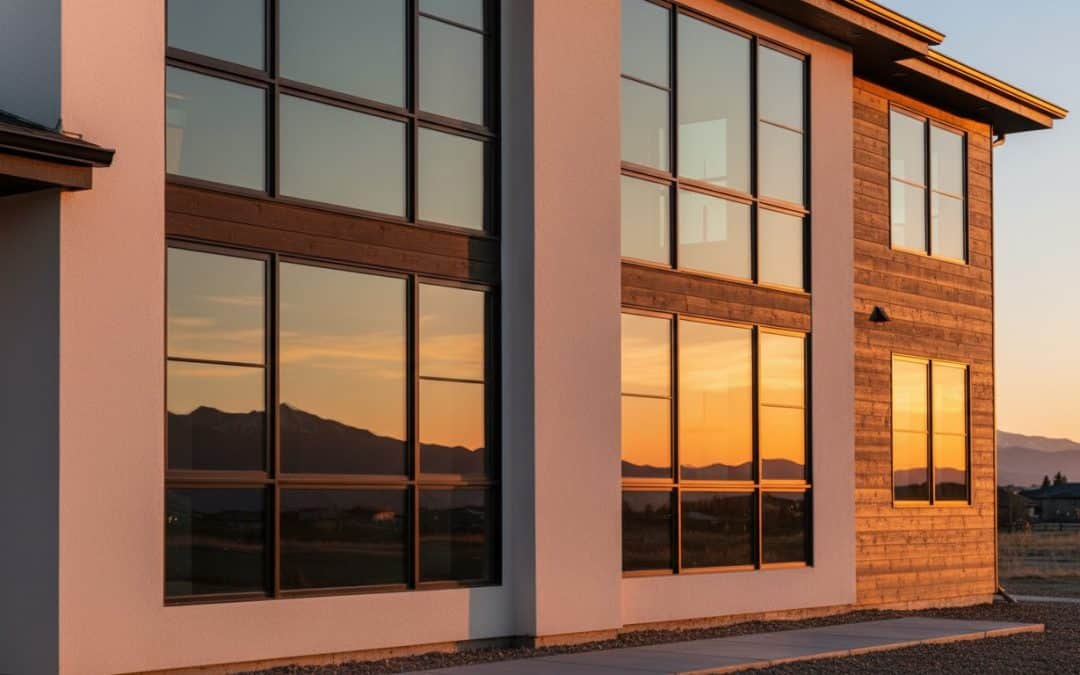
Could your home’s most expensive architectural feature actually be its greatest liability? In the high-altitude neighborhoods of West Jordan and Salt Lake City, the same windows that showcase the Wasatch Range often lead to a 35% increase in annual cooling expenses. When you choose professional window tinting for homes, you’re investing in an advanced thermal shield specifically engineered for Utah’s thin atmosphere. At 4,226 feet above sea level, the sun’s energy is significantly more aggressive, hitting your interior furnishings with unfiltered radiation that can ruin $15,000 worth of hardwood flooring in just a few seasons.
You’ve likely noticed that by 4:00 PM, your west-facing rooms in Saratoga Springs feel less like a living space and more like a greenhouse. It’s frustrating to feel forced to close your blinds and live in the dark just to keep your thermostat below 75 degrees. This guide promises to show you how to reclaim your comfort and protect your property using the latest 2026 ceramic film technologies. We’ll explore how to reject 66% of solar heat and secure total daytime privacy in crowded Lehi subdivisions while maintaining perfect optical clarity.
Key Takeaways
- Shield your interior from Utah’s high-altitude UV intensity, which can be up to 15% stronger than sea-level environments.
- Compare the latest ceramic and carbon technologies to choose the most effective window tinting for homes based on solar energy rejection and light transmission.
- Learn how to eliminate harsh TV glare and manage solar heat gain in west-facing rooms without sacrificing your mountain views.
- Identify the ideal film type for every space in your house, from high-performance heat blocks in kitchens to privacy-focused solutions for master suites.
- Discover why professional installation is essential for protecting modern Low-E glass seals and ensuring a lifetime of crystal-clear performance.
Why Window Tinting for Homes is Essential in the Salt Lake Valley
Residential window tinting is a sophisticated defensive strategy for your property. To understand its value, you must first define what window film is: a high-performance polyester layer engineered to manage solar energy through absorption or reflection. In the Salt Lake Valley, this technology serves as the “Expert Guardian” for your interior. We focus on neutralizing the intense Great Salt Lake glare without sacrificing the mountain views that make Utah living unique. Our goal is to balance thermal comfort with optical clarity, ensuring your home remains a sanctuary rather than a greenhouse.
Combating High-Altitude UV Radiation
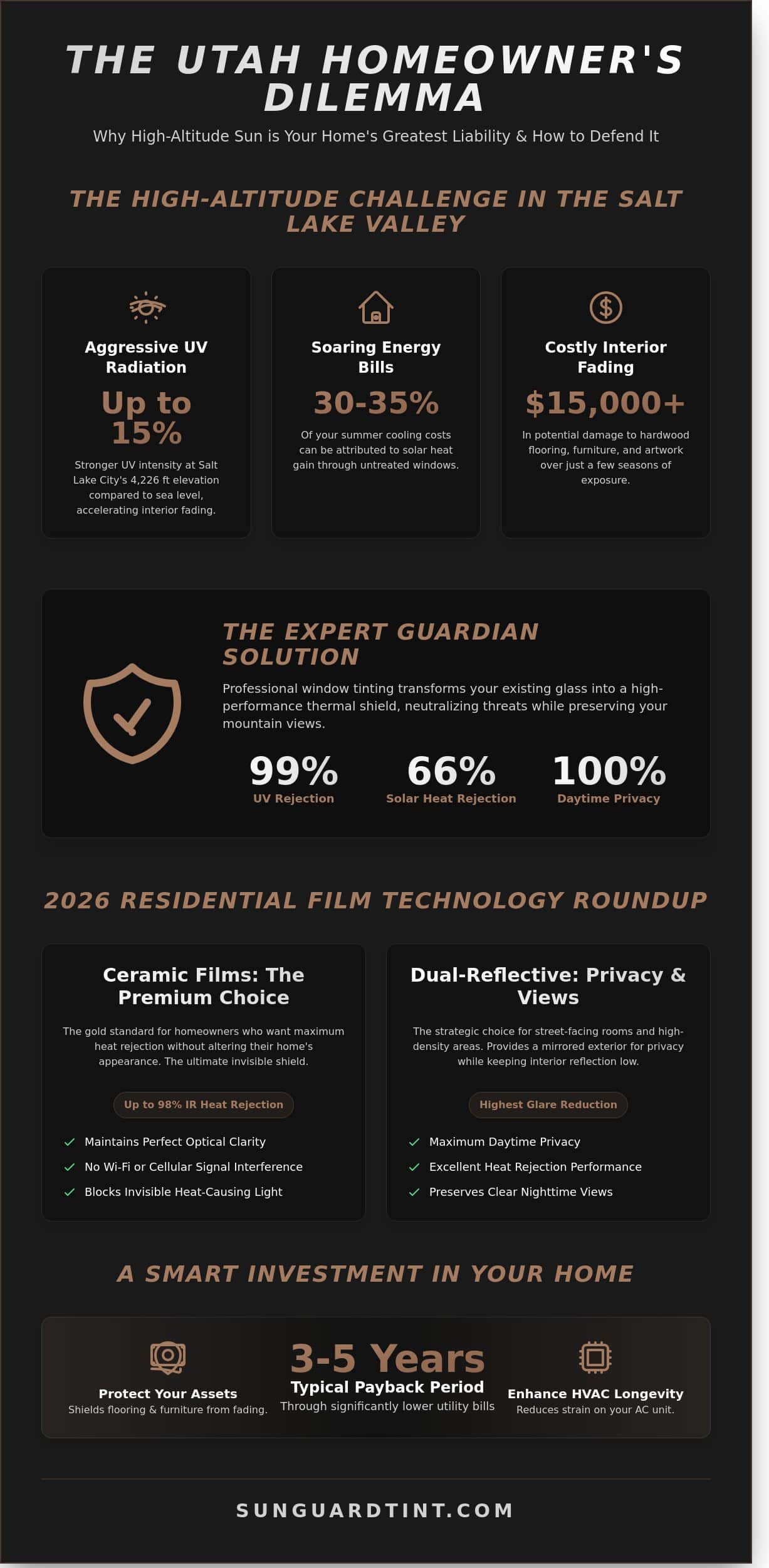
Salt Lake City sits at an average elevation of 4,226 feet. This altitude is significant because UV intensity increases by roughly 10% to 15% for every 1,000 feet of elevation gain compared to sea-level cities. For homeowners in West Jordan and South Jordan, this means your furniture, artwork, and hardwood floors face a “slow burn” that is far more aggressive than in coastal regions.
Standard double-pane windows lack the specialized filtration needed to block these harmful wavelengths. Professional window tinting for homes provides a 99% UV rejection rate, creating a permanent shield for your assets. This protection is vital when Utah summers hit 100 degrees for consecutive weeks, as it stops the primary catalyst for interior fading before it touches your carpet.
Energy Efficiency in the Utah Climate
Energy management in the Wasatch Front requires a solution that performs year-round. During the peak summer months in Orem and Provo, solar heat gain through untreated glass can account for 30% of your total cooling costs. High-performance films reject up to 78% of solar heat, significantly reducing the load on your AC unit.
The benefits extend into the winter. Many of our premium films offer an insulation effect that helps retain internal heat during snowy January nights. For large-windowed estates in Draper, calculating the ROI is straightforward. Most homeowners see the film pay for itself through lower utility bills within 3 to 5 years. You aren’t just buying a service; you’re investing in a thermal barrier that enhances the longevity of your HVAC system and your comfort. Window tinting for homes transforms your existing glass into a high-efficiency asset.
Roundup: The Best Residential Window Films for 2026
Choosing the right window tinting for homes requires a technical understanding of how different materials react to Utah’s high-altitude UV exposure. Professional grade films utilize advanced multi-layered construction to balance Total Solar Energy Rejection (TSER) and Visible Light Transmission (VLT). While DIY static-cling options from online retailers often bubble or peel within 12 months, the Sun Guard standard focuses on materials engineered to endure temperature swings ranging from -10°F in January to 105°F in July. We prioritize films that maintain their structural integrity and optical clarity for decades, not seasons.
- TSER: Measures the total amount of solar energy (UV, visible, and infrared) that a film rejects. High-end films reach TSER ratings of 60% or higher.
- VLT: Determines how much natural light enters the room. A 70% VLT film is virtually invisible, while a 15% VLT film provides significant glare reduction.
Ceramic Window Films: The Premium Choice
Ceramic films are the gold standard for homeowners in Lehi and Saratoga Springs who want to protect their interiors without changing their home’s appearance. These films use nano-ceramic particles to achieve an infrared heat rejection rate of up to 98%. Because they contain no metal, they don’t interfere with Wi-Fi signals or cellular reception. They effectively reduce solar heat gain by blocking the invisible spectrum of light that causes interior temperature spikes. It’s the ultimate invisible shield for high-end architecture.
Dual-Reflective and Privacy Films
Dual-reflective technology is the strategic choice for high-density developments in Salt Lake City. These films feature a mirrored exterior finish to provide daytime privacy for ground-floor windows. Unlike older reflective films, they’re designed with low interior reflectivity. This ensures you can still see the city lights at night instead of seeing your own reflection in the glass. This dual-action performance makes them ideal for street-facing rooms where privacy and evening views are equally important. Homeowners who want a deeper understanding of their options can explore our comprehensive guide on home tinting for privacy to find the right solution for every room in their Utah residence.
Smart Film and Specialty Coatings
Smart film represents the cutting edge of residential window tinting for homes. It utilizes a PDLC (Polymer Dispersed Liquid Crystal) layer that transitions from clear to opaque at the touch of a button. It’s a transformative solution for master bathrooms or home gyms where privacy needs change throughout the day. Beyond light control, we also deploy 8-mil thick security films and sacrificial graffiti coatings. These specialized layers protect glass surfaces from physical impact and urban wear in high-traffic areas. If you’re ready to enhance your home’s resilience, you can view our full performance specifications to find the right fit for your project.
Analyzing Performance: Heat Rejection and Glare Control
Many people mistake window tinting for homes for simple shading. While dark screens merely dim the light, high-performance films target the actual source of physical discomfort. Infrared (IR) radiation accounts for approximately 53% of the solar heat entering your living space. Sun Guard utilizes advanced ceramic layers to block up to 98% of these IR rays, preventing the localized heat pockets that often reach 115 degrees near untreated glass. This technical precision protects your sensitive electronics and prevents the fading of expensive artwork without sacrificing your view. We focus on optical clarity to ensure your environment feels enhanced rather than dimmed.
Total Solar Energy Rejection (TSER) Explained
Total Solar Energy Rejection (TSER) is the combined measurement of UV, visible light, and infrared energy blocked. It is the most reliable metric for Utah homeowners to evaluate film performance. Choosing a film with 70% TSER instead of a basic 40% option results in a 12 to 15 degree temperature drop in south-facing kitchens during July. This efficiency is backed by the Department of Energy on Window Efficiency, which notes that window films are among the most cost-effective ways to manage solar heat gain. Our technical approach ensures you get maximum rejection while maintaining the sleek, premium look of your glass.
Glare Reduction for Home Offices
The rise of remote work in the Silicon Slopes area has made glare control a top priority for local residents. West-facing windows can make monitors unreadable and turn professional Zoom calls into a struggle against harsh, washing shadows. Professional window tinting for homes solves this by cutting glare by up to 90%. This allows you to work comfortably without relying on heavy, dust-collecting blinds that completely block your natural light. You get a modern solution that protects your eyes and improves productivity throughout the intense afternoon sun cycle. For a deeper look at the specific film technologies engineered for Utah’s solar conditions, our expert guide to residential window tinting in West Jordan and Salt Lake City covers the full range of 2026 options available to homeowners.
- Eliminate 4:00 PM TV glare in west-facing living rooms.
- Reduce digital eye strain for home office workers.
- Protect custom furniture from localized heat pockets.
- Maintain crystal clear views while rejecting solar energy.
We treat every installation as a meticulous shielding process. By selecting films with high optical clarity, we ensure your home remains bright and inviting while performing at a professional level. It is about achieving the perfect balance between aesthetics and high-end functionality.
The Homeowner’s Selection Guide: Room-by-Room Strategy
Your home isn’t a monolith; it’s a collection of environments with unique thermal and privacy demands. Effective window tinting for homes requires a tailored approach that addresses the specific orientation of each room. In West Jordan, kitchens often bear the brunt of intense solar gain. By installing high-performance ceramic films, you can achieve up to 70% total solar energy rejection. This keeps your breakfast nook 10 to 15 degrees cooler without forcing your AC to work overtime at 7:00 AM.
Living rooms and great rooms require a focus on shielding your high-value investments. UV rays account for 40% of the fading damage seen on expensive hardwood floors and leather sectionals. Our films block 99.9% of these harmful rays, preserving the color and integrity of your interior design for years. For master bedrooms, we balance light management with seclusion. We often recommend films that provide daytime privacy while maintaining a crystal-clear view of the Wasatch Range.
Privacy vs. View: Finding the Middle Ground
Homeowners in Spanish Fork subdivisions often face the “fishbowl” effect where neighbors are just 20 feet away. You don’t have to feel boxed in by heavy drapes or blinds. We utilize specific Visible Light Transmission (VLT) percentages, typically between 25% and 35%, to satisfy strict HOA guidelines while blocking prying eyes. Unlike frosted decorative films that obscure your view entirely, our home tinting for privacy solutions maintain optical clarity from the inside while creating a sleek, professional barrier on the exterior.
Safety and Security Film Integration
Basement windows are the most common entry points for “smash and grab” intruders. We install 8-mil security film to transform vulnerable glass into a resilient shield. This thick polyester layer holds glass shards together during an attempted break-in, delaying entry by up to 120 seconds. This delay is often enough to trigger an alarm and deter a criminal. The Expert Guardian tip: combine solar protection with impact resistance. This dual-layer approach reduces injury risks from shattered glass in playrooms and sliding doors, providing peace of mind during Utah’s severe 60-mph windstorms or accidental impacts.
Why Professional Installation in West Jordan Wins Over DIY
DIY window tinting for homes often looks like a cost-saving measure until the first air bubble appears. Residential glass is a precision-engineered asset. Applying film without technical training risks permanent damage to expensive Low-E glass seals. These seals can fail due to improper heat absorption; this often voids your window manufacturer’s warranty and costs you $1,200 or more per pane in replacement fees. Professional installation is the only way to safeguard these high-value components.
- Precision Trimming: Prevents light gaps and peeling edges that occur with hand-cut retail kits.
- Controlled Environments: Specialized tools and techniques minimize dust particles trapped under the film.
- Chemical Bonding: Professional-grade mounting solutions ensure a bond that lasts for decades without purple discoloration.
Sun Guard Tint brings 22 years of experience to every Salt Lake Valley project involving window tinting for homes. We use surgical-grade stainless steel blades and industrial-strength heat guns to achieve a factory-finish look. Unlike store-bought rolls that turn brittle or crack after two summers, our professional films carry a lifetime residential guarantee. This warranty protects your investment against bubbling, peeling, and delamination for as long as you own the home.
The Sun Guard Standard of Craftsmanship
Our installation protocol begins with a three-stage glass decontamination process. We don’t just clean the surface; we remove microscopic debris that causes visual imperfections. This meticulous approach has made us a trusted name across West Jordan and South Jordan since 2004. We act as your expert consultants. We don’t just sell film; we solve property challenges by identifying whether your Salt Lake County home requires high-heat rejection or privacy-focused solutions.
Experience the Difference in West Jordan
Local homeowners view their property as their most valuable asset. Our Expert Guardian philosophy ensures that every installation enhances both the security and the aesthetic of your residence. We provide clear, data-driven estimates that show exactly how much solar energy you’ll block. When searching for residential window film installers near me, you need specialists who understand Utah’s unique high-altitude solar demands and deliver flawless, bubble-free results. Protect your home today with Sun Guard Tint’s professional residential services and secure the peace of mind that only comes from technical mastery.
Secure Your Home’s Future with Advanced Solar Protection
Investing in window tinting for homes is a strategic move to manage Salt Lake Valley’s intense 90 degree plus summer temperatures. High-performance films now block up to 99% of UV rays, which stops the rapid fading of expensive hardwood floors and custom furniture. By choosing professional installation, you secure a flawless finish that eliminates the unsightly bubbles and peeling common in DIY attempts. You’ll gain immediate climate control while maintaining the optical clarity of your views.
Sun Guard Tint brings over 20 years of local Utah experience to every project. We specialize in advanced infrared heat rejection technologies that can lower indoor temperatures by as much as 15 degrees during peak West Jordan heat. Our team provides a lifetime residential warranty on all premium films, ensuring your investment stays protected for the long haul. It’s time to stop fighting the sun and start enjoying a cooler, more efficient living space. Request a Free Residential Window Tinting Quote today. We look forward to helping you experience the ultimate standard in home comfort and protection.
Frequently Asked Questions
How much does it cost to tint windows in a house in Utah?
Residential window tinting for homes in Utah typically costs between $7 and $15 per square foot, depending on the performance grade of the film. For a standard 2,500 square foot home in West Jordan with 300 square feet of glass, homeowners can expect an investment ranging from $2,100 to $4,500. This price includes professional installation and high-performance ceramic films that offer 99 percent UV rejection.
Can I see out of my house windows at night with privacy film?
You can see out of your windows at night; however, the privacy effect reverses when your interior lights are on. Standard one-way privacy films rely on a light balance where the more reflective side faces the brighter light source. For 100 percent 24-hour privacy, we recommend frosted or decorative films that maintain 70 percent light transmission while blocking all visibility from both sides.
Will window tinting for homes kill my indoor plants?
Professional window tinting for homes won’t kill your indoor plants because most species thrive in the filtered light provided by the film. Houseplants primarily require red and blue light waves for photosynthesis, which these films allow to pass through. By blocking 99 percent of UV rays and reducing infrared heat by 85 percent, the film creates a stable environment that prevents soil from drying out 20 percent faster during Salt Lake City summers.
How long does professional residential window film last?
Professional residential window film typically lasts between 15 and 20 years when installed by a certified specialist. Our premium ceramic and carbon films are engineered to resist bubbling, peeling, and discoloration even under Utah’s intense high-altitude sun. We provide a lifetime residential warranty that covers both materials and labor, ensuring your property remains protected for two decades.
Does window film damage double-pane or Low-E glass?
Modern window films don’t damage double-pane or Low-E glass when you select a product rated for Thermal Stress Compatibility. We use specialized software to calculate the specific heat absorption rate of your glass, ensuring the film doesn’t exceed the 35 percent solar heat absorption threshold for dual-pane units. This scientific approach prevents seal failure and glass breakage while maintaining your factory window warranties.
Is home window tinting applied to the inside or outside of the glass?
We apply window tinting for homes to the interior surface of the glass to maximize its operational lifespan. This protects the film from the Salt Lake Valley’s external elements, including snow, windborne debris, and hard water deposits. While we occasionally use specialized exterior films for hard-to-reach skylights, 95 percent of our residential projects utilize interior applications to ensure the scratch-resistant coating remains pristine for 15 years.
Can window tint help lower my Salt Lake City utility bills?
Window film reduces Salt Lake City cooling costs by 10 percent to 30 percent during the peak summer months. By rejecting up to 80 percent of solar heat before it enters your living space, your HVAC system runs 15 percent less frequently. In a typical West Jordan residence, this increased efficiency translates to an average savings of $25 to $60 on your monthly utility bill.
How do I clean my windows after the tint has been installed?
Clean your tinted windows using a soft microfiber cloth and a standard ammonia-free glass cleaner. You must wait 30 days after installation to allow the moisture to fully evaporate from the adhesive layer. Avoid using abrasive pads or squeegees with metal edges; these can compromise the scratch-resistant coating. A simple mixture of 5 percent dish soap and 95 percent water works perfectly for maintaining optical clarity.